
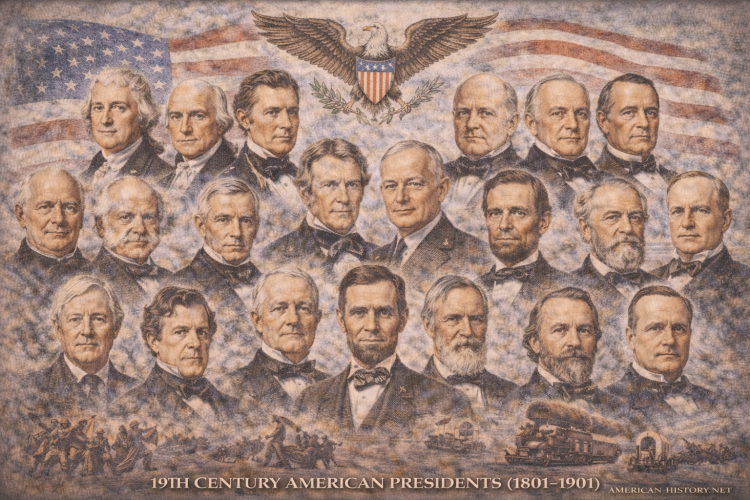

The 19th century was one of the most transformative periods in American history. Over the course of 100 years, the United States expanded across a continent, fought a devastating civil war, abolished slavery, industrialized at an unprecedented pace, and emerged as a global economic power.
From frontier settlements and westward migration to railroads, factories, and growing cities, the century reshaped American society, politics, and culture in lasting ways. This page provides a comprehensive overview of 19th century America, serving as a gateway to its most important themes, events, and transformations.
🇺🇸 Explore This Era: 19th Century American History (1801–1900)
🌎 Expansion & the Frontier
How the U.S. grew westward—through purchases, settlement, conflict, and new states.
🏭 Industry, Railroads & Cities
The rise of factories, rail networks, and rapidly growing urban life.
⚔️ Slavery, the Civil War & Reconstruction
The central conflict of the century—slavery, sectional crisis, war, and rebuilding.
✊ Work, Rights & Social Change
How industrial growth changed everyday life—and sparked labor organizing and reform.
Westward Expansion and Territorial Growth
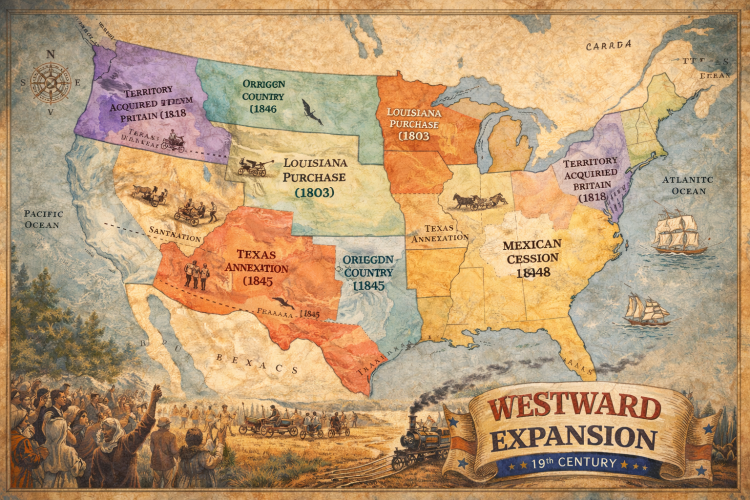
At the start of the 19th century, the United States was a relatively small nation concentrated along the Atlantic coast. That changed dramatically with the Louisiana Purchase of 1803, which doubled the country’s size and opened vast territories to American settlement.
Millions of settlers moved westward in search of land, opportunity, and independence. This expansion created new territories, states, and communities, but it also generated intense conflict. Native American nations were forcibly displaced through warfare, broken treaties, and federal policies such as the Indian Removal Act.
Westward expansion shaped American identity around ideals of opportunity, self-reliance, and progress—while leaving a lasting legacy of displacement and injustice.
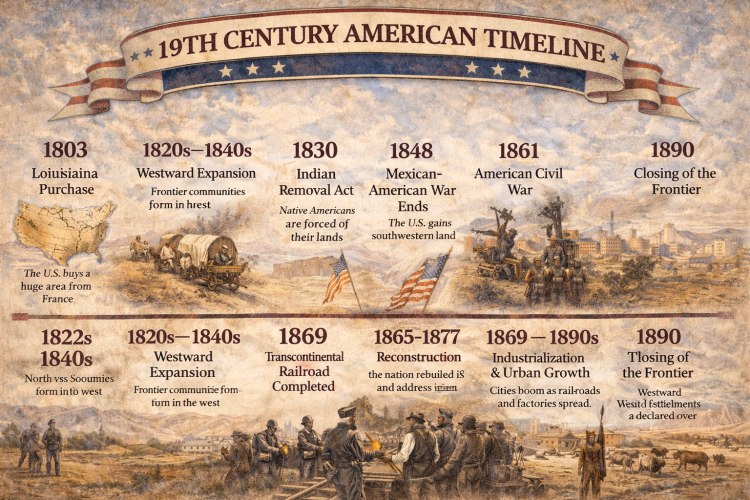
🇺🇸 19th Century American Timeline
-
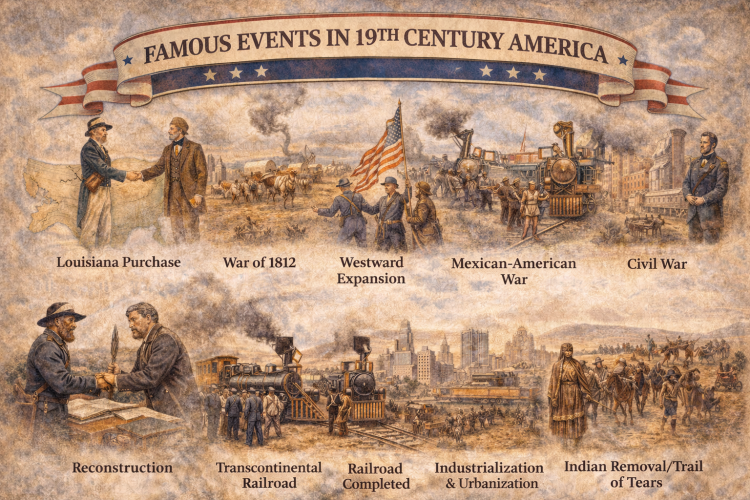
1803 – Louisiana Purchase
The United States doubles its size by purchasing land from France, accelerating westward expansion. -
1820s–1840s – Westward Expansion
Settlers move westward, forming frontier communities and new states. -
1830 – Indian Removal Act
Native American nations are forcibly removed from ancestral lands. -
1848 – Mexican-American War Ends
The U.S. gains vast southwestern territories. -
1861–1865 – American Civil War
Conflict over slavery and union leads to the deadliest war in U.S. history. -
1865–1877 – Reconstruction
The nation rebuilds after the Civil War and grapples with citizenship and civil rights. -
1869 – Transcontinental Railroad Completed
Railroads connect the East and West, transforming trade and travel. -
1870s–1890s – Industrialization & Urban Growth
Factories expand, cities grow rapidly, and the U.S. becomes an industrial power. -
1890 – Closing of the Frontier
The Census Bureau declares the frontier closed, symbolizing the end of westward settlement.
Life on the American Frontier
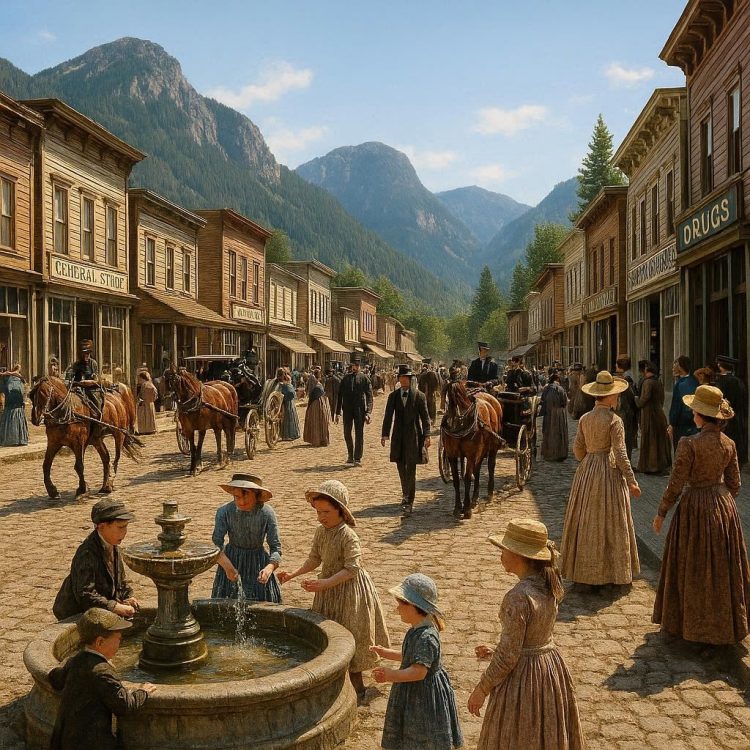
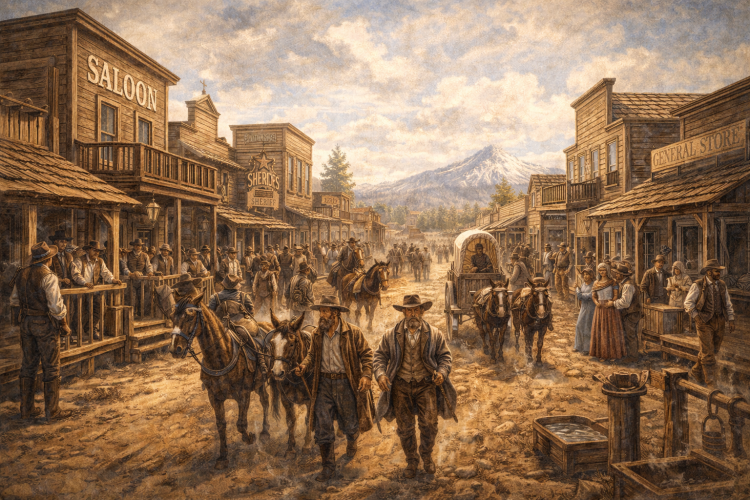
The American West became one of the most powerful symbols of the 19th century. Frontier life was defined by risk and resilience, as settlers built farms, towns, and transportation routes in unfamiliar and often dangerous environments.
Many western towns grew rapidly around mining, ranching, and railroads, while others declined just as quickly, becoming ghost towns once resources were exhausted or routes shifted. Ranching, cattle drives, and homesteading became hallmarks of western life, while law enforcement often struggled to keep pace with rapid population growth.
Despite its romanticized image, frontier life was physically demanding, uncertain, and frequently harsh for most settlers.
Industrialization and Economic Transformation
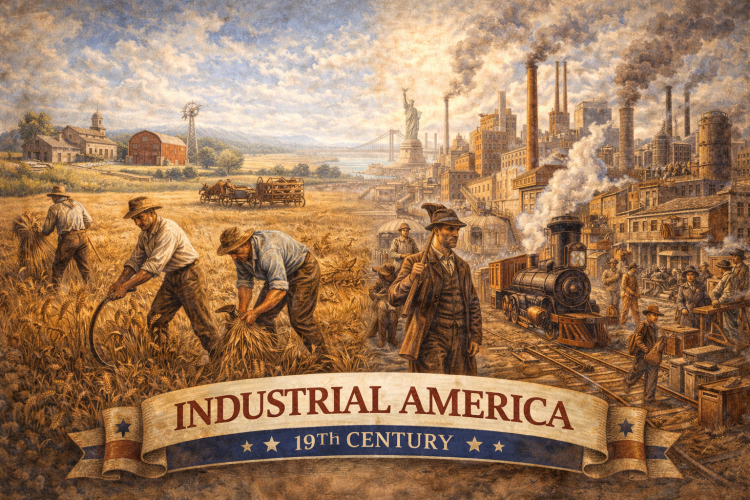
The 19th century marked the rise of industrial America, transforming how people worked, lived, and produced goods. Early in the century, the economy was largely agricultural. By the late 1800s, the United States had become the world’s leading industrial nation.
New inventions such as the steel plow, mechanical reaper, and barbed wire revolutionized farming, while factories powered by steam and later electricity enabled mass production. Iron and steel output surged, fueling construction, railroads, and manufacturing.
Industrial growth generated immense wealth but also created dangerous working conditions, economic inequality, and widespread social unrest.
Railroads and Transportation Networks
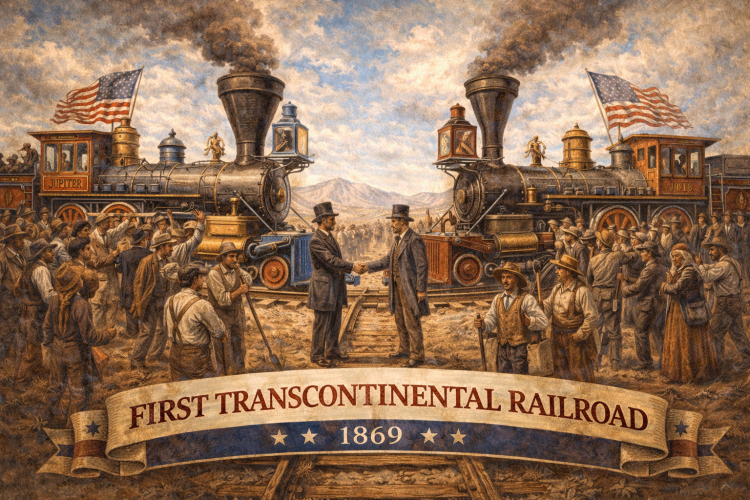
No development shaped the 19th century more profoundly than the railroad. Early transportation depended on horses, wagons, and canals, limiting movement and trade. Railroads transformed the nation.
The completion of the First Transcontinental Railroad in 1869 connected the eastern and western United States, allowing people, goods, and information to travel at unprecedented speed. By the end of the century, nearly 190,000 miles of track crisscrossed the nation.
Railroads accelerated settlement, expanded markets, unified regional economies, and increased corporate power—while also reshaping landscapes and communities.
Growth of American Cities
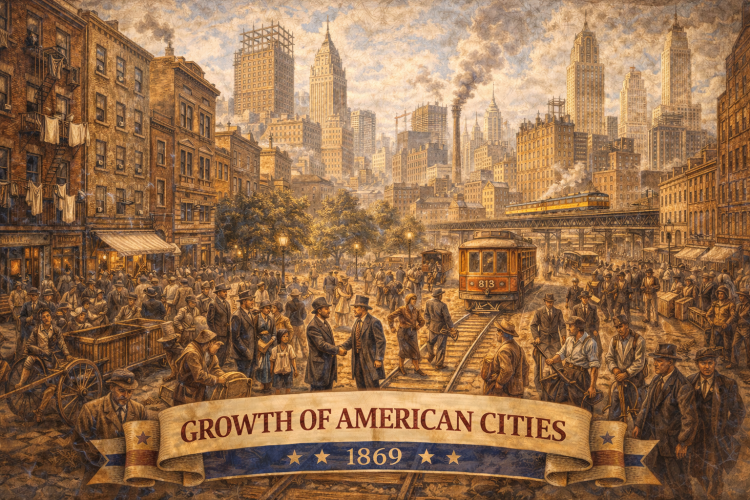
Industrialization fueled rapid urban growth. Millions of Americans left rural areas, and immigrants from around the world arrived seeking factory jobs and economic opportunity.
Early cities were overcrowded and unsanitary, but improvements such as clean water systems, gas lighting, public transportation, and urban parks gradually transformed city life. Steel-frame construction made skyscrapers possible, permanently reshaping American skylines.
City life was often crowded, noisy, and dangerous, but it also fostered cultural diversity, innovation, and modern urban culture.
Rural Life and Farming Communities
Despite urban growth, much of the population remained rural throughout the 19th century. Farmers and homesteaders lived largely self-sufficient lives, growing food, building homes, and relying on family labor.
Technological advancements increased productivity, but farming remained physically demanding and economically uncertain. Droughts, debt, and volatile prices caused hardship, particularly in the Great Plains.
Rural life reinforced values of independence, perseverance, and self-reliance that became central to American identity.
Slavery, Sectional Conflict, and the Civil War
Slavery was the most divisive issue of 19th-century America. While northern states gradually abolished slavery, the southern economy depended heavily on enslaved labor.
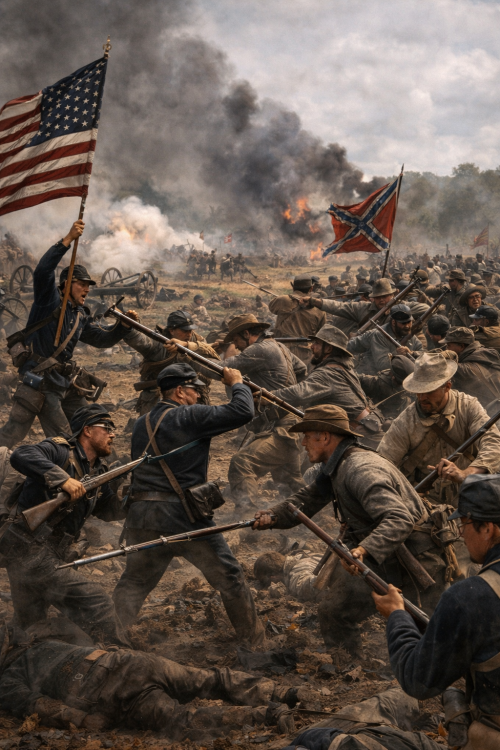
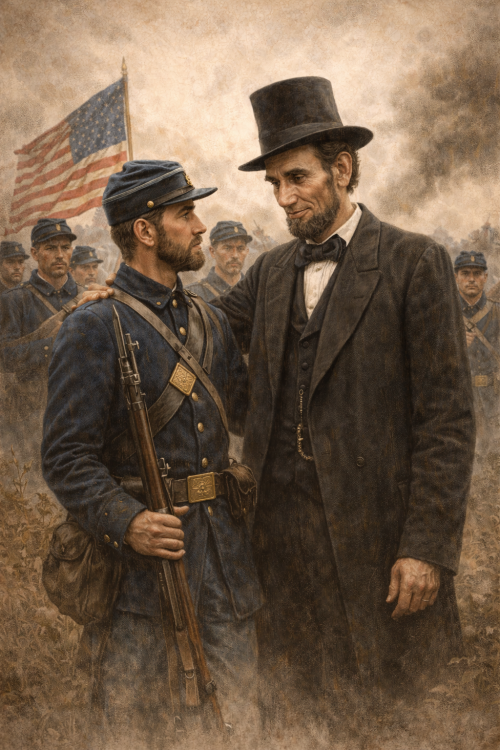
As new states entered the Union, fierce debates erupted over whether slavery would expand westward. Temporary compromises delayed conflict, but tensions continued to escalate. The election of Abraham Lincoln in 1860 triggered southern secession and the outbreak of the American Civil War (1861–1865).
The Union’s victory preserved the nation and led to the abolition of slavery, but at the cost of immense destruction and loss of life.
Reconstruction and Its Aftermath
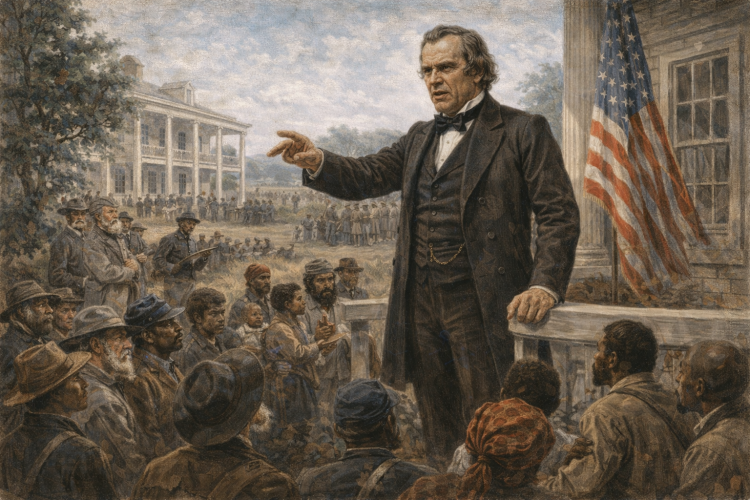
After the Civil War, the nation entered the Reconstruction Era, attempting to rebuild the South and integrate formerly enslaved people into American society.
Constitutional amendments abolished slavery and granted citizenship and voting rights, but Reconstruction faced violent resistance. Many gains were undermined through segregation, discriminatory laws, and political backlash.
The failures of Reconstruction left unresolved issues that continued to shape American politics and race relations long after the 19th century ended.
Labor, Unions, and Social Change
Industrialization created a new working class, giving rise to organized labor movements. Factory workers often endured long hours, low wages, and unsafe conditions.
Labor unions such as the Knights of Labor organized strikes and protests demanding fair treatment. These efforts were frequently met with resistance from corporations and government authorities, sometimes resulting in violent confrontations.
Although progress was slow and uneven, labor activism laid the foundation for future workplace protections and reforms.
Conclusion: The Legacy of the 19th Century
The 19th century transformed the United States from a young republic into a continental and industrial power. Expansion, innovation, conflict, and reform reshaped American society in lasting ways.
Many of the nation’s defining institutions, economic systems, and social struggles trace their roots to this era. Understanding 19th-century American history is essential to understanding the modern United States—and the forces that continue to shape it today.
❓ 19th Century America — Frequently Asked Questions
What defined the 19th century in American history?
The 19th century was defined by westward expansion, industrialization, the Civil War, and the United States’ transformation into a continental power.
Why was westward expansion so important?
Expansion provided land and opportunity for settlers, strengthened national unity, and fueled economic growth—while also displacing Native American nations through forced removal and conflict.
How did industrialization change American life?
Industrialization shifted the economy from agriculture to manufacturing, created cities, increased immigration, and produced both vast wealth and harsh working conditions.
What role did railroads play in the 1800s?
Railroads connected regions, accelerated settlement, expanded markets, and transformed transportation, communication, and national commerce.
Why did the Civil War occur?
The Civil War was caused by deep divisions over slavery, states’ rights, and political power as the nation expanded westward.
What was the long-term impact of Reconstruction?
Reconstruction reshaped the Constitution and citizenship, but its failure allowed segregation and racial inequality to persist into the 20th century.
🧠 19th Century America — Knowledge Quiz
Test your understanding of expansion, industrialization, and conflict in 19th century America.
📚 Glossary: 19th Century America
Westward Expansion
The movement of settlers across North America, driven by land opportunity and government policy.
Manifest Destiny
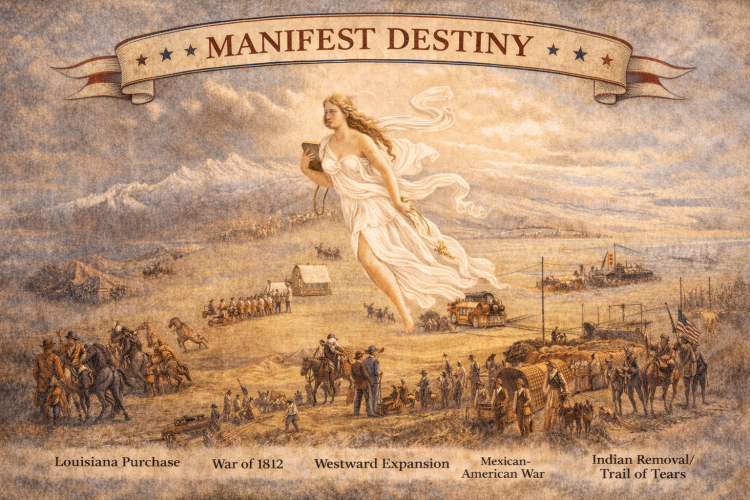
The belief that U.S. expansion across the continent was inevitable and justified.
Industrialization
The shift from hand production to machine-based manufacturing and factory labor.
Transcontinental Railroad
A rail line completed in 1869 that connected the eastern and western United States.
Reconstruction
The post–Civil War effort to rebuild the South and redefine citizenship.
Labor Union
An organization formed by workers to demand better wages, hours, and working conditions.