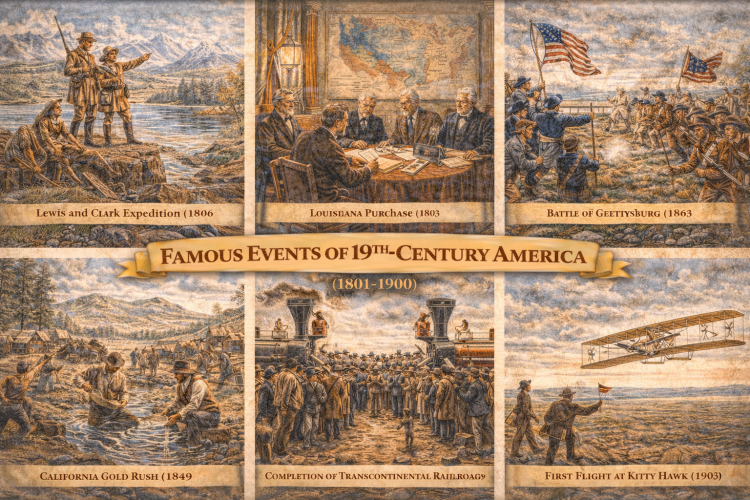
The 19th century was one of the most transformative periods in American history. Spanning from 1801 to 1900, this century witnessed the United States expand across a continent, endure civil war, industrialize rapidly, and emerge as a rising global power. Political decisions, military conflicts, social movements, and economic upheavals during this era permanently reshaped the nation’s identity.
This page provides an overview of the most significant events of the 19th century, with links to detailed articles that explore each topic in greater depth.
🗺️ The Louisiana Purchase (1803)
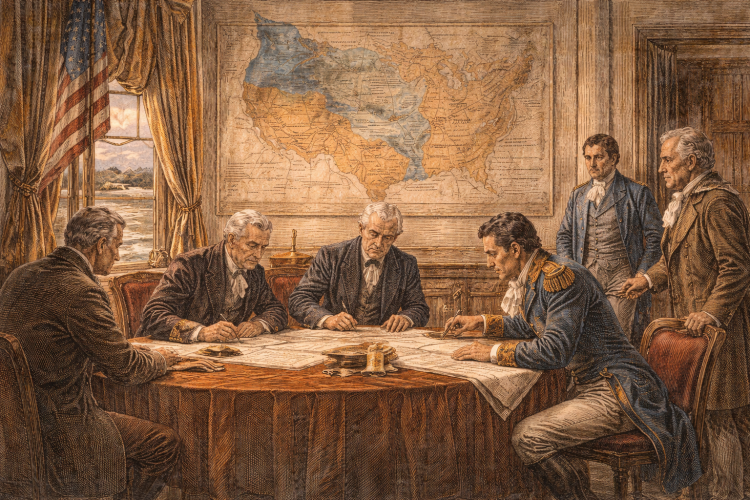
One of the most consequential events of the early 19th century was the Louisiana Purchase. The Louisiana Territory was a vast region stretching from the Mississippi River to the Rocky Mountains, and from Canada to the Gulf of Mexico.
In 1803, the United States purchased this land from France for $15 million during the presidency of Thomas Jefferson. Negotiated while Napoleon Bonaparte ruled France, the deal instantly doubled the size of the nation, secured control of the Mississippi River, and is widely regarded as one of the most successful land deals in history.
The Lewis and Clark Expedition (1804–1806)
Following the Louisiana Purchase, much of the newly acquired territory remained unexplored. To better understand the land, President Jefferson commissioned the Lewis and Clark Expedition.
Led by Meriwether Lewis and William Clark, the expedition began in 1804 and traveled over 8,000 miles, reaching the Pacific Ocean in 1805 before returning in 1806. Along the way, the expedition mapped rivers and mountains, established relations with Native American tribes, and documented numerous plant and animal species previously unknown to Americans.
The War of 1812 (1812–1815)
The War of 1812 was fought between the United States and the United Kingdom at a time when Britain was deeply engaged in the Napoleonic Wars in Europe. Tensions arose over British trade restrictions, naval impressment of American sailors, and continued British influence in North America.
Although the war ended in a military stalemate, it strengthened American nationalism. Despite the burning of Washington, D.C., the conflict concluded with the Treaty of Ghent, restoring pre-war borders and improving long-term relations between the two nations.
🏹 Westward Expansion & Native American Removal (1830s–1890s)
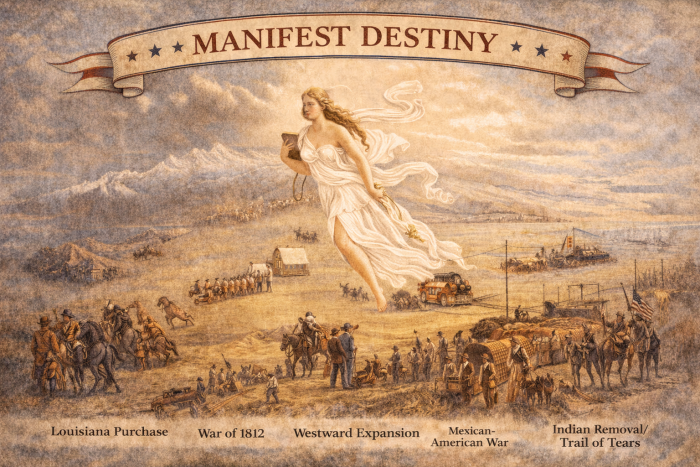
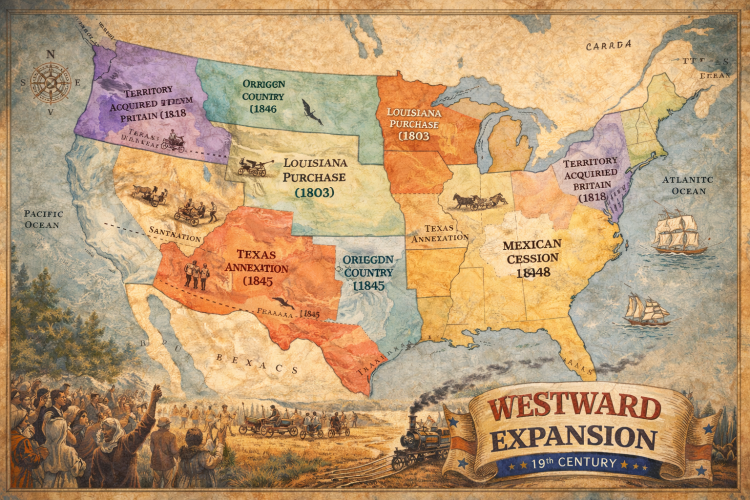
One of the most defining forces of 19th-century American history was the rapid westward expansion of the United States. Driven by Manifest Destiny, land hunger, and economic opportunity, settlers pushed steadily beyond the Mississippi River.
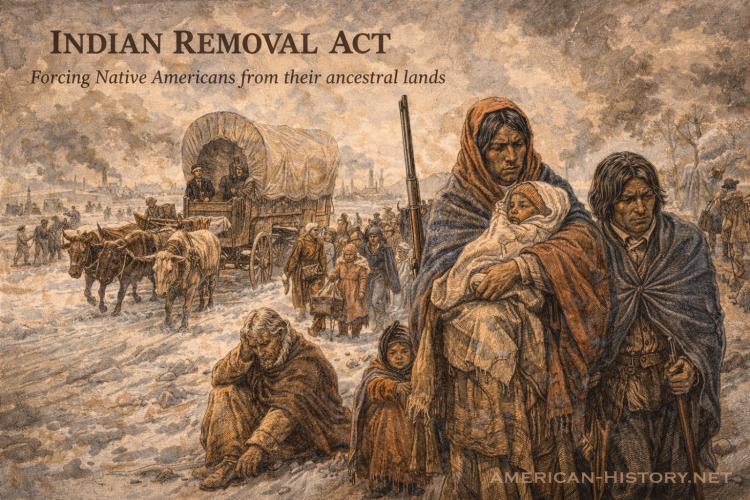
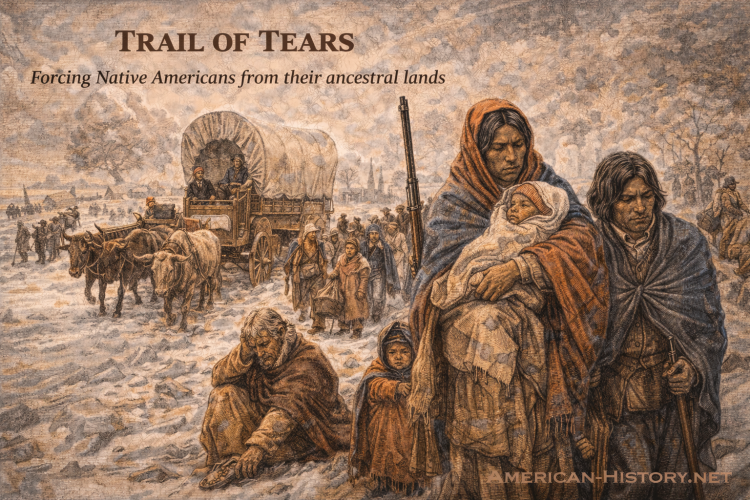
This expansion came at a devastating cost to Native American nations. Federal policies, including the Indian Removal Act, forced tribes from their ancestral lands onto reservations, leading to mass displacement, warfare, and tragedies such as the Trail of Tears.
Conflicts like the Great Sioux War, Red Cloud’s War, and the Nez Perce War marked the violent final chapters of Indigenous resistance during the century.
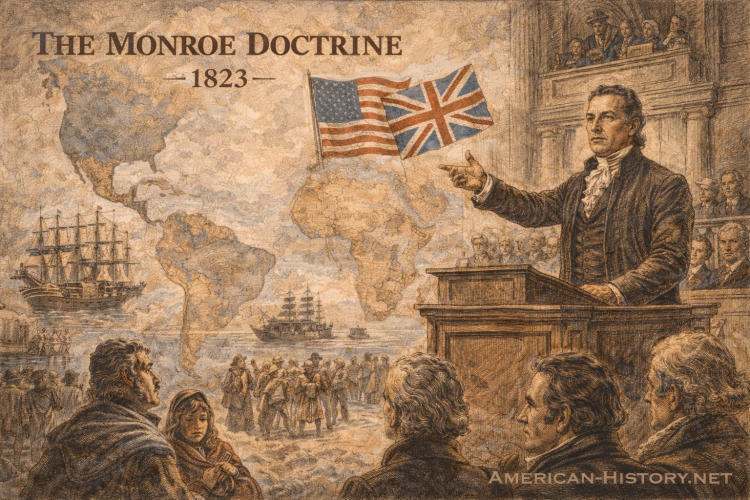
The Monroe Doctrine (1823)
In 1823, President James Monroe announced the Monroe Doctrine, a cornerstone of American foreign policy. The doctrine warned European powers against further colonization or interference in the Western Hemisphere.
While the United States lacked the military strength to enforce the doctrine at the time, it symbolized a growing confidence and laid the foundation for future American influence in the Americas.
Texas Independence and Annexation (1835–1845)
During the early 19th century, Texas was part of Mexico. A growing population of American settlers increasingly clashed with Mexican authorities over governance and policy.
In 1835, Texans rebelled and declared independence. After defeating Mexican forces, the Republic of Texas was established in 1836. Nearly a decade later, Texas was annexed by the United States in 1845, a move that directly contributed to war with Mexico.
🌎 The Spanish–American War (1898)
The Spanish–American War marked a turning point in U.S. history, signaling America’s emergence as a global power. The conflict began over Cuba’s struggle for independence from Spain and lasted only a few months.
The United States decisively defeated Spain and gained control of overseas territories including Puerto Rico, Guam, and the Philippines. The war ended Spain’s colonial empire and reshaped America’s role on the world stage.
This brief but influential war bridged the 19th and 20th centuries, setting the stage for American involvement in global affairs.
The Mexican–American War (1846–1848)
The Mexican–American War erupted after disputes over Texas and border claims. American forces quickly defeated Mexico, even capturing its capital.
The war concluded with the Treaty of Guadalupe Hidalgo, under which Mexico recognized Texas and ceded vast territories to the United States. These lands would later become parts of California, Arizona, Nevada, Utah, and New Mexico, dramatically expanding U.S. territory.
The Abolition Movement
Slavery was the most divisive issue of the 19th century. The abolitionist movement, which sought to end slavery, gained strength in the Northern states, while the Southern states remained economically dependent on enslaved labor.
This growing divide shaped politics, culture, and public debate, ultimately leading to the most destructive conflict in American history.
🇺🇸 The American Civil War (1861–1865)
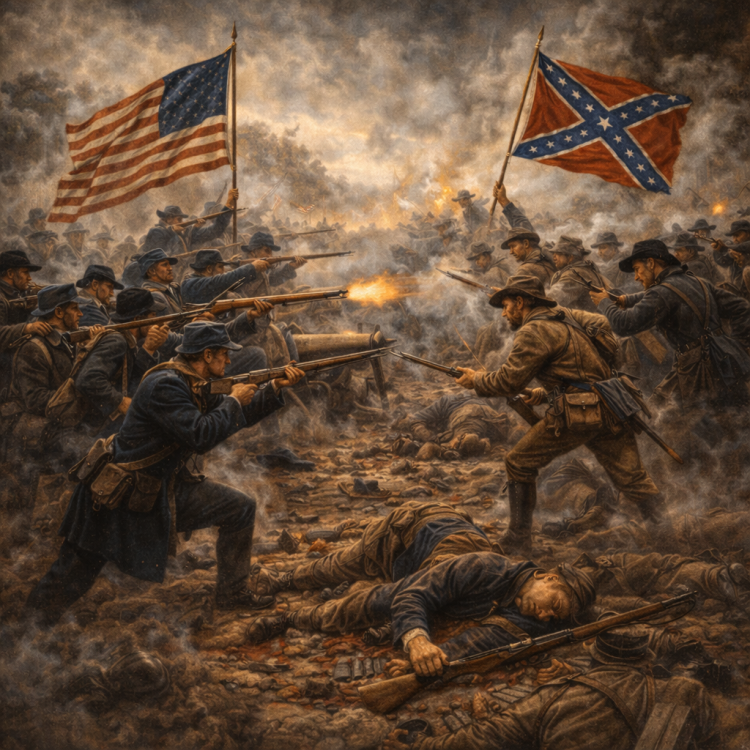
The American Civil War was fought between the Union (Northern states) and the Confederacy (Southern states that seceded). Triggered primarily by disputes over slavery and states’ rights, the conflict lasted four brutal years.
The Union’s victory preserved the nation and led to the abolition of slavery. The war accelerated military innovation, transformed the federal government, and permanently reshaped American society.
The Assassination of Abraham Lincoln (1865)
Shortly after the Civil War ended, President Abraham Lincoln was assassinated in April 1865. His death shocked the nation at a critical moment of recovery and reconciliation.
Lincoln’s assassination deeply affected the course of Reconstruction, leaving the country without the leader many believed best suited to reunite the nation.
Native American Wars and the Battle of Little Bighorn (1876)
Throughout the 19th century, the United States fought numerous wars against Native American tribes, largely driven by westward expansion and broken treaties.
One of the most famous conflicts was the Battle of Little Bighorn in 1876, where Native American forces defeated U.S. cavalry under George Armstrong Custer. Despite this victory, continued military campaigns eventually forced most Native nations onto reservations, culminating in tragedies such as the Wounded Knee Massacre in 1890.
Economic, Industrial, and Social Change
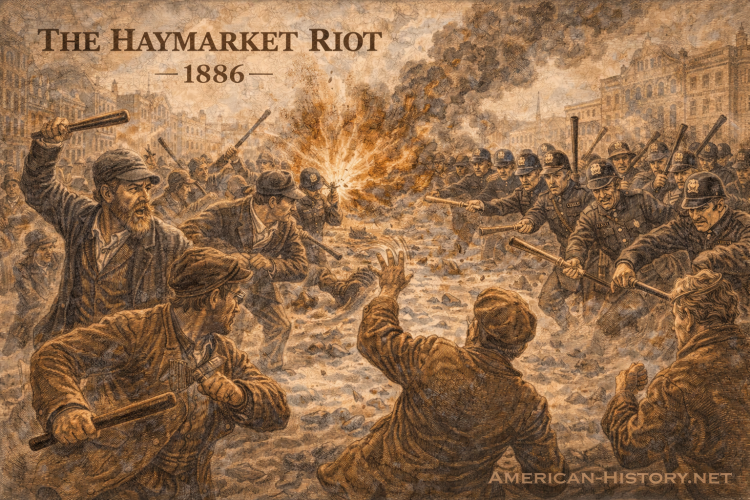
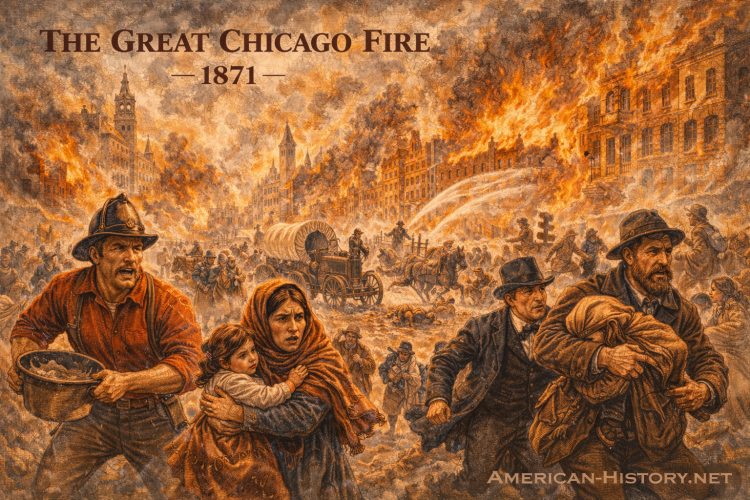
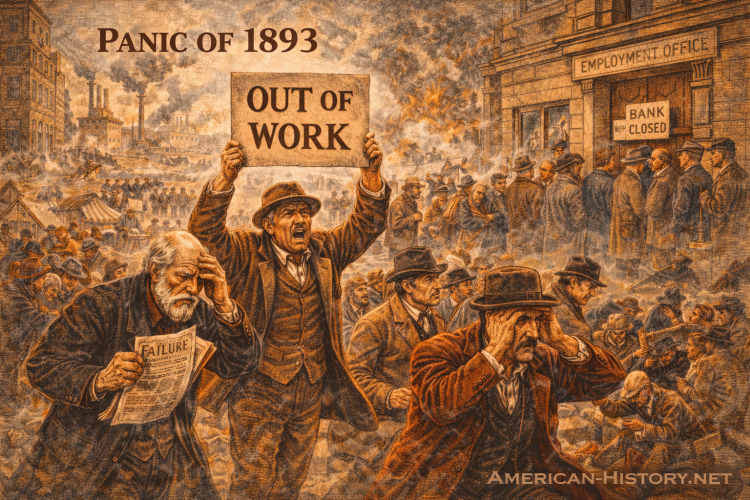
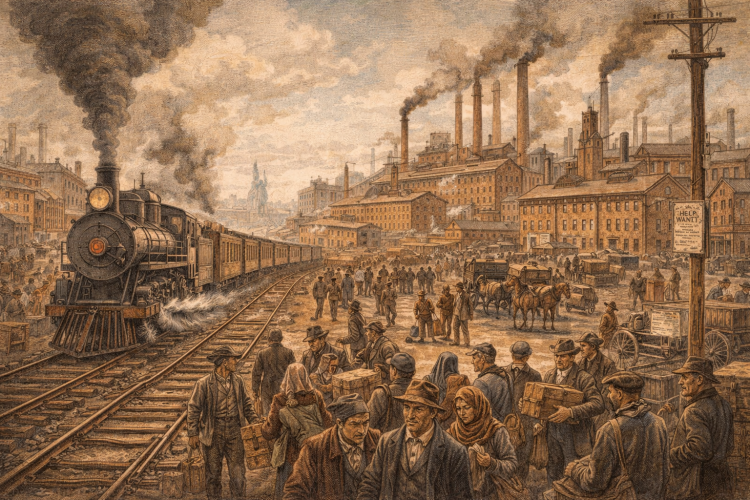
The late 19th century saw rapid industrialization, urban growth, and economic volatility. Events such as the Great Chicago Fire, major labor strikes, and financial panics reflected both the opportunities and hardships of industrial America. Railroads, factories, and mass immigration transformed American cities and labor at an unprecedented scale.
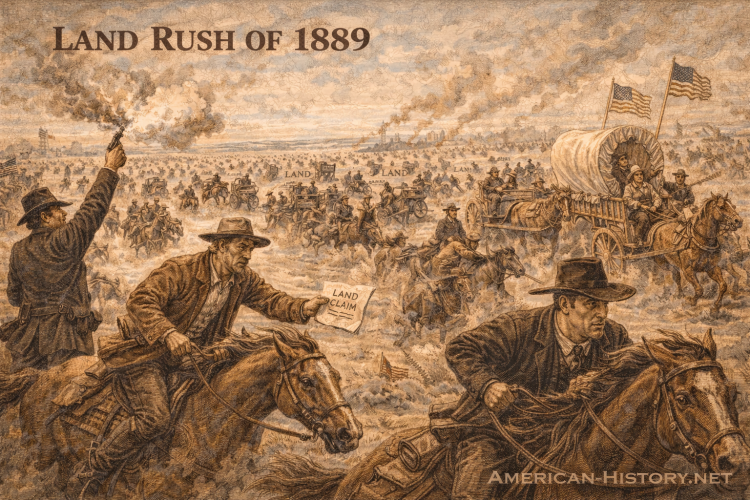
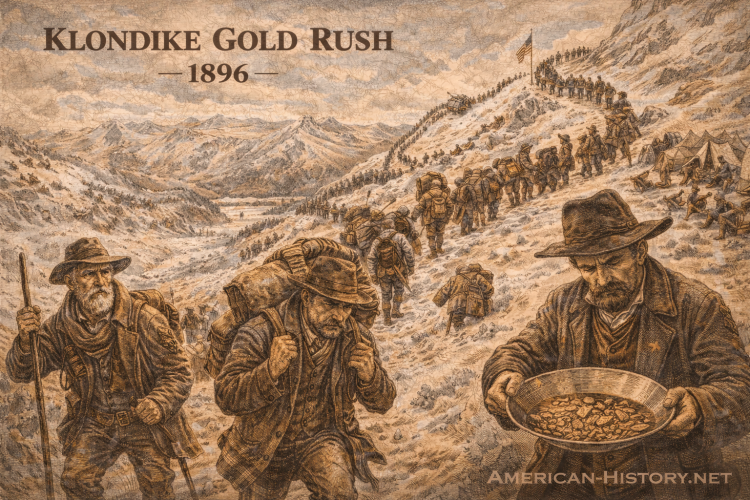
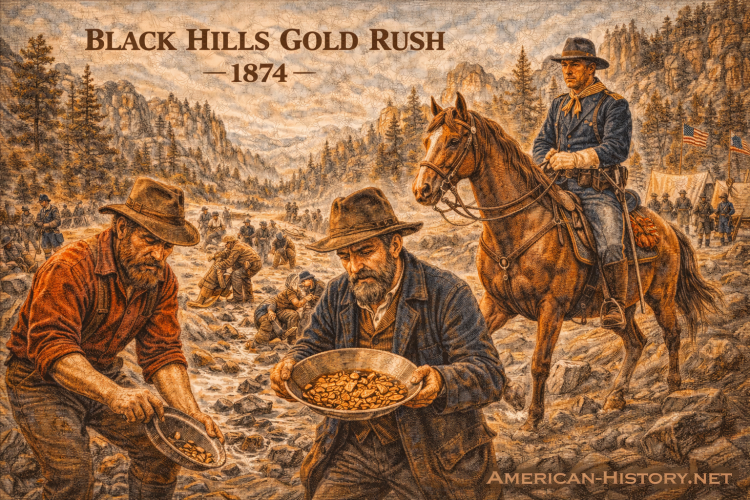
Gold rushes, land runs, and westward settlement attracted millions, while immigration transformed cities and fueled economic growth.
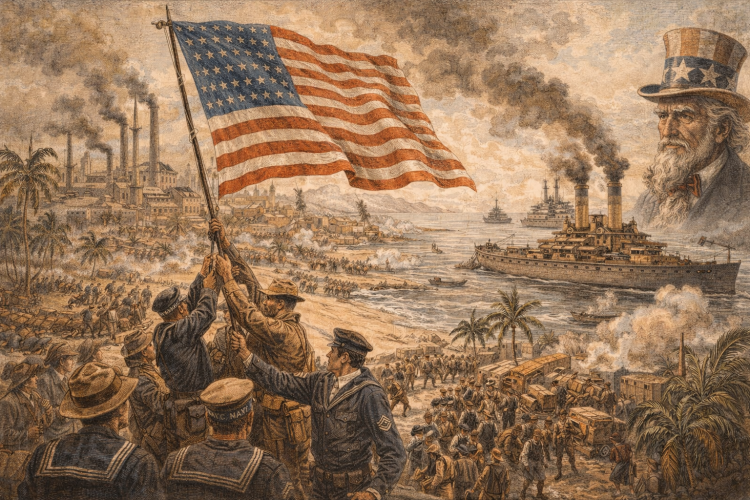
Overseas Expansion at the End of the 19th Century
By the end of the 19th century, the United States had begun to look beyond North America. The Spanish–American War of 1898 marked a decisive turning point, bringing overseas territories such as Puerto Rico, Guam, and the Philippines under American control.
This brief but consequential conflict signaled the United States’ emergence as a global power and closed the 19th century with a dramatic shift in American foreign policy.
The 19th century shaped the United States more profoundly than any previous era. Through territorial expansion, political reform, war, and economic transformation, America evolved from a young republic into an industrial nation with global influence.
The events outlined here form the foundation of modern American history and continue to influence the nation’s political, social, and cultural landscape today.
❓ Frequently Asked Questions: 19th Century American History
What were the most important events of the 19th century in American history?
Some of the most significant events include the Louisiana Purchase, westward expansion, the American Civil War, the abolition of slavery, industrialization, and the Spanish–American War. Together, these events reshaped the nation politically, socially, and economically.
Why was the Louisiana Purchase so important?
The Louisiana Purchase doubled the size of the United States, secured control of the Mississippi River, and allowed the nation to expand westward. It is widely regarded as one of the most successful land deals in history.
What caused the American Civil War?
The Civil War was primarily caused by disputes over slavery, states’ rights, and political power. Southern states seceded from the Union after the election of Abraham Lincoln, leading to a four-year conflict.
How did westward expansion affect Native Americans?
Westward expansion led to forced removals, broken treaties, warfare, and the confinement of Native American tribes to reservations. These policies caused widespread displacement and suffering throughout the century.
Why is the Spanish–American War considered a turning point?
The Spanish–American War marked the United States’ emergence as a global power. By acquiring overseas territories, America shifted from continental expansion to international influence.