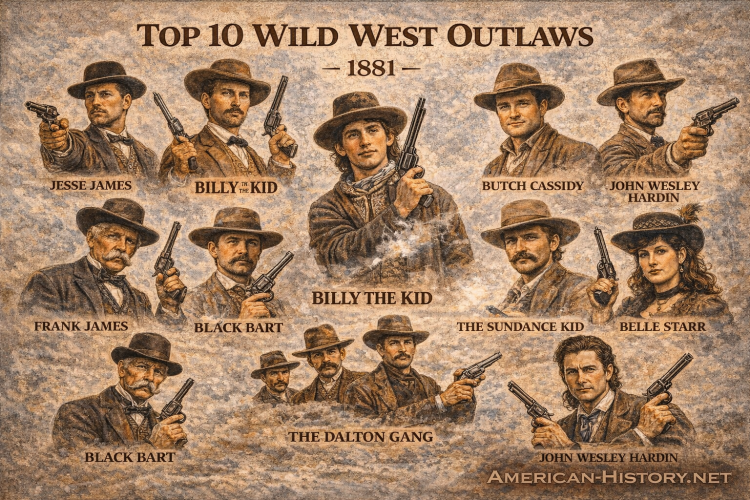
Why Was It Called the Wild West?
The term “Wild West” was used to describe the vast western territories of the United States during the 19th century—a region that lay beyond the settled eastern states and operated with little formal law or government.
While the original thirteen states had established legal systems, towns, and institutions, the lands west of the Mississippi River were largely undeveloped. These territories contained few roads, no major cities, and minimal government presence. As settlers moved westward, law enforcement was often informal or nonexistent, giving rise to the region’s reputation for danger, disorder, and opportunity.
Native American tribes had lived across these lands for generations, organized into communities with their own cultures and traditions. To incoming settlers unfamiliar with this world—and unprotected by eastern institutions—the frontier appeared untamed and unpredictable, earning it the name the Wild West.
🤠 Explore the Wild West
Discover the people, legends, and defining moments that shaped life on the American frontier. Select a topic below to explore in more detail.
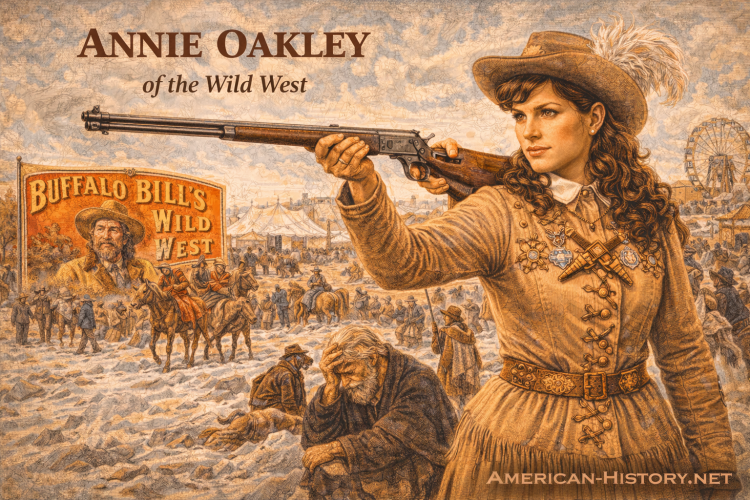
🎯 Annie Oakley
The legendary sharpshooter who became one of the most famous figures of the Wild West.
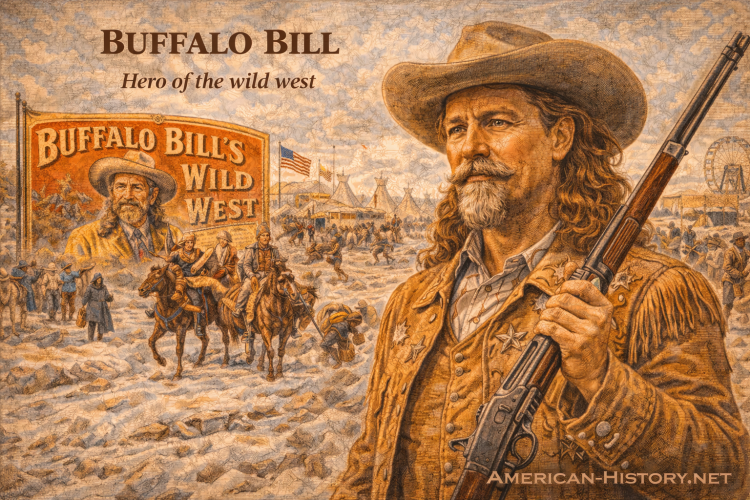
🎪 Buffalo Bill
Showman, scout, and soldier who turned the Wild West into a global spectacle.
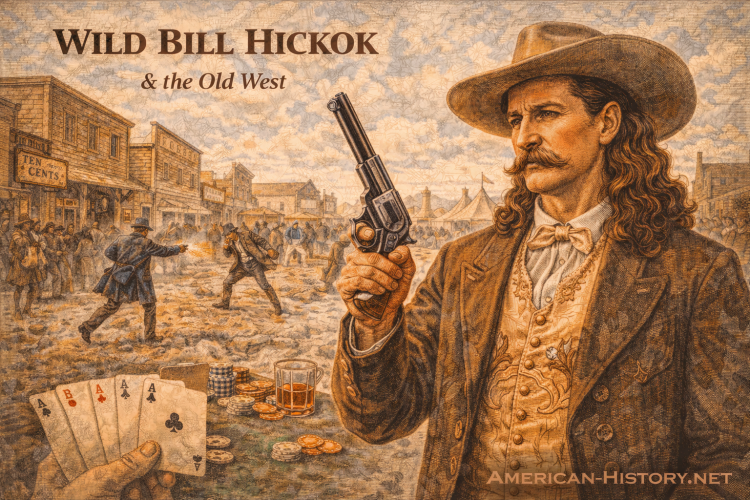
🔫 Wild Bill Hickok
Lawman, gunslinger, and one of the most iconic legends of frontier justice.
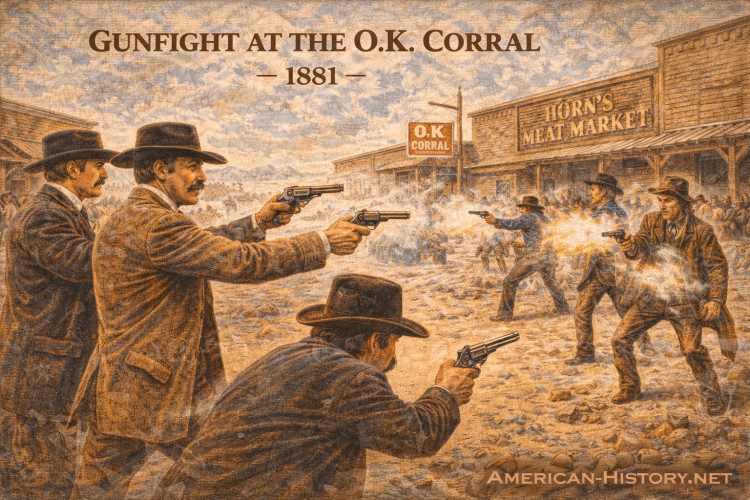
⚔️ Gunfight at the O.K. Corral
The most famous shootout in Wild West history and its lasting legacy.
Americans Move West
Following the Louisiana Purchase in 1803, the United States acquired an enormous expanse of land. President Thomas Jefferson commissioned the Lewis and Clark Expedition to explore this new territory and report on its geography, resources, and inhabitants.
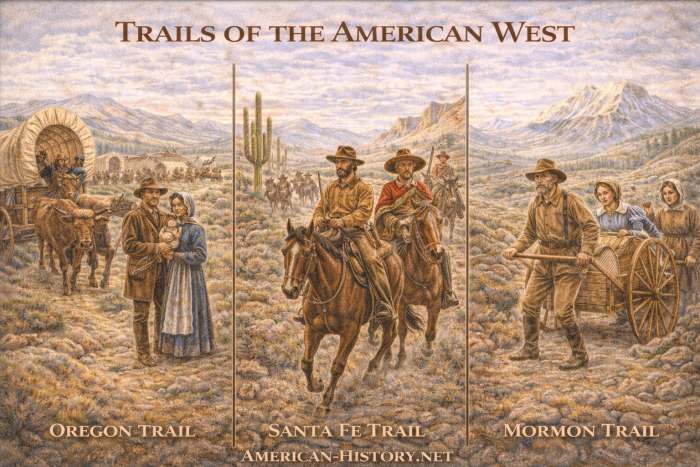
When the expedition returned in 1806, news of fertile farmland, open plains, and natural wealth sparked widespread excitement. Throughout the 19th century, settlers, farmers, ranchers, miners, and entrepreneurs began moving west in search of land and opportunity.
As migration increased, settlers established towns, built railroads, farmed the land, and mined precious resources. Over time, these frontier settlements grew into organized territories and eventually new U.S. states, permanently reshaping the nation’s geography.
What Happened to Native Americans?
Westward expansion came at a devastating cost to Native American nations. As settlers occupied more land, Native communities were displaced, their resources depleted, and their way of life threatened.
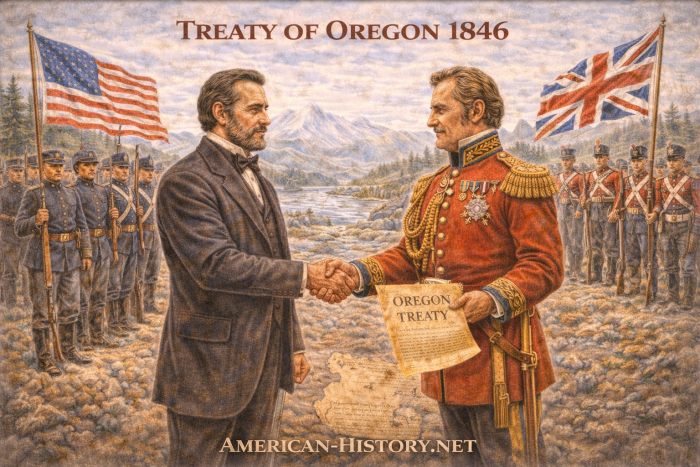
Although the U.S. government signed treaties promising Native tribes permanent ownership of their lands, many of these agreements were later broken. Federal policies forced tribes onto reservations, often far from their ancestral homelands. Conflicts erupted as Native nations resisted displacement, leading to decades of warfare, suffering, and loss.
By the end of the 19th century, most Native Americans had been confined to reservations, marking one of the most tragic chapters in American history.