
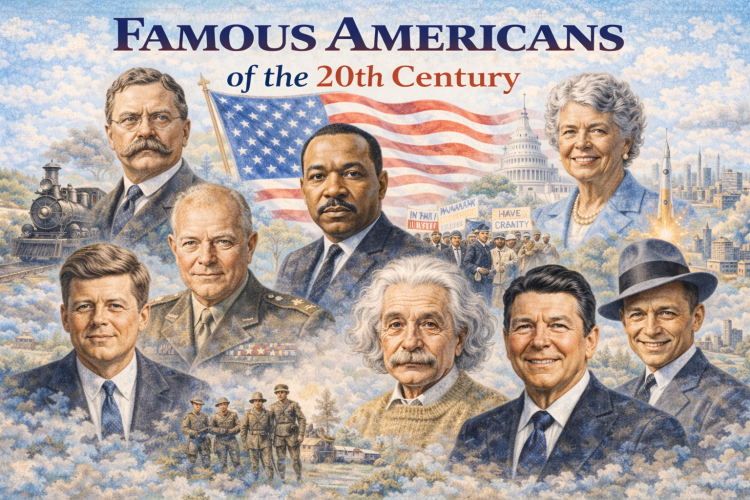
The 20th century reshaped the United States more profoundly than any previous era. From 1901 to 2000, America moved from an industrial nation grappling with internal reform to a dominant global power, shaped by world wars, economic crises, social movements, and technological revolutions. This century witnessed the rise of federal authority, mass consumer culture, civil rights struggles, Cold War rivalry, and rapid scientific advancement. This hub offers a concise overview of the major themes and turning points of 20th Century America, providing essential context and pathways to in-depth articles across the era.
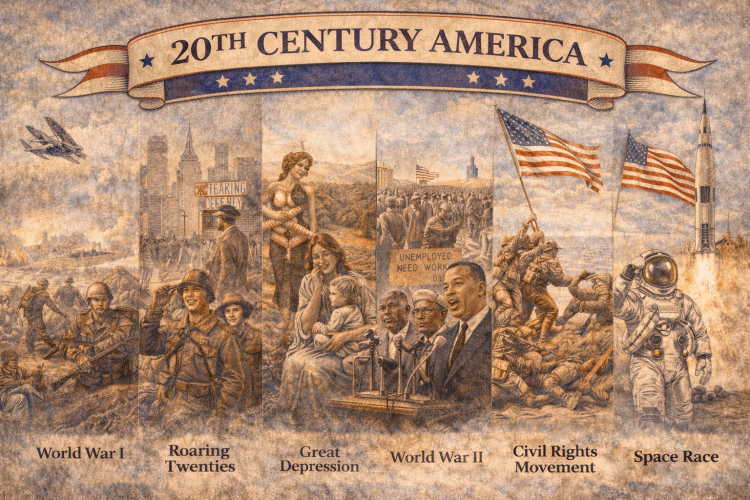
🇺🇸 Explore This Era: 20th Century America (1901–2000)
Explore the forces that reshaped the United States in the 20th century — reform movements, economic booms and crises, global wars, social change, and America’s rise to world leadership.
⚖️ Reform & Social Change
Reform movements that expanded democracy, reshaped government, and challenged inequality.
💰 Prosperity, Crisis & Recovery
Economic highs and lows that shaped everyday American life.
🌍 World Wars & Global Conflict
How global wars transformed America’s military, economy, and role in the world.
☢️ Cold War, Technology & Power
Ideological rivalry, nuclear tension, and technological competition.
The Progressive Era (c. 1901–1917)
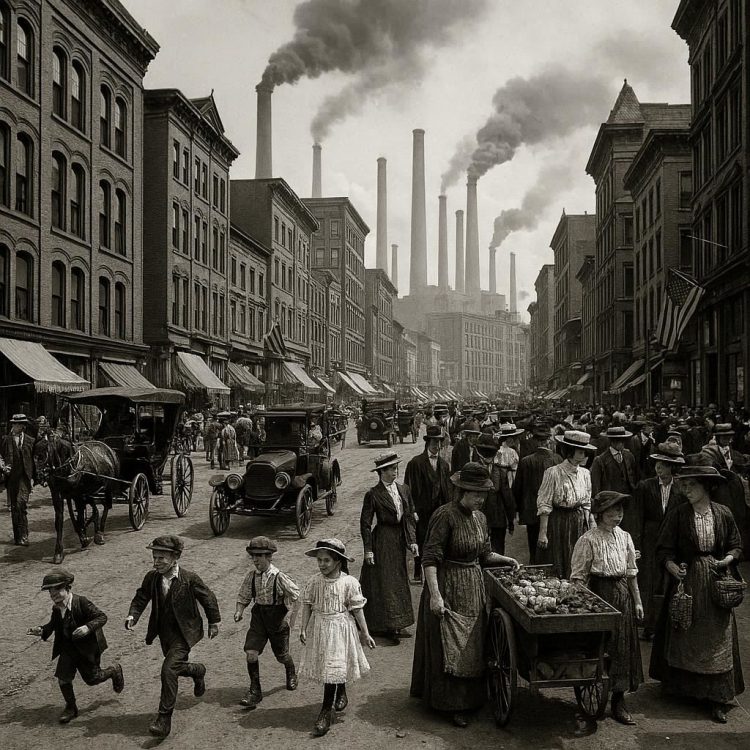
At the start of the century, Americans confronted problems tied to industrial growth: political corruption, unsafe working conditions, monopolies, and poverty in crowded cities. Reformers—often called Progressives—pushed for government action to regulate business and improve public life.
Key reforms included antitrust enforcement, food and drug regulation, labor protections, and democratic changes such as primary elections and direct election of senators. The era also helped build new federal capacity, including the Federal Reserve System (1913), which reshaped national economic policy.
The United States in World War I (1917–1918)
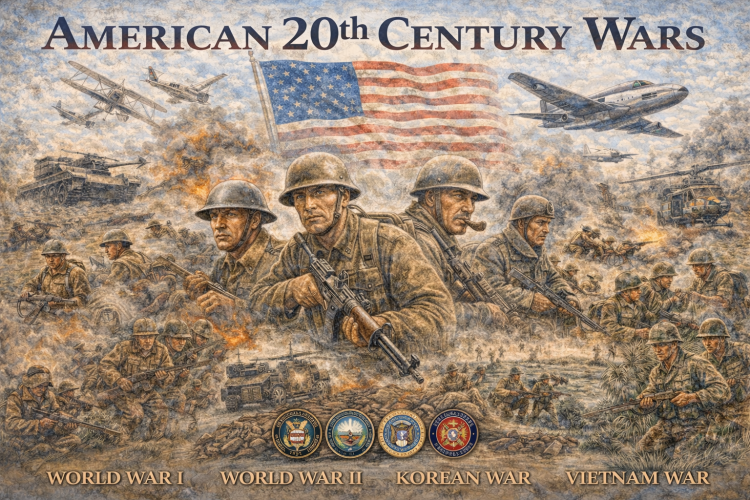
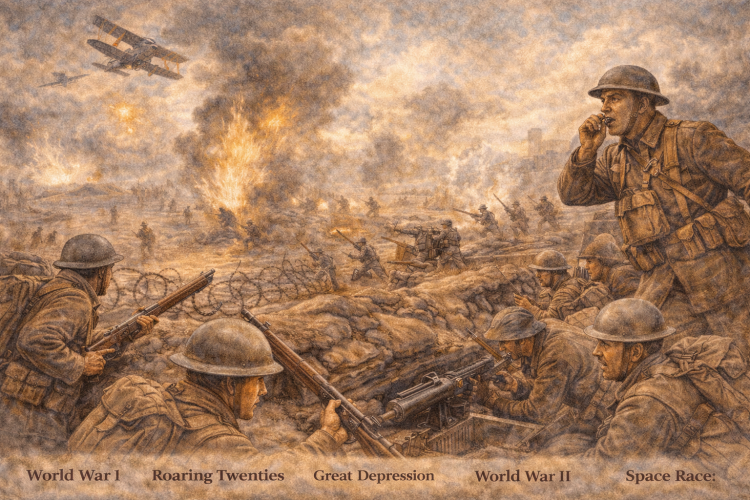
The United States entered World War I in 1917 after rising tensions at sea and worsening relations with Germany. American troops and industrial production helped strengthen the Allied war effort in the final phase of the conflict.
At home, the war accelerated federal power, mobilized industry, and intensified debates about civil liberties and national identity—marking a major step toward America’s expanded international role.
The Roaring Twenties (1920–1929)
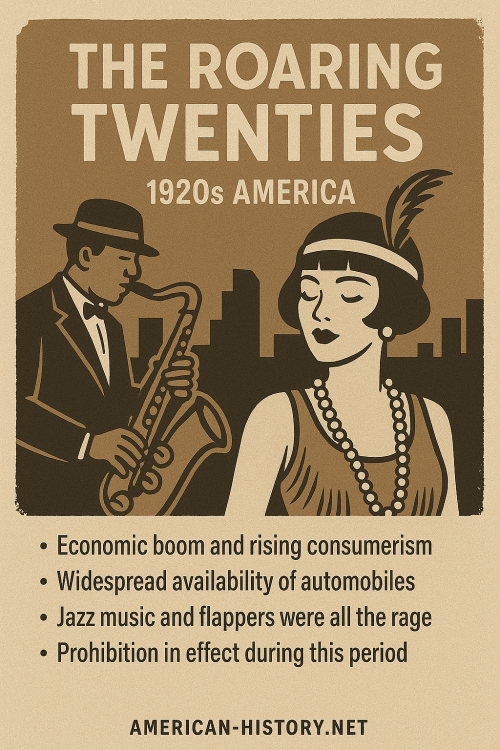
The 1920s brought dramatic cultural and economic change. Mass production and advertising spread consumer goods such as cars, radios, and household appliances, while cities grew and popular culture expanded through film, music, and national media.
The decade also revealed deep tensions—between urban and rural values, modern lifestyles and traditional norms, and rising prosperity alongside economic fragility. That fragility became clear when the stock market crashed in 1929, ending the boom.
Prohibition (1920–1933)
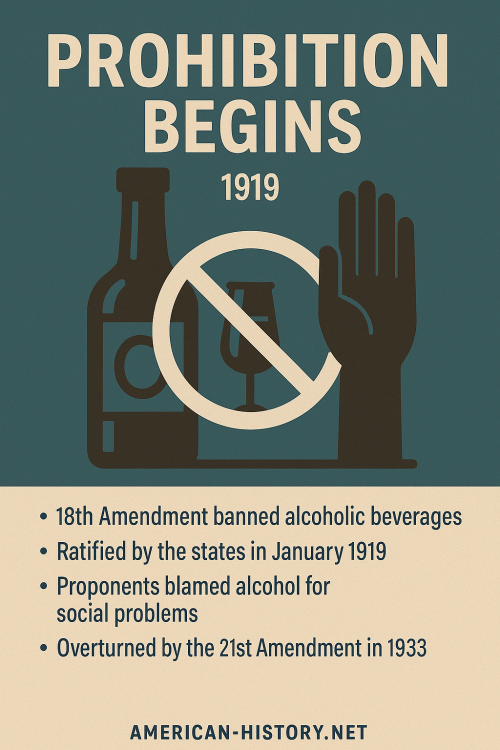
Prohibition was one of the era’s defining social experiments. The 18th Amendment and Volstead Act banned the manufacture and sale of alcohol nationwide, aiming to improve morality and public order.
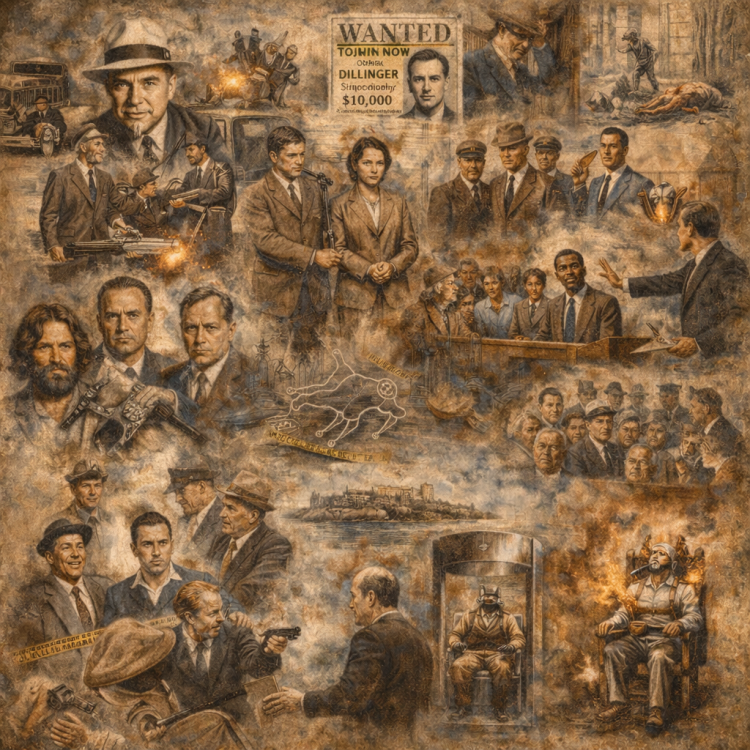
Instead, Prohibition fueled bootlegging, organized crime, and widespread defiance of the law. Public opposition grew, and the policy was repealed by the 21st Amendment in 1933—showing how difficult it can be to enforce sweeping moral reform through legislation.
The Great Depression and the New Deal (1929–late 1930s)
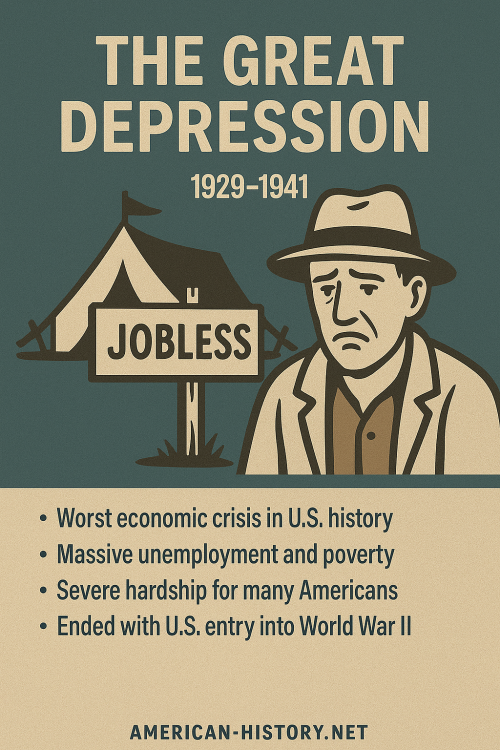
The Great Depression was the most severe economic crisis in modern American history. Bank failures, collapsing demand, and mass unemployment devastated families and communities across the country.
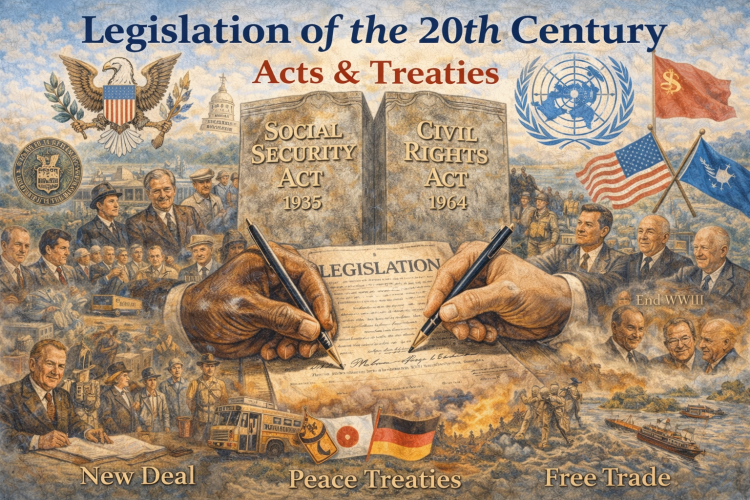
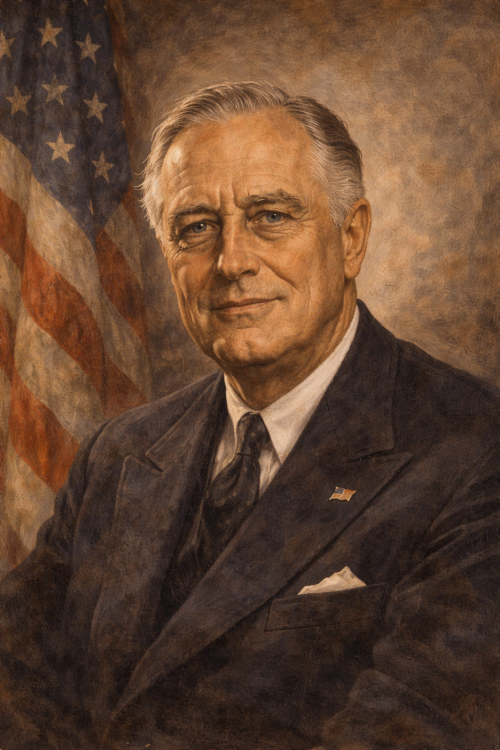
In response, Franklin D. Roosevelt’s New Deal expanded the federal government’s role through relief programs, job creation, banking reforms, and new regulations. The era permanently changed expectations about what government should do during national emergencies.
The United States in World War II (1941–1945)
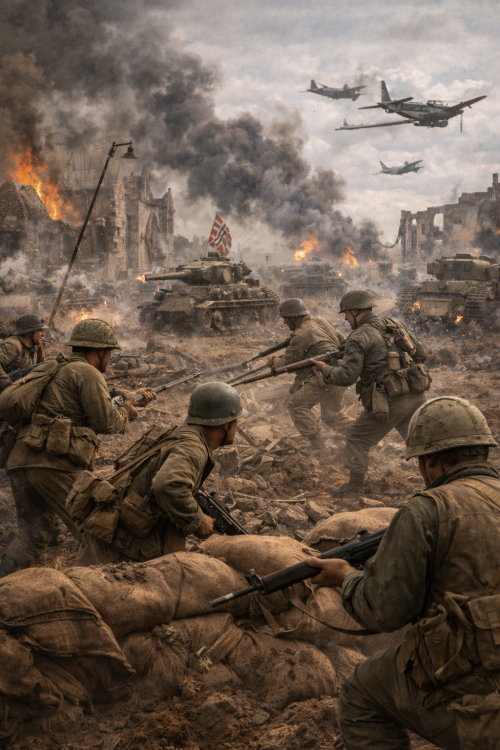
After remaining neutral early in the conflict, the United States entered World War II following Japan’s attack on Pearl Harbor in 1941. American industrial output and military power became decisive in the defeat of Nazi Germany and Imperial Japan.
The war ended with the use of atomic weapons against Hiroshima and Nagasaki and launched the United States into a new position of global leadership—along with new global responsibilities and fears.
Cold War America (1945–1991)
After World War II, the United States and the Soviet Union became rival superpowers. They competed through alliances, espionage, propaganda, and proxy conflicts rather than direct war, shaping global politics for decades.
The Cold War influenced American defense spending, domestic politics, education, and culture—while major flashpoints abroad reinforced the idea that international events could directly affect life at home.
☢️ The Nuclear Arms Race
The arrival of nuclear weapons fundamentally transformed diplomacy, military planning, and global politics. During the Cold War, the United States and the Soviet Union built vast nuclear arsenals and developed strategies based on deterrence, creating a constant fear of catastrophic global war.
At the same time, nuclear competition accelerated scientific research, military innovation, and technological development, becoming a central pillar of the broader Cold War struggle for political and ideological supremacy.
The Civil Rights Movement (1950s–1960s)
One of the most important domestic transformations of the century was the fight against segregation and discrimination. Activists used legal challenges, boycotts, marches, and civil disobedience to demand equal rights and protection under the law.
The movement led to landmark federal legislation, including the Civil Rights Act (1964) and Voting Rights Act (1965), reshaping American democracy and setting long-term struggles over equality and citizenship.
Postwar Prosperity and Social Change (1945–1970s)
After World War II, many Americans experienced rising wages, suburban growth, and expanding consumer culture. At the same time, the era saw major change: youth culture, women’s activism, new immigration patterns, and debates about the direction of American society.
Prosperity was real—but uneven—and political conflict grew sharper as Americans argued over rights, war, and the limits of government power.
The Space Race and Technological America
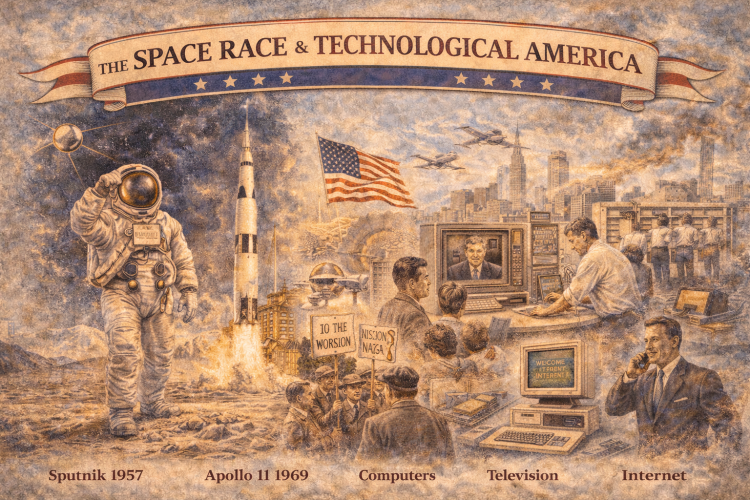
The Cold War competition extended beyond Earth. The Soviet launch of Sputnik (1957) shocked the United States and accelerated investment in science and education.
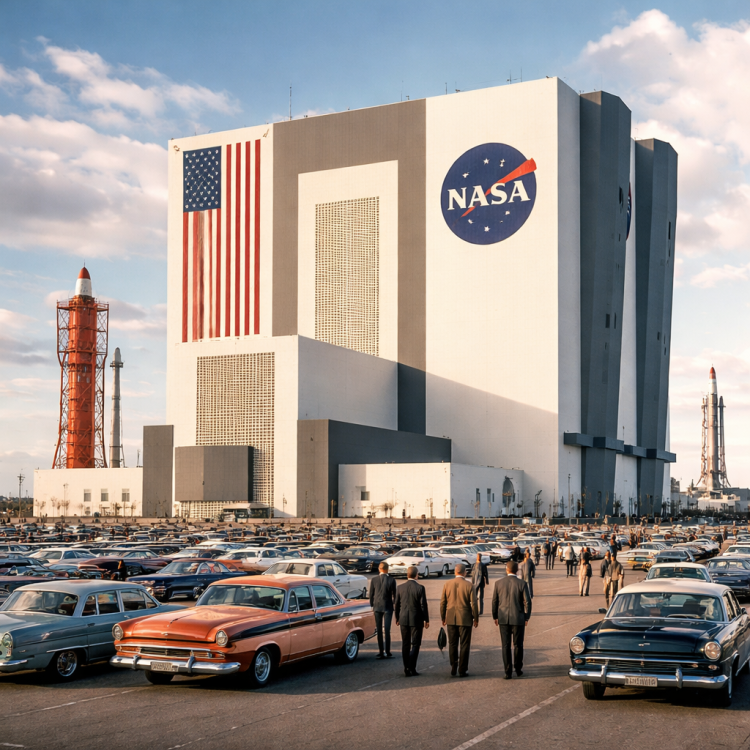
America’s moon landing in 1969 became a defining symbol of national capability, while late-century innovations—computing, satellites, and communications—helped shape the modern economy and daily life.
America at Century’s End (1970s–2000)
The late 20th century brought economic restructuring, cultural debate, and shifting foreign policy priorities. The collapse of the Soviet Union in 1991 ended the Cold War and left the United States as the world’s dominant power.
By 2000, America’s influence was global—economically, militarily, and culturally—while unresolved issues around inequality, rights, and America’s role in the world continued into the next century.
❓ 20th Century America — Frequently Asked Questions
What defined the Progressive Era?
The Progressive Era focused on reform, government regulation, and social activism aimed at addressing industrial corruption, inequality, and political abuses.
Why is the Roaring Twenties historically significant?
The Roaring Twenties marked rapid economic growth, mass consumer culture, cultural innovation, and social change—while masking economic weaknesses that led to the Great Depression.
What caused the Great Depression?
The Great Depression resulted from economic speculation, banking failures, overproduction, and the 1929 stock market crash, leading to widespread unemployment and poverty.
How did World War II change the United States?
World War II transformed the U.S. into a global superpower, expanded industrial capacity, strengthened federal authority, and reshaped American society at home and abroad.
What was the Cold War?
The Cold War was a prolonged rivalry between the United States and the Soviet Union, defined by ideological conflict, nuclear tension, proxy wars, and global competition without direct warfare.
Why was the Civil Rights Movement important?
The Civil Rights Movement dismantled legalized segregation, expanded voting rights, and redefined American democracy through landmark legislation and grassroots activism.
🧠 20th Century America — Knowledge Quiz
Test your understanding of reform, war, economic change, and American global power.
📚 Glossary: 20th Century America
Progressive Era
A reform period focused on regulation, social justice, and expanded democracy.
Roaring Twenties
A decade of economic growth, cultural change, and consumer expansion during the 1920s.
Great Depression
A severe global economic downturn beginning in 1929 marked by unemployment and poverty.
Cold War
An ideological and geopolitical rivalry between the U.S. and Soviet Union.
Civil Rights Movement
A struggle to end racial segregation and secure equal rights for African Americans.
Superpower
A nation with dominant military, economic, and global influence.