What Was Happening in 1815?
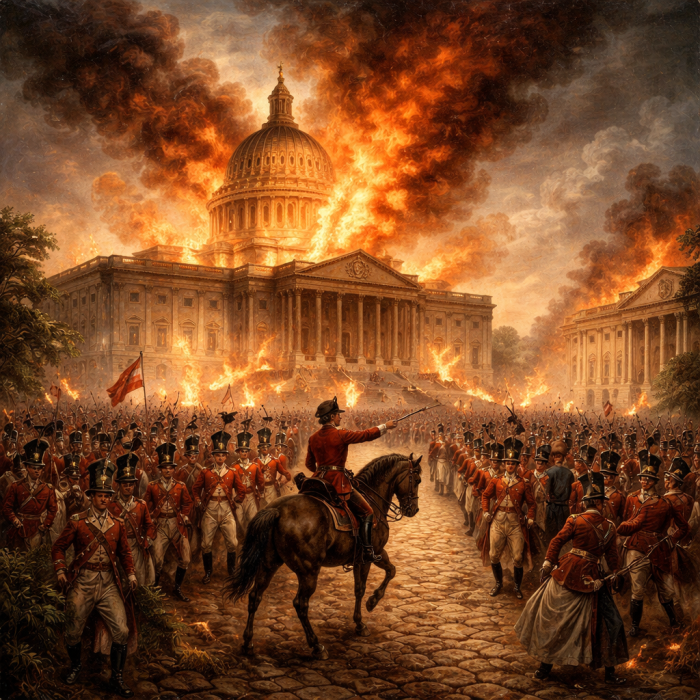
In 1815, the United States and Great Britain were still engaged in the War of 1812, a conflict that had begun three years earlier over issues of trade, maritime rights, and territorial expansion.
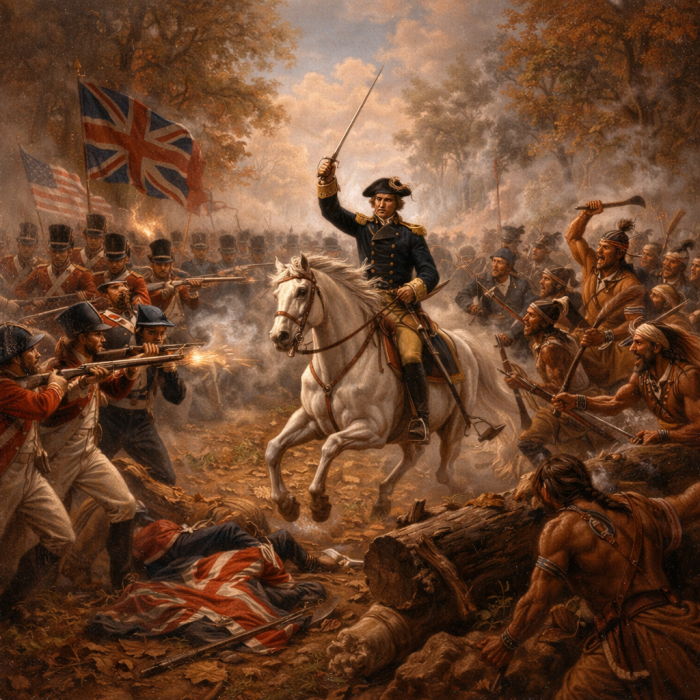
One of the major causes of the war was British impressment—the practice of seizing American sailors and forcing them to serve in the Royal Navy during Britain’s war with France. Britain also restricted American trade and supported Native American resistance to U.S. expansion in the western territories. These actions led the United States to declare war in June 1812.
Background of the Battle of New Orleans
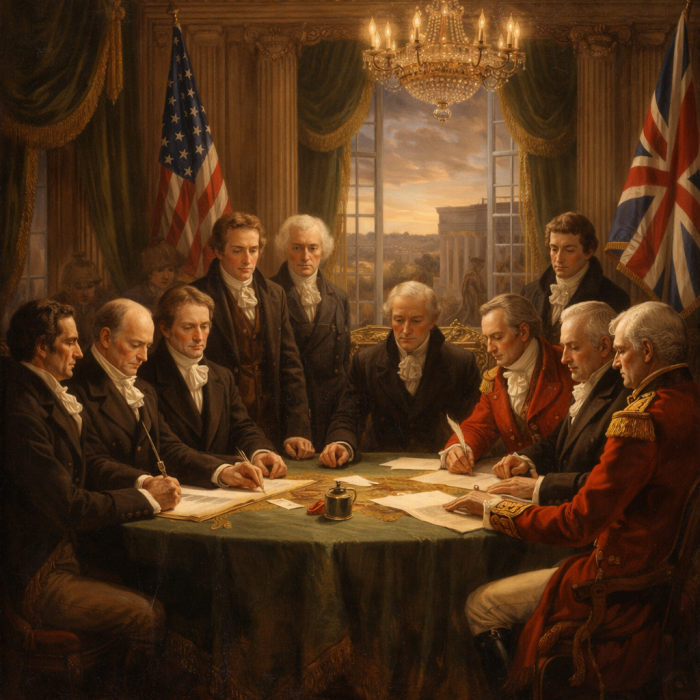
By late 1814, both the American and British governments had grown weary of the war. Peace negotiations were held in Europe, and on December 24, 1814, representatives from both nations signed the Treaty of Ghent, formally ending the conflict.
However, news of the treaty had not yet reached North America. As a result, fighting continued, including the Battle of New Orleans, which took place weeks after the treaty was signed.
The British objective was to capture New Orleans, a vital port city that controlled access to the Mississippi River and the Louisiana Territory. Control of the city would have given Britain significant economic and strategic leverage over the United States.
When and Where Was the Battle Fought?
The Battle of New Orleans was fought on January 8, 1815, near the Chalmette Plantation, approximately five miles southeast of New Orleans, Louisiana.
Commanders on Both Sides
The American forces were commanded by Major General Andrew Jackson, who would later become the 7th President of the United States.
British forces were led by Major General Sir Edward Pakenham, with naval support provided by Admiral Sir Alexander Cochrane.
The Fighting
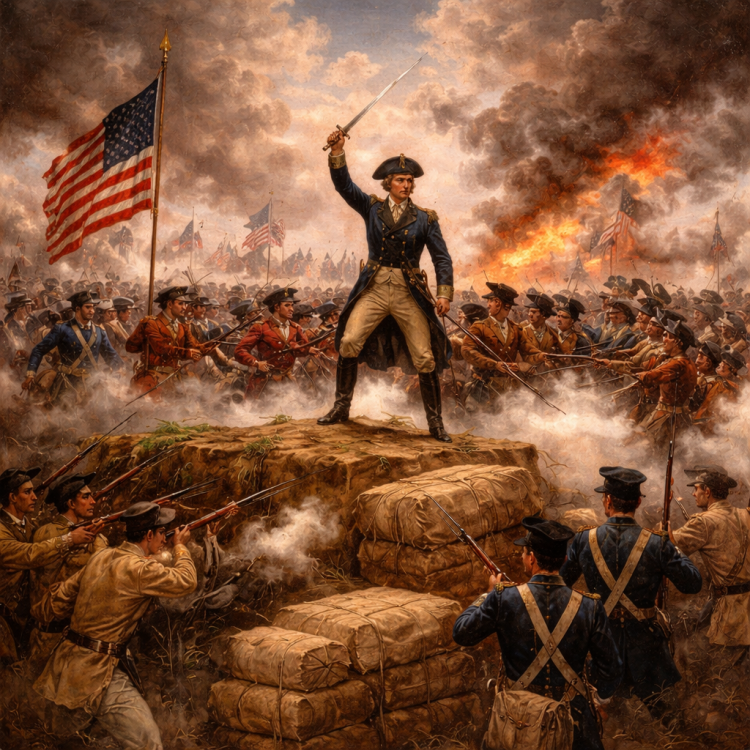
Anticipating a British assault, Andrew Jackson constructed a strong defensive position known as Jackson’s Line, consisting of earthworks, artillery, and infantry positions along the Rodriguez Canal.
When British forces launched a frontal attack, they were met with devastating artillery and rifle fire. The American defensive position proved extremely effective, while British coordination and visibility were poor.
British troops repeatedly attempted to breach the American line but suffered heavy casualties. General Pakenham was killed during the assault, along with several other senior officers. The few British units that reached the American defenses were quickly repelled.
The battle ended in a decisive American victory.
Outcome and Aftermath
The British suffered approximately 2,000 casualties, including killed, wounded, and captured. American losses were remarkably light, with fewer than 100 total casualties.
Although the battle had no effect on the already-signed Treaty of Ghent, it had a profound impact on American morale and national identity. The victory made Andrew Jackson a national hero and reinforced the belief that the United States had successfully defended its independence.
The Battle of New Orleans became one of the most famous engagements of the War of 1812 and is often remembered as its symbolic conclusion.