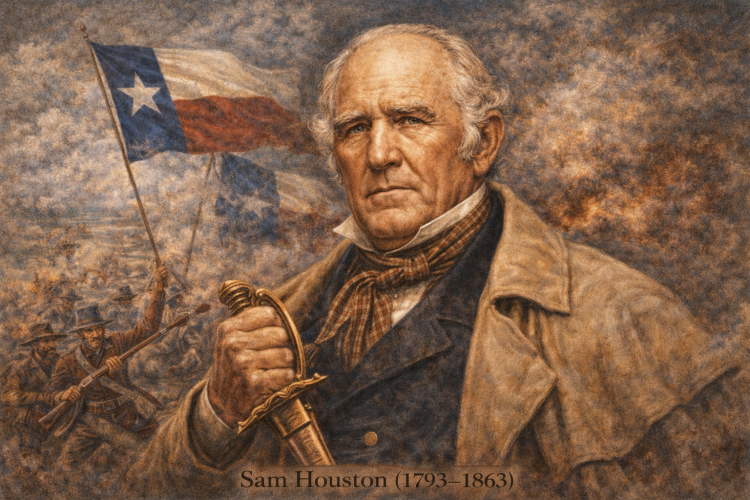
The Mexican–American War was fought between the United States and Mexico from 1846 to 1848. The conflict developed after the United States annexed Texas in 1845, a move Mexico refused to recognize.
At the heart of the dispute was Texas’s southern boundary. Mexico claimed the border lay at the Nueces River, while the United States asserted that it extended to the Rio Grande. These competing claims created rising tensions and eventually led to armed conflict.
By the end of the war, the United States had gained more than 500,000 square miles of former Mexican territory, permanently altering the political map of North America.
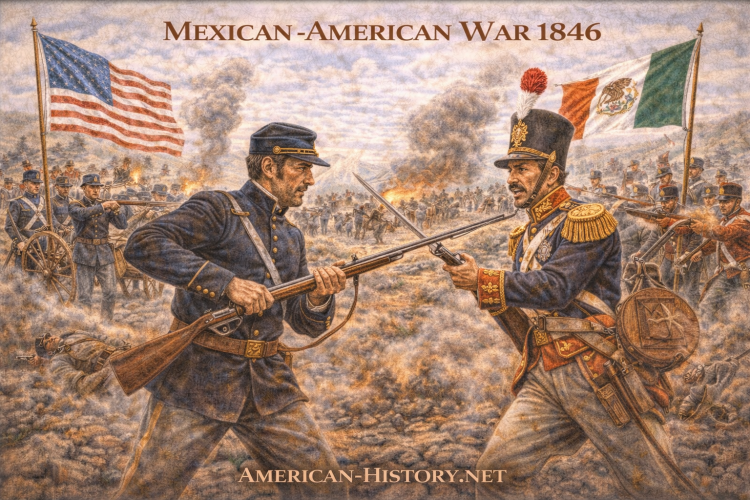
Outbreak of the Mexican–American War
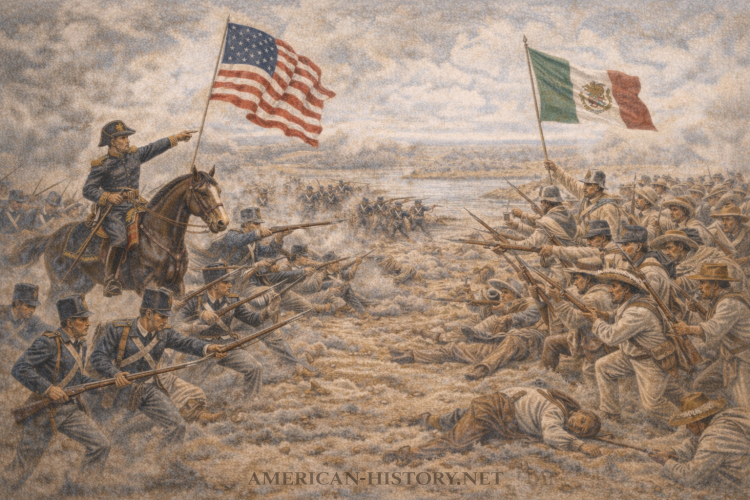
Fighting began on April 25, 1846, when Mexican and American forces clashed in the disputed border region near the Rio Grande. U.S. troops under General Zachary Taylor had been sent to the area to assert the American claim.
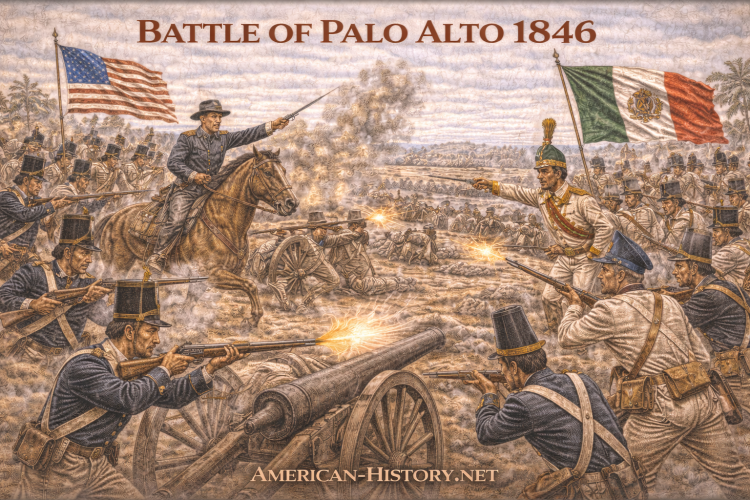
The first major engagements, including the Battle of Palo Alto and the Battle of Resaca de la Palma, resulted in American victories and forced Mexican forces to withdraw south of the Rio Grande.
American Forces Advance into Mexico
After securing the contested border region, American forces crossed into Mexican territory. U.S. armies captured several key cities, including Monterrey and Santa Fe, and eventually advanced toward the Mexican capital.
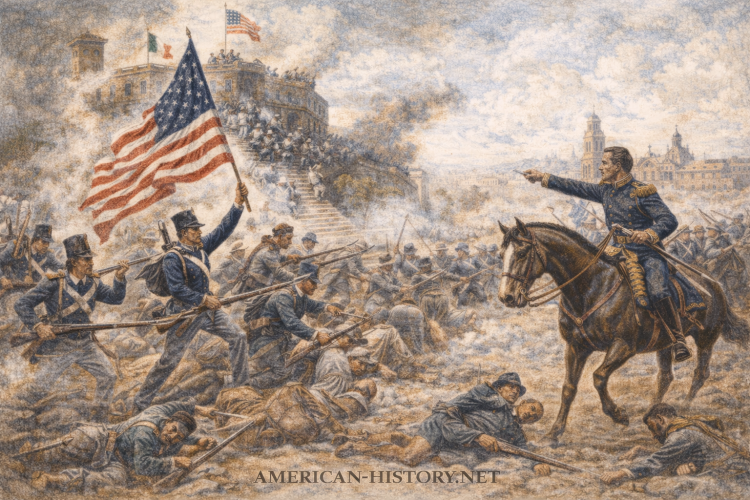
In 1847, American troops entered and occupied Mexico City, effectively ending large-scale Mexican resistance and bringing the war to a decisive conclusion.
Peace Negotiations and the Treaty of Guadalupe Hidalgo
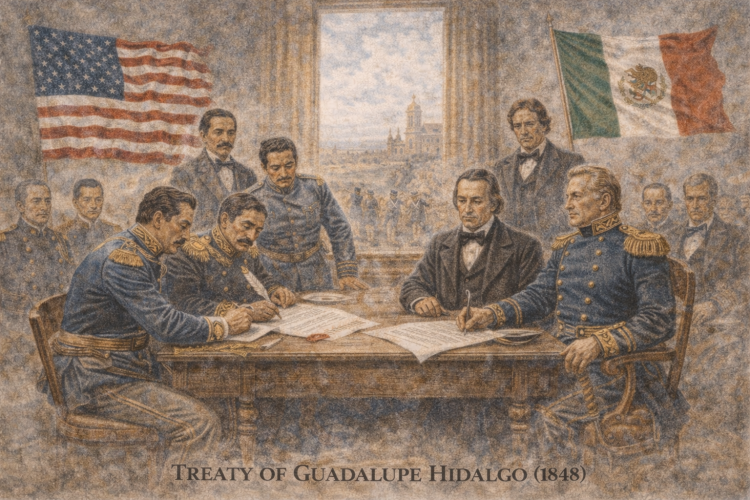
Following the fall of Mexico City, both nations moved toward ending the conflict. Peace negotiations resulted in the Treaty of Guadalupe Hidalgo, signed in February 1848 and ratified later that year.
The treaty officially ended the war and established the Rio Grande as the recognized border between Texas and Mexico.
Aftermath of the War
Under the terms of the treaty, Mexico ceded vast territories to the United States, including present-day California, Nevada, Utah, Arizona, New Mexico, and parts of Colorado and Wyoming.
In return, the United States paid $15 million to Mexico. The war intensified national debates over westward expansion and slavery, contributing to growing sectional tensions that would later lead to the American Civil War.