Background of the Nez Perce War
The Nez Perce were a Native American people who lived in the Pacific Northwest, primarily in what is now Idaho, Oregon, and Washington. They had occupied this region for generations and regarded it as their ancestral homeland.
As the United States expanded westward during the 19th century, increasing numbers of settlers entered Nez Perce territory. Tensions grew as settlers demanded land and resources that Native peoples depended upon.
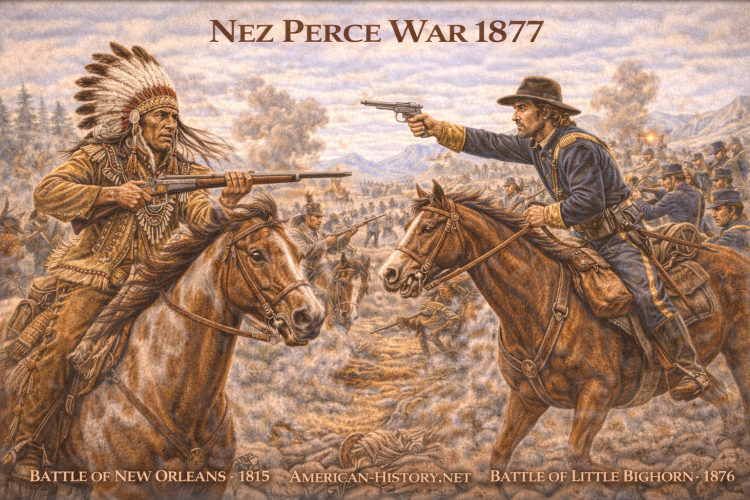
In 1855, the U.S. government signed a treaty with the Nez Perce that allowed them to retain approximately 7.5 million acres of land while maintaining certain rights and privileges. However, following the discovery of gold in the region, the government attempted to reduce the size of the Nez Perce lands and relocate the tribe to a reservation in Idaho.
Some Nez Perce bands agreed to the new terms, but others rejected what they viewed as a violation of the original treaty. Resistance to forced relocation ultimately led to armed conflict between Nez Perce warriors and the United States Army.
When and Where the War Was Fought
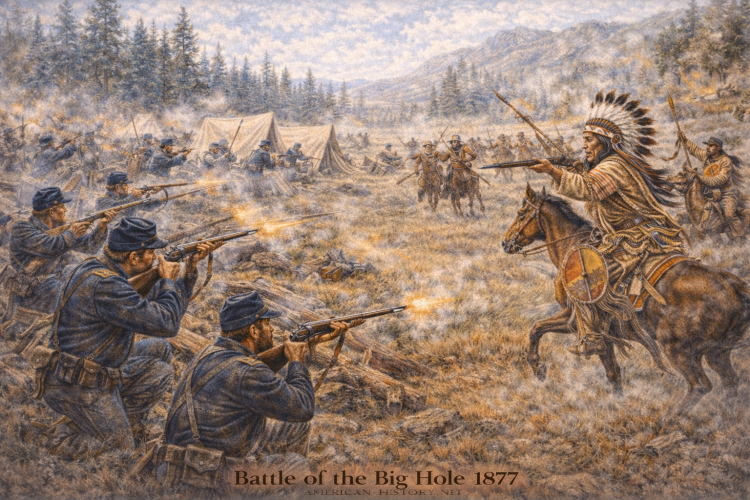
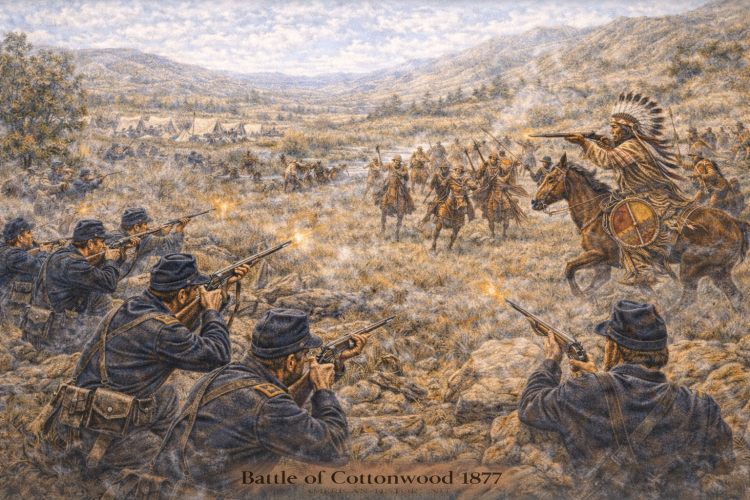
The Nez Perce War began in June 1877 and ended in October 1877. Fighting occurred across a wide area of the western United States, including parts of Idaho, Oregon, Wyoming, and Montana.
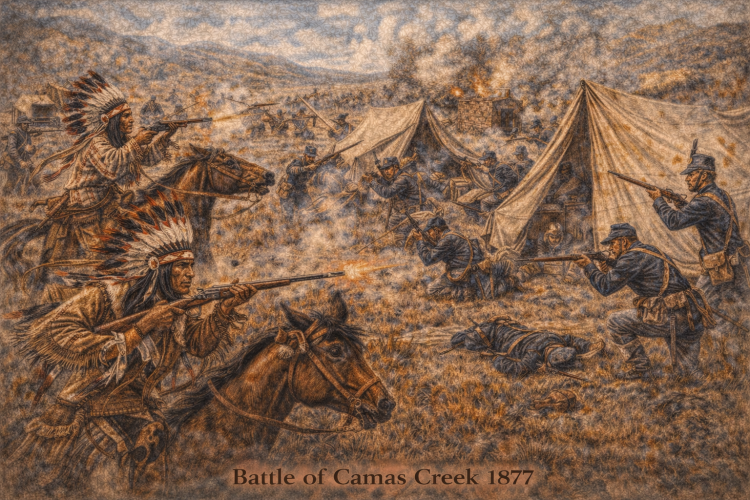
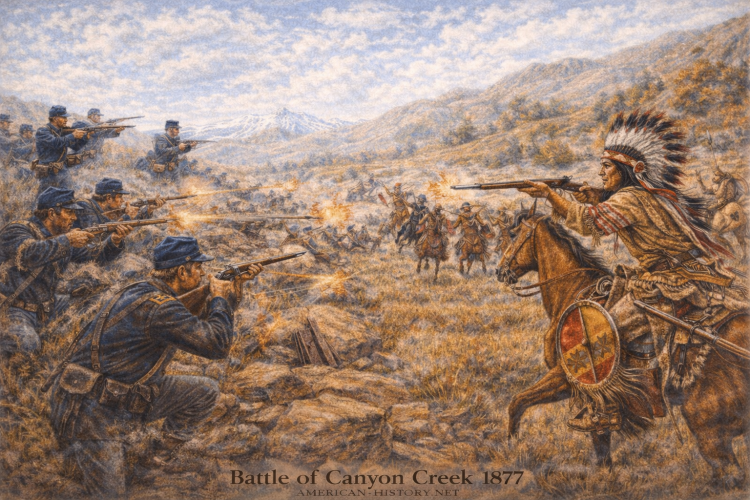
Rather than a single campaign, the war consisted of a prolonged retreat by the Nez Perce, punctuated by numerous battles and skirmishes as they attempted to evade pursuing U.S. forces.
Commanders and Forces Involved
On the United States side, the primary commanders were General Oliver Otis Howard and General Nelson A. Miles. The U.S. Army committed roughly 1,500 soldiers to the campaign.
The Nez Perce forces consisted of approximately 250 to 300 warriors, led by several leaders, the most well-known being Chief Joseph. Despite being heavily outnumbered, the Nez Perce demonstrated exceptional mobility, discipline, and tactical skill throughout the conflict.
The Fighting and the Retreat
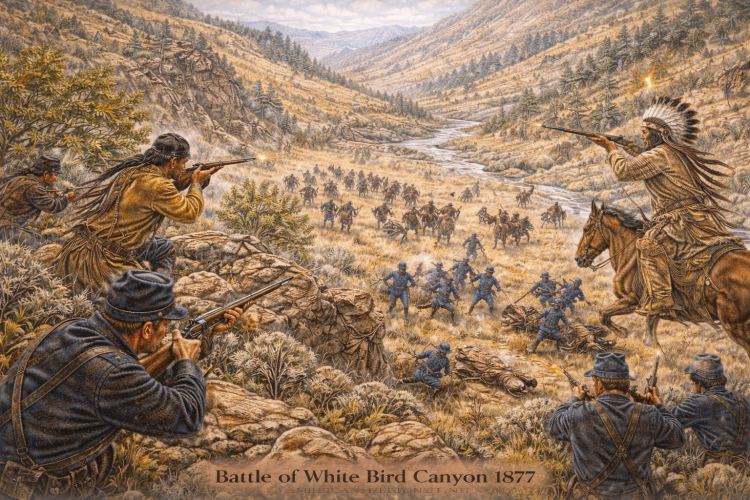
The war opened with the Battle of White Bird Canyon in June 1877, where Nez Perce warriors defeated a U.S. Army detachment. This early victory set the tone for much of the conflict.
As U.S. forces intensified their pursuit, the Nez Perce began a long retreat toward the southeast. Along the way, they fought a series of engagements while protecting non-combatants, including women, children, and elders.
Despite repeated encounters with the U.S. Army, the Nez Perce were rarely decisively defeated. Over the course of the campaign, they fought nearly 18 engagements, including several major battles, while traveling more than 1,000 miles.
At one point, the Nez Perce sought refuge with the Crow Nation, but assistance was refused. Hoping to escape U.S. forces, they continued northward toward the Canadian border.
Surrender and End of the War
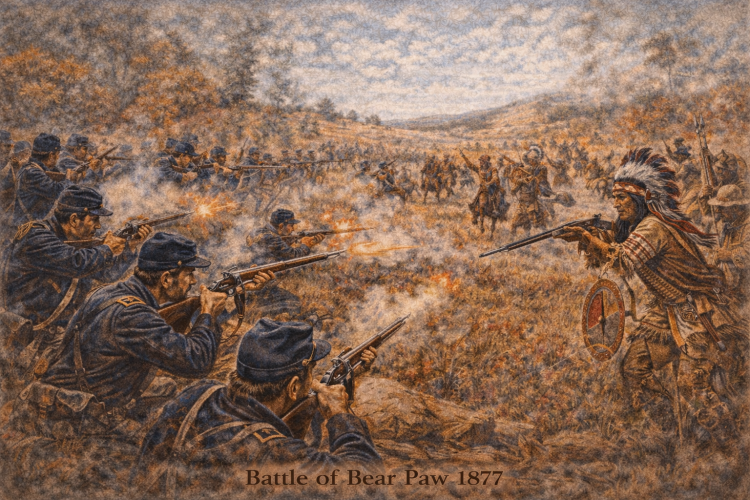
In late September 1877, the Nez Perce were intercepted approximately 40 miles from Canada near Bear Paw Mountain in Montana. After several days of fighting in harsh conditions, the Nez Perce were forced to surrender on October 5, 1877.
Chief Joseph’s surrender effectively ended the war. Many Nez Perce survivors were removed from their homeland and sent to reservations, marking the end of organized Nez Perce resistance.
Historical Significance
The Nez Perce War is remembered as one of the most remarkable resistance campaigns fought by Native Americans during the westward expansion of the United States. Despite overwhelming odds, the Nez Perce demonstrated strategic skill, endurance, and determination.
The conflict highlighted the consequences of broken treaties and forced relocation policies and remains a significant chapter in the history of Native American resistance in the 19th century.