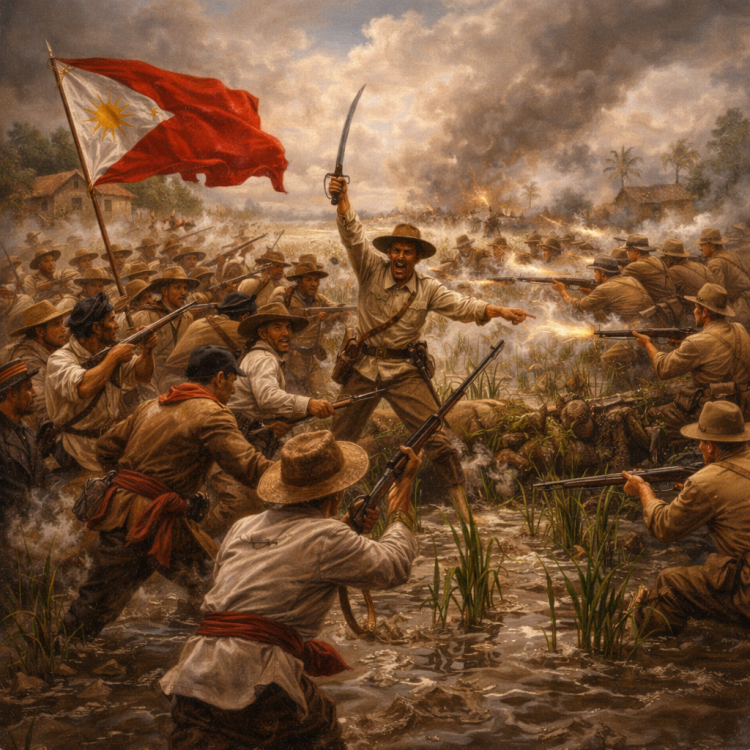
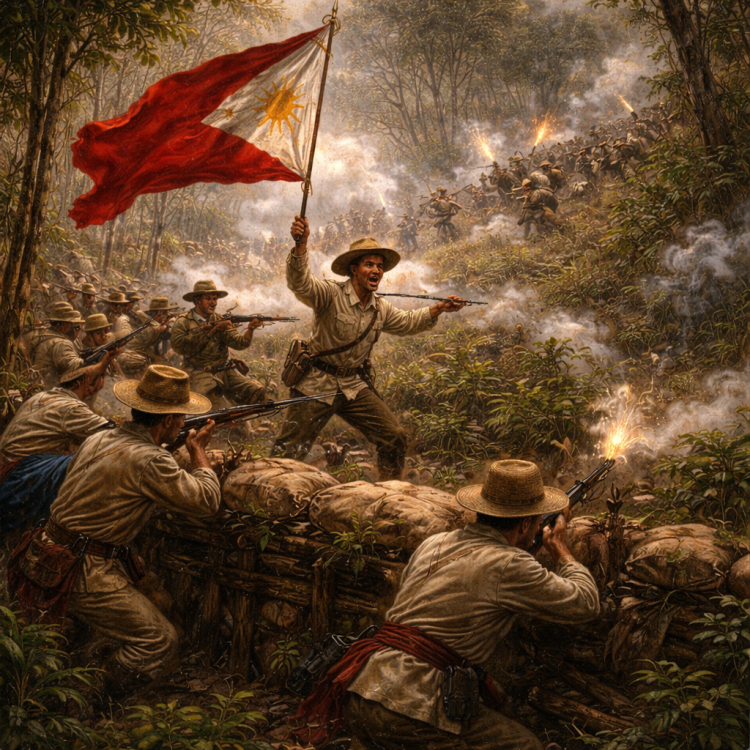
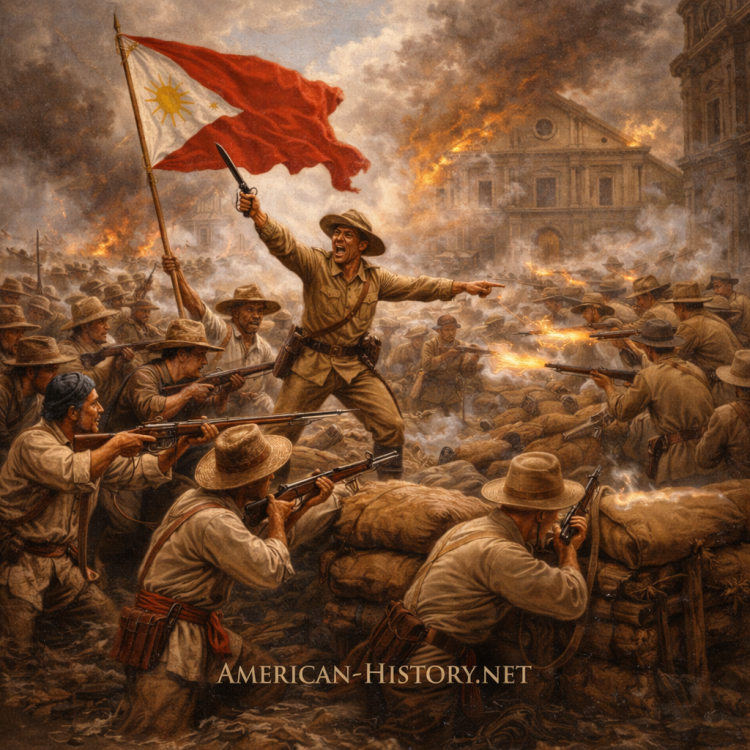
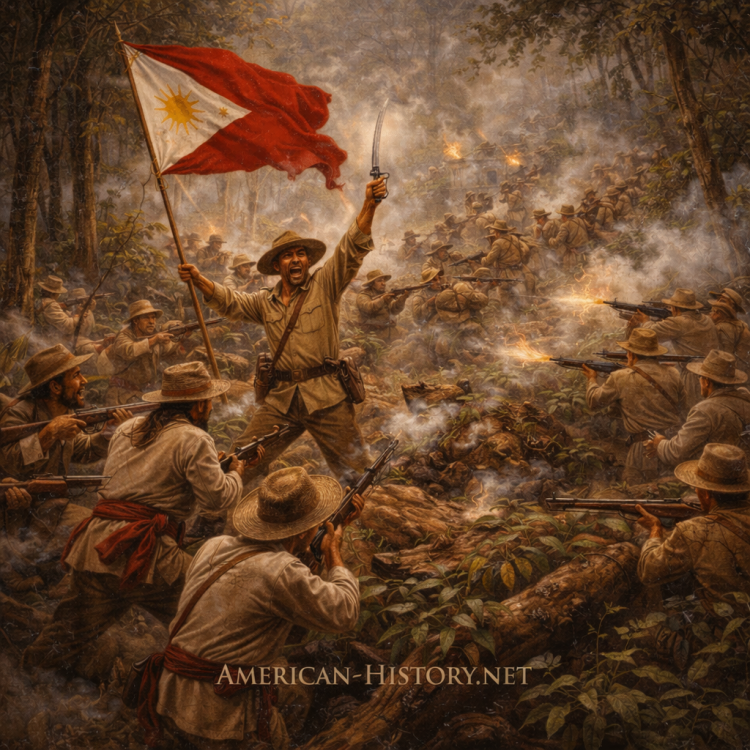
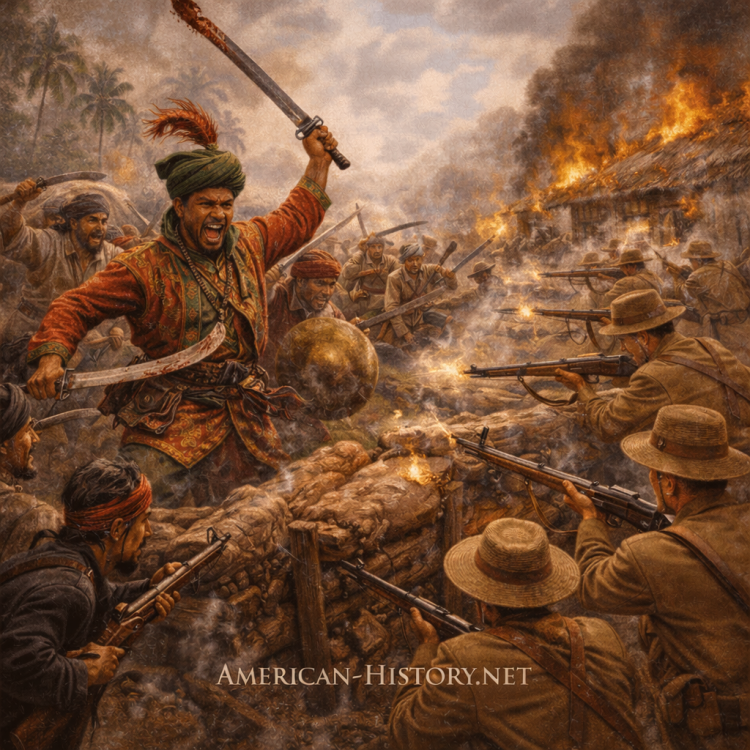
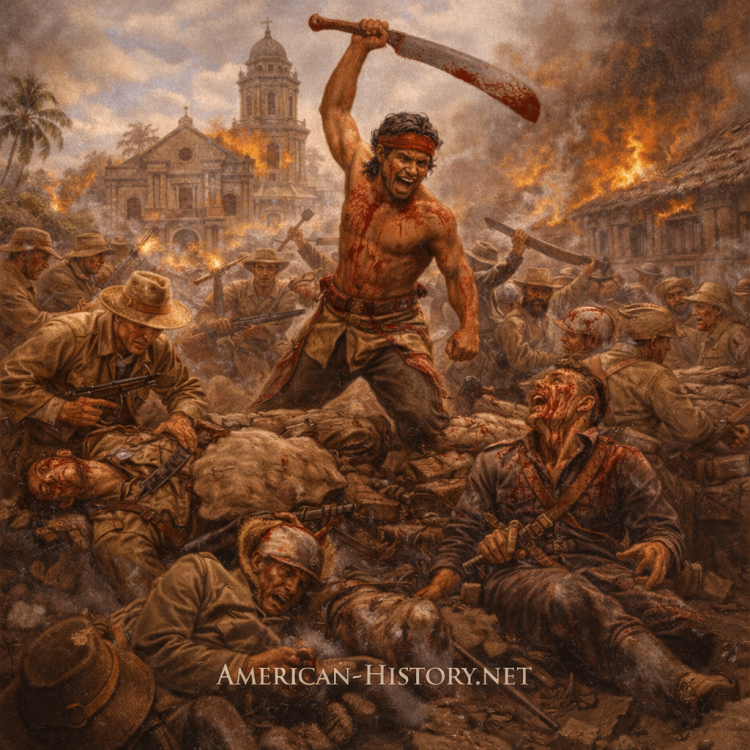
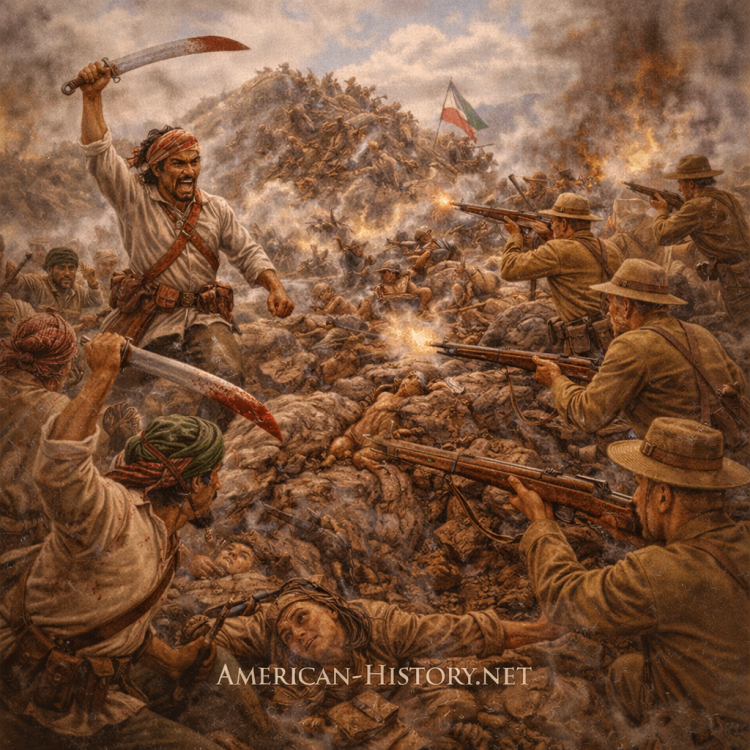
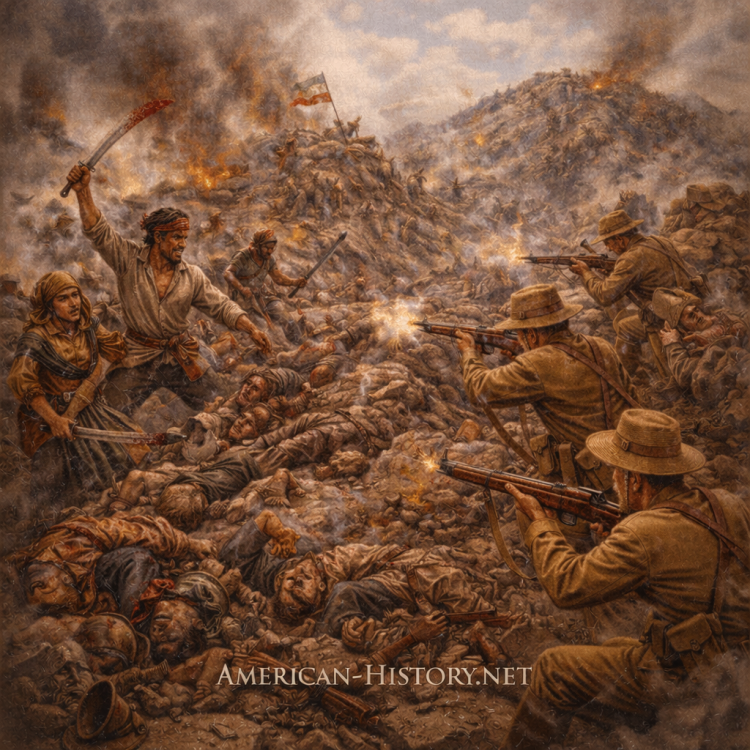
Start of the Philippine–American War
During the Spanish–American War, the United States cooperated with Filipino revolutionary forces who were fighting to end Spanish colonial rule in the Philippines. These revolutionaries hoped that Spain’s defeat would lead to full independence for their country.
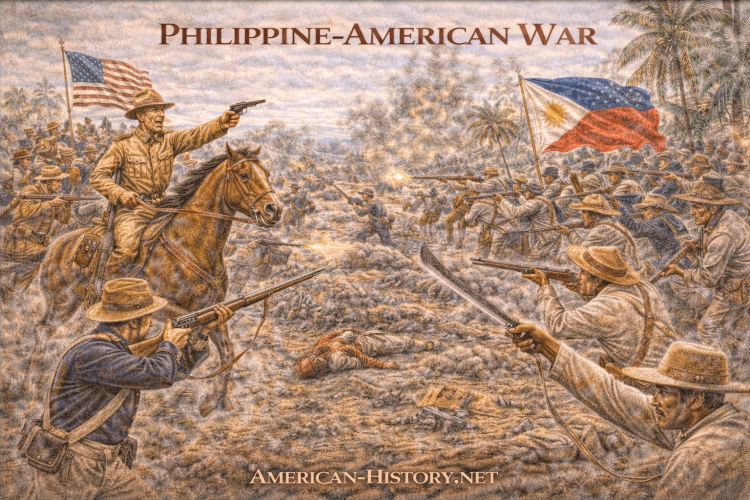
However, after Spain was defeated in 1898, the United States assumed control of the Philippines instead of granting independence. This decision deeply disappointed Filipino leaders and led to growing tensions between American forces and Filipino revolutionaries.
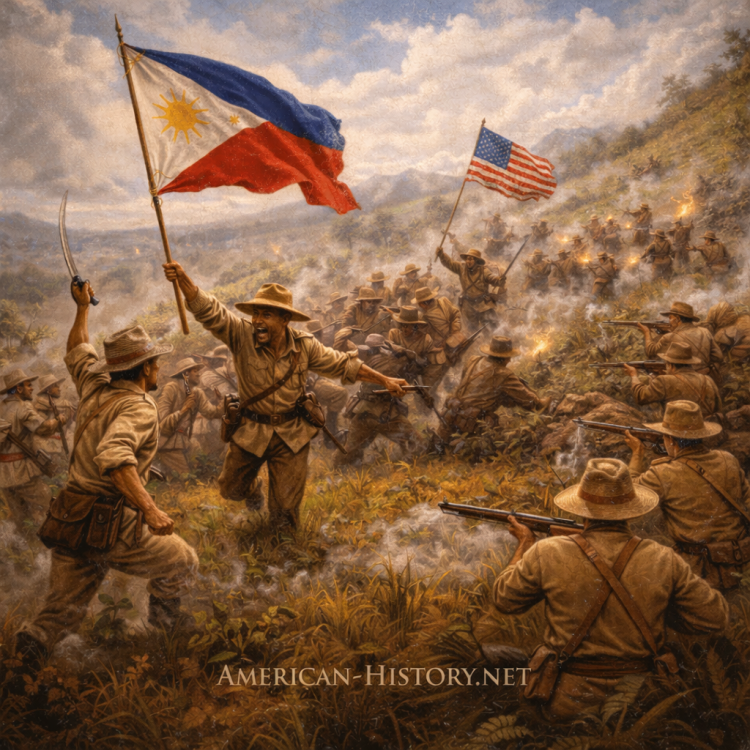
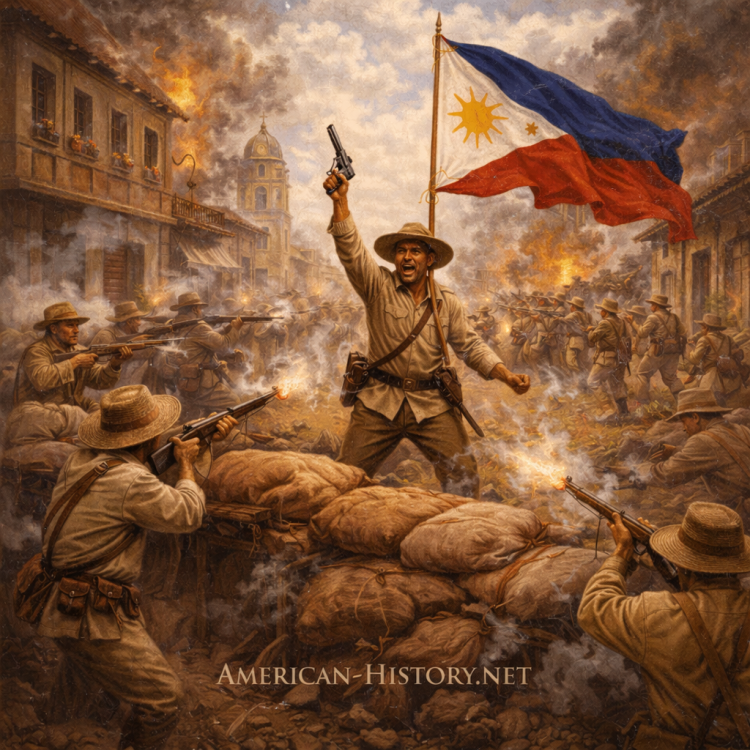
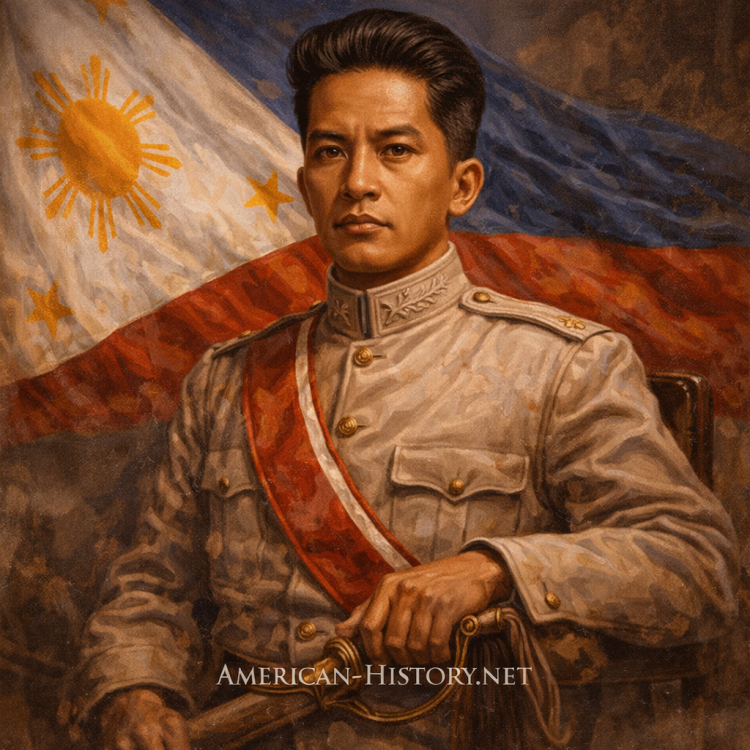
On February 4, 1899, fighting broke out when an American soldier shot a Filipino soldier near Manila. Although Emilio Aguinaldo, the leader of the Filipino revolutionary government, attempted to negotiate a ceasefire, the American military rejected the proposal. Open warfare soon followed.
Although the Philippine–American War officially ended in 1902, armed resistance against American rule continued in the southern Philippines, particularly among Moro Muslim communities in Mindanao and the Sulu Archipelago.
These later campaigns—commonly referred to as the Moro Rebellion or Moro Wars—are closely connected to U.S. colonial rule but are generally treated by historians as a distinct phase of conflict rather than part of the main Philippine–American War.
Moro-era conflicts covered on this site include:
- Moro Rebellion (1899–1913)
- First Battle of Bud Dajo (1906)
- Second Battle of Bud Dajo (1911)
- Battle of Bud Bagsak (1913)
- The Balangiga Massacre (1901)
These events occurred after the formal end of the Philippine–American War but are included here to provide a complete picture of American military involvement and resistance in the Philippines during the early 20th century.
The Fighting
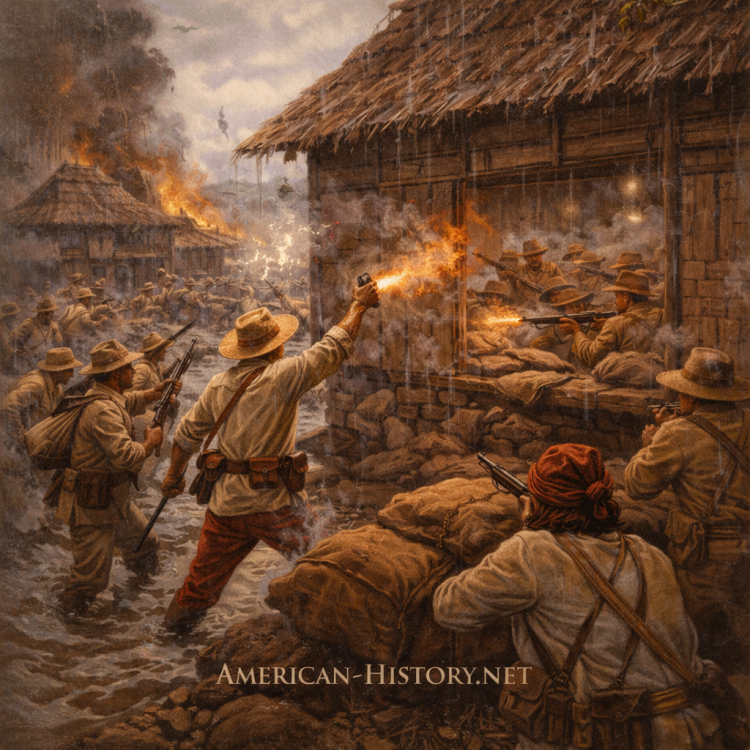
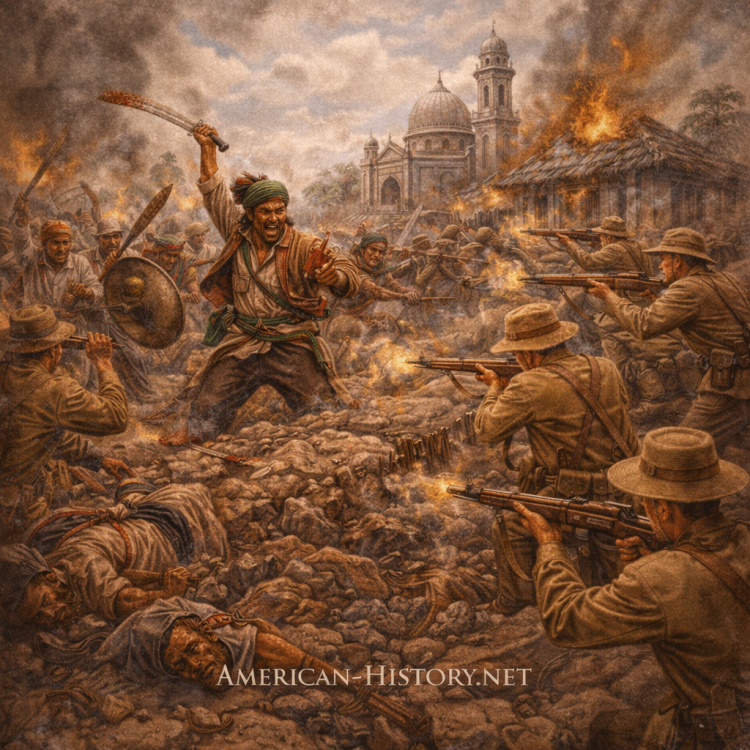
American forces in the Philippines were better equipped and professionally trained, giving them a clear advantage in conventional battles. Filipino fighters, however, were highly familiar with the local terrain and increasingly relied on guerrilla warfare rather than direct engagements.
As the conflict expanded, the United States sent more than 100,000 troops to the Philippines and recruited local auxiliaries. While large-scale fighting declined after 1901, resistance continued in various regions. Emilio Aguinaldo was captured in 1901, and by 1902 the main phase of organized resistance had been suppressed.
Start and End of the War
The Philippine–American War officially began on February 4, 1899, and ended on July 2, 1902, when the United States declared the conflict over.
Size of the Armies
At its peak, the United States deployed approximately 126,000 troops in the Philippines. Between 5,000 and 6,000 American soldiers died during the war, with several thousand more wounded.
The Filipino revolutionary forces numbered roughly 100,000 fighters, many of whom were irregular troops. An estimated 20,000 Filipino combatants were killed during the conflict.
Result and Aftermath
The war ended in an American victory. Despite Filipino hopes for independence after the defeat of Spain, the Philippines remained under American rule until 1946.
The conflict had severe consequences for civilians. Disease, famine, and displacement led to the deaths of an estimated 250,000 Filipino civilians. American counterinsurgency tactics included village destruction and the relocation of civilians into controlled zones. After the war, the U.S. government restructured Philippine society, disestablished the Catholic Church as a state institution, and introduced English as the language of administration and education.
- Major campaigns of the Philippine–American War
- Guerrilla warfare tactics used by Filipino forces
- Civilian life during the conflict
- U.S. military administration in the Philippines
- Transition from war to American colonial rule