



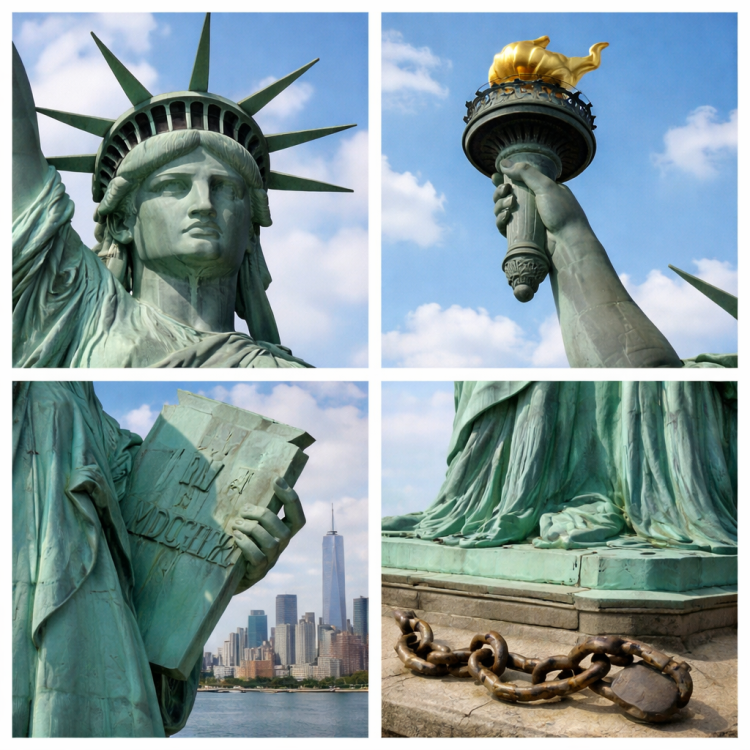
The Statue of Liberty is one of the most recognizable landmarks in the United States and a lasting symbol of freedom, democracy, and opportunity. Standing on Liberty Island in New York Harbor, the colossal neoclassical statue has welcomed visitors and immigrants alike since its dedication in 1886.
A gift from France to the United States, the statue commemorated the centennial of American independence and celebrated the shared republican ideals of both nations. Over time, it became closely associated with immigration, hope, and the promise of a new life in America.

Origins and Construction
The idea for the Statue of Liberty was first proposed by Édouard de Laboulaye, a French historian and abolitionist who admired the American experiment in democracy. He envisioned a monument that would honor liberty and strengthen Franco-American friendship.

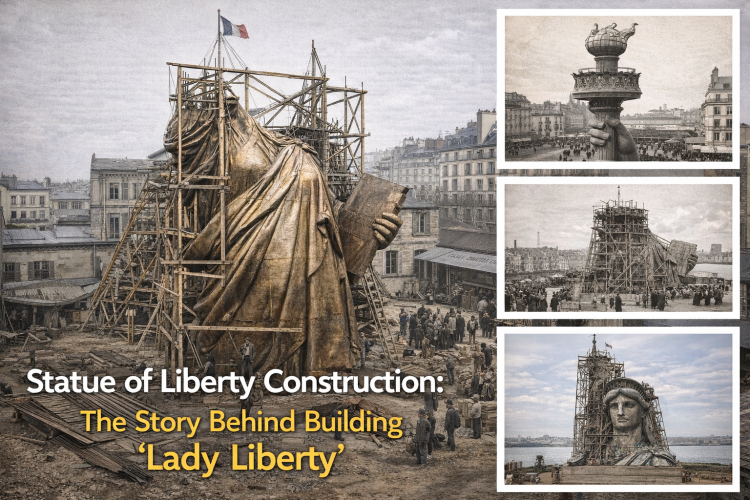
French sculptor Frédéric Auguste Bartholdi embraced the concept and designed the statue, drawing inspiration from the Roman goddess Libertas. Construction began in France in 1875, with different components completed and displayed publicly before final assembly.
The statue was built in sections and shipped across the Atlantic in crates. After arriving in New York Harbor, it was assembled atop a specially constructed pedestal and officially dedicated on October 28, 1886.
Engineering and Design
While Bartholdi designed the statue’s exterior, the internal structure was engineered by Gustave Eiffel, later famous for the Eiffel Tower. Eiffel created an innovative iron framework that allowed the statue to withstand wind, weather, and temperature changes while maintaining its graceful form.
This combination of artistic vision and advanced engineering made the Statue of Liberty one of the great structural achievements of the 19th century.
Symbolism and Meaning
Every element of the Statue of Liberty carries symbolic meaning.
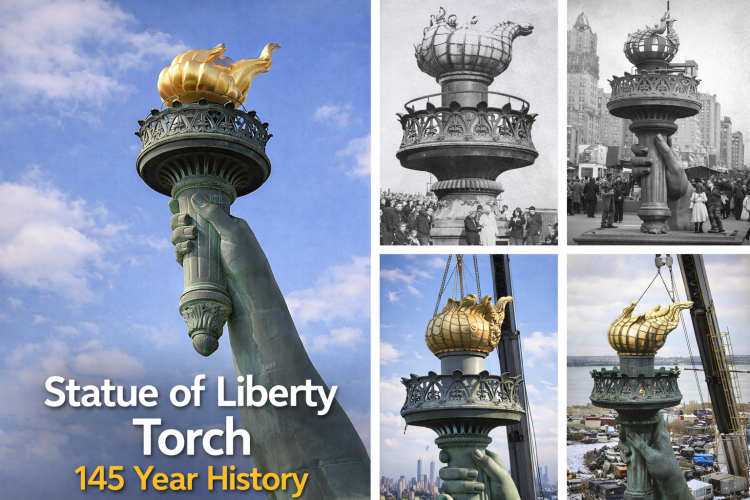
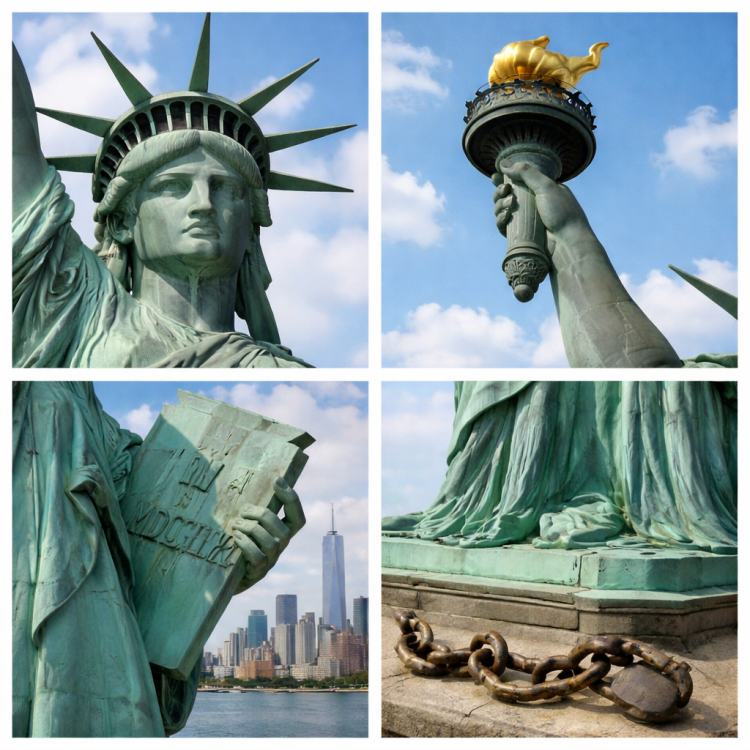
The raised torch represents enlightenment and the guiding light of freedom. In her left hand, Liberty holds a tablet inscribed with the date July 4, 1776, symbolizing the rule of law and American independence.
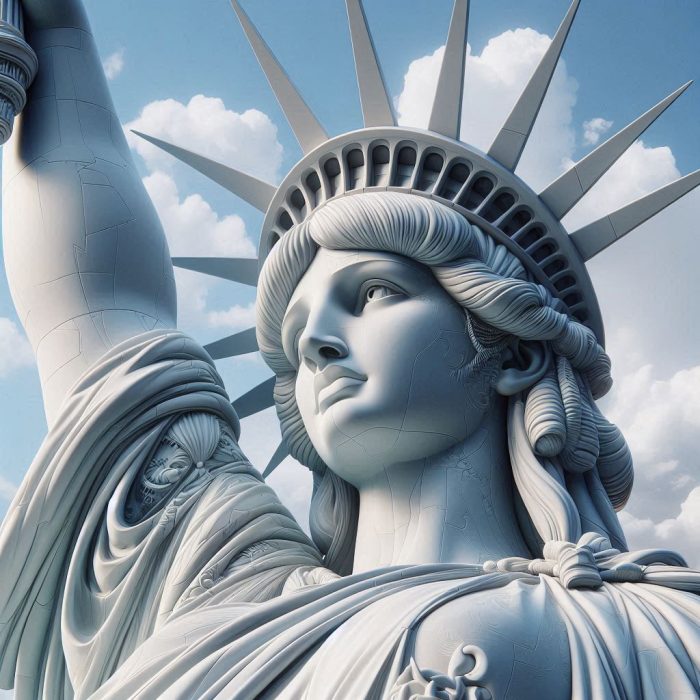
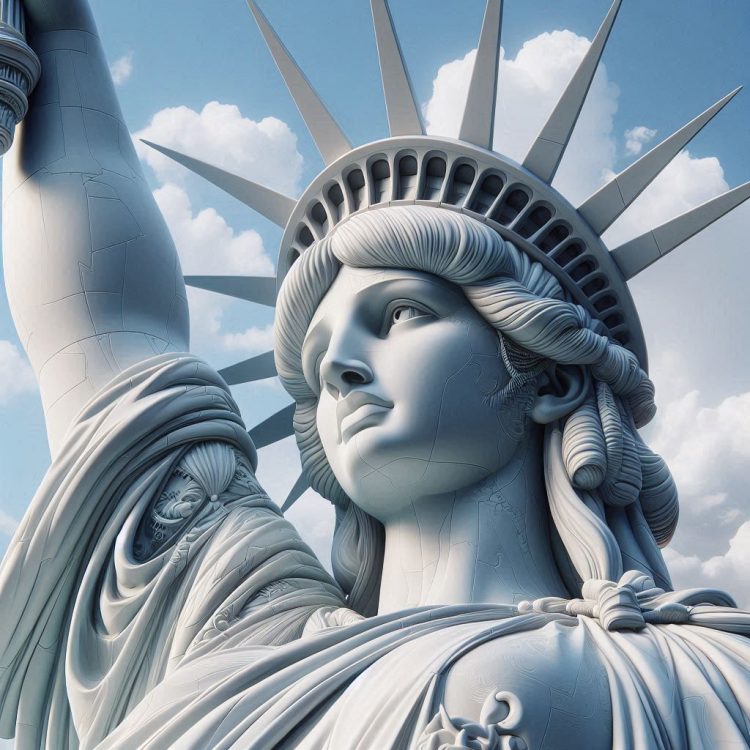
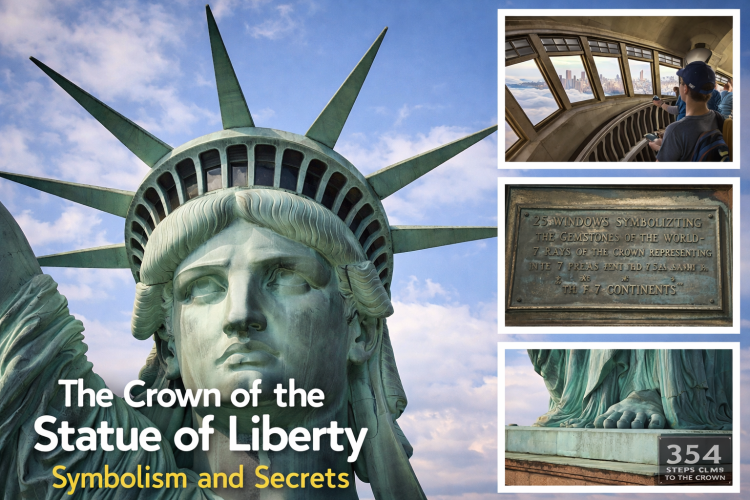
At her feet lie broken chains, representing liberation from oppression and tyranny. The statue’s crown, with its seven rays, symbolizes liberty extending across the seven continents and seven seas, reinforcing the idea that freedom is universal.
📏 Statue of Liberty — Height & Dimensions
The Statue of Liberty was engineered on a monumental scale. The chart below breaks down her height and major structural measurements.
| Component | Measurement |
|---|---|
| Height of Statue (heel to head) | 151 feet (46 m) |
| Pedestal & Foundation | 154 feet (47 m) |
| Total Height (ground to torch) | 305 feet (93 m) |
| Torch length | 29 feet |
| Face height | 8 feet |
| Crown spikes | 7 rays |
At the time of its completion in 1886, the Statue of Liberty was among the tallest structures ever built and remains one of the most recognizable monuments in the world.
Immigration and Legacy
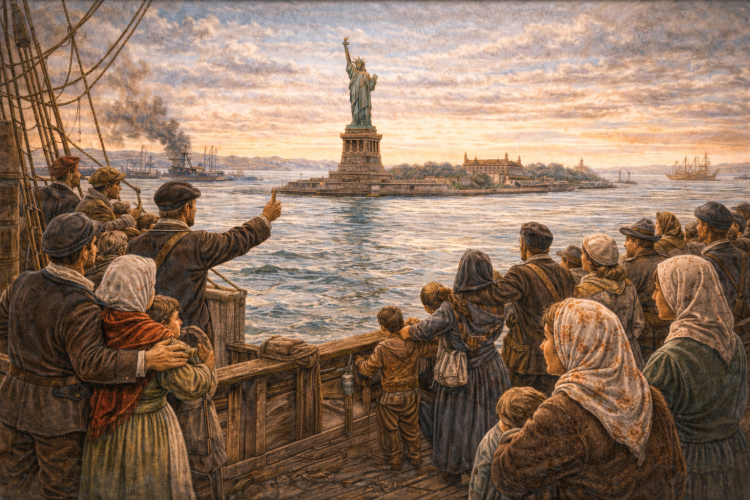
For millions of immigrants arriving by sea in the late 19th and early 20th centuries, the Statue of Liberty was often the first sight of America. Though originally intended as a symbol of liberty and republican values, the statue became inseparably linked to the immigrant experience and the hope of opportunity.
Today, the Statue of Liberty remains a powerful cultural and political symbol, representing ideals that continue to shape American identity and global perceptions of freedom.
🗽 Explore the Statue of Liberty
Discover in-depth articles exploring the statue’s many dimensions — from its construction and symbolism to the people, events, and ideas that shaped one of America’s most powerful symbols.
🛠️ Construction & Engineering
How the statue was designed, built, transported, and assembled across two continents.
🔥 Symbolism & Components
The torch, crown, tablet, and broken chains — and what each element represents.
🕰️ Timeline & Milestones
A chronological journey from concept to completion and beyond.
👤 Famous People
The visionaries, engineers, and supporters behind Lady Liberty.
🏝️ Liberty Island
The history of the island that became home to an American icon.
⭐ Facts, Myths & Cultural Impact
Surprising facts, legends, and the statue’s influence worldwide.
More than a monument, the Statue of Liberty is a living symbol—one that reflects the ideals, struggles, and aspirations of the United States. From its origins in France to its enduring presence in New York Harbor, Lady Liberty continues to inspire people around the world and remains one of the most enduring symbols of freedom in human history.