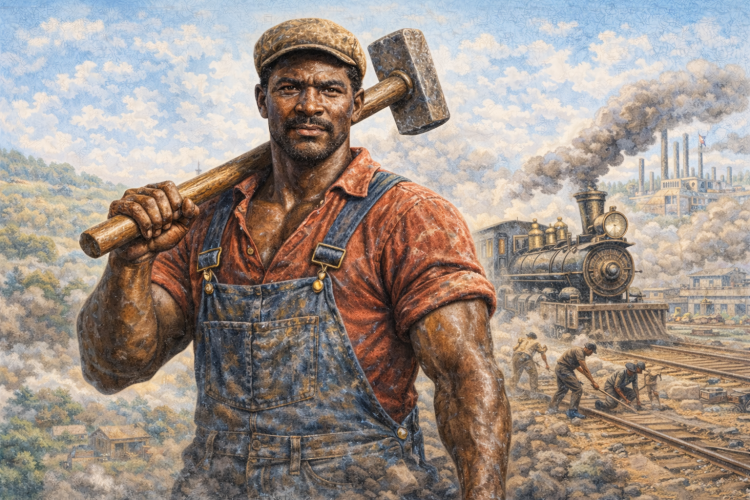
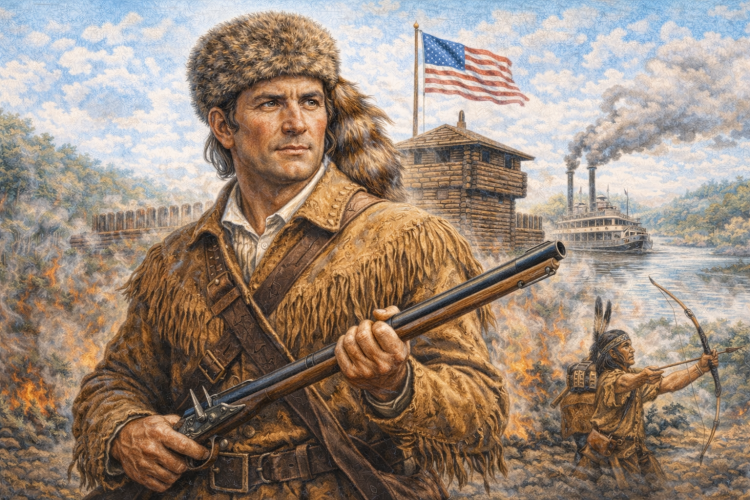
The 19th century was one of the most transformative periods in United States history. Between 1801 and 1900, America expanded across a continent, endured civil war, industrialized rapidly, and emerged as a growing global power. This era produced leaders, innovators, military figures, reformers, and cultural icons whose actions permanently shaped the nation.
This page highlights some of the most influential Americans of the 19th century. While several individuals listed here have dedicated articles, others are presented as historical overviews, with additional biographies planned for the future.
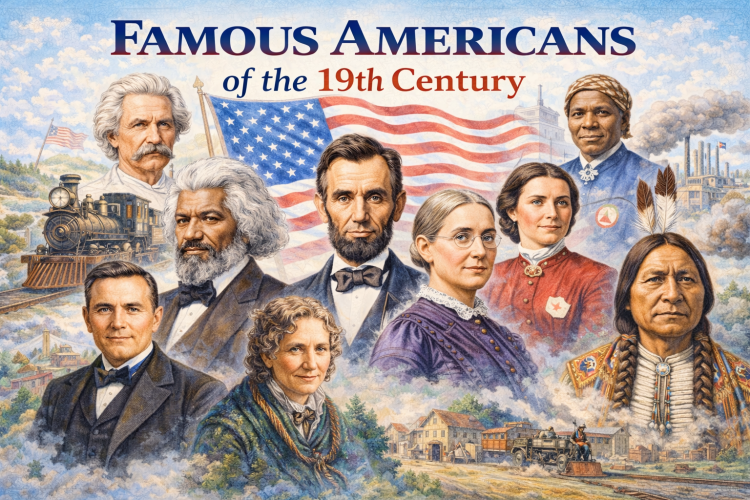
Note: This hub highlights influential figures of 19th-century American history. Some individuals link to detailed articles, while others are presented as overview summaries. Additional biographies are being added over time.
Thomas Jefferson
Thomas Jefferson served as the third President of the United States, beginning his presidency in 1801. A Founding Father and the principal author of the Declaration of Independence, Jefferson played a central role in shaping the nation’s early ideals.
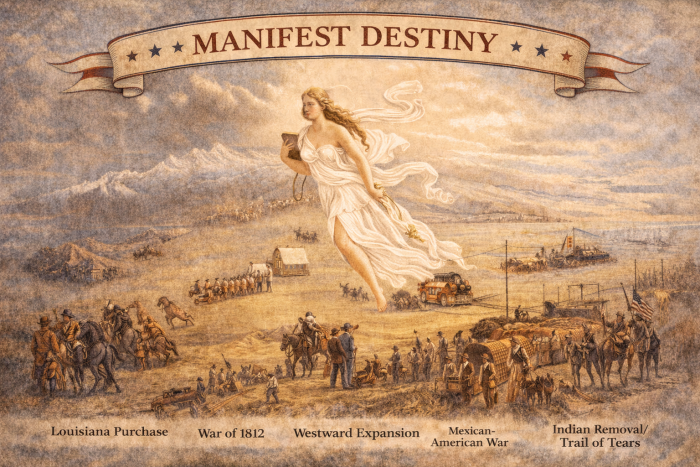
During his presidency, the Louisiana Purchase doubled the size of the United States, securing control of the Mississippi River and opening vast lands for westward expansion. Jefferson strongly supported states’ rights, limited federal power, and remains one of the most influential political thinkers in American history.
Abraham Lincoln
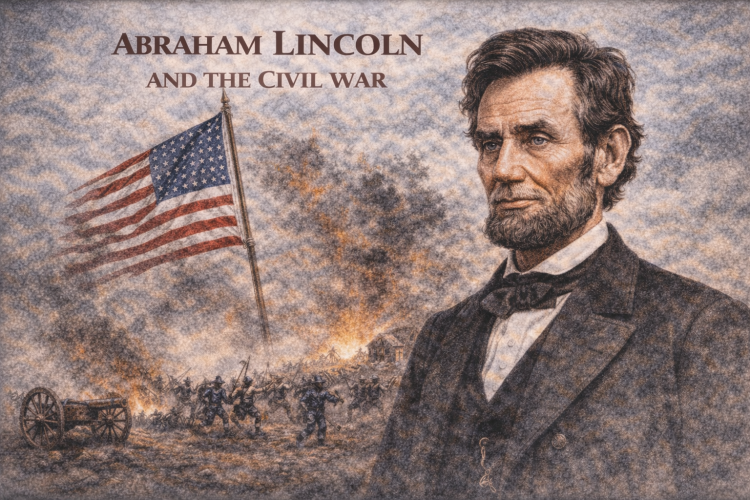
Abraham Lincoln is widely regarded as one of the greatest American presidents. Elected in 1861, his presidency coincided with the outbreak of the American Civil War, the most destructive conflict in U.S. history.
Lincoln led the Union through four years of war, preserving the nation and advancing the cause of emancipation. His leadership culminated in the abolition of slavery, but his life was tragically cut short when he was assassinated in 1865, just days after the war ended.
Ulysses S. Grant
Ulysses S. Grant rose to prominence as the leading Union general during the American Civil War. After early military setbacks, President Abraham Lincoln entrusted Grant with overall command of Union forces.
Grant’s relentless strategy ultimately forced the Confederate surrender, bringing the war to an end in 1865. Following the conflict, he served as the 18th President of the United States, overseeing the early years of Reconstruction during a turbulent period of national recovery.
Theodore Roosevelt
Theodore Roosevelt emerged as a national hero during the Spanish–American War, where he led the volunteer cavalry unit known as the Rough Riders. In 1901, he became president at the age of 42, the youngest person to hold the office.
Roosevelt championed progressive reforms, strengthened the presidency, and played a major role in conservation, establishing national parks, forests, and monuments. Though his presidency extended into the early 20th century, his rise reflects the closing chapter of the 19th-century American experience.
Thomas Edison
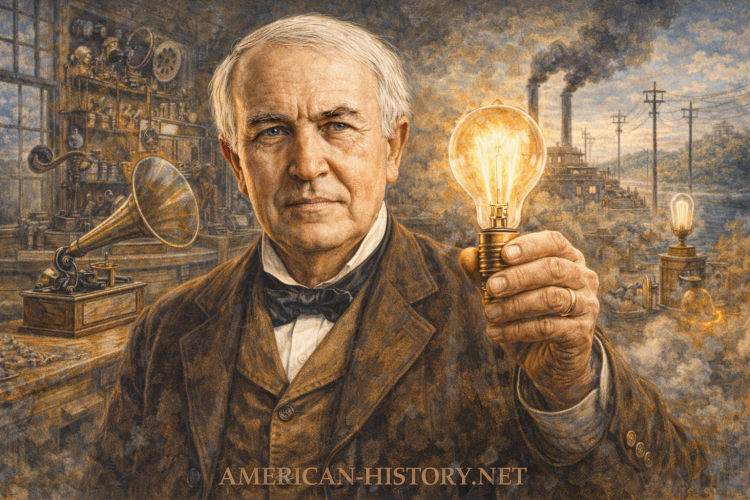
Thomas Edison was the most influential American inventor of the 19th century. His work helped define the industrial age, transforming daily life through technology.
Edison developed or improved inventions such as the electric light bulb, phonograph, and motion picture camera. Holding over 1,000 patents, he also pioneered the concept of industrial research laboratories, changing how innovation was pursued in America.
Robert E. Lee
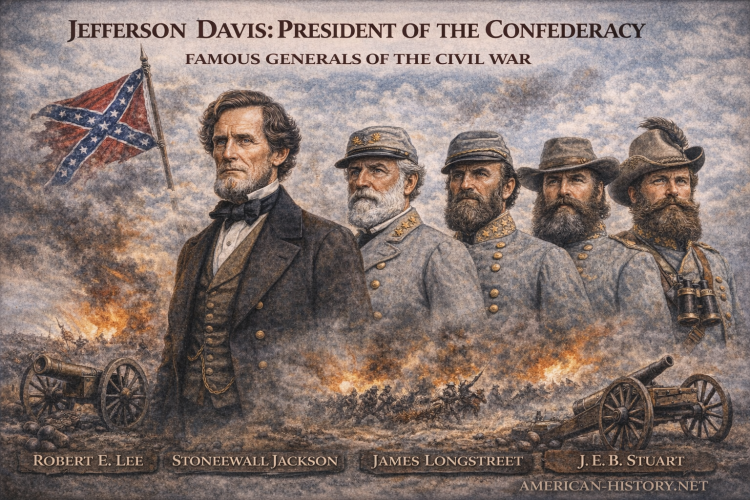
Robert E. Lee served as the principal military commander of the Confederate States during the American Civil War. Before the war, he gained distinction as an officer in the Mexican–American War and was regarded as one of the most capable soldiers of his generation.
When the Civil War began, Lee chose to side with his home state of Virginia. He led Confederate forces to several major victories against the Union, despite being outnumbered and undersupplied. In April 1865, Lee surrendered to Ulysses S. Grant at Appomattox Court House, effectively bringing the war to an end.
Clara Barton
Clara Barton was a pioneering humanitarian and the founder of the American Red Cross. During the Civil War, she provided medical aid to wounded soldiers directly on the battlefield.
After the war, Barton helped reunite families with missing soldiers and later established the American Red Cross in 1881, extending humanitarian relief efforts both nationally and internationally.
Sitting Bull
Sitting Bull was one of the most prominent Native American leaders of the 19th century. A spiritual leader and strategist, he united Lakota and allied tribes in resistance against U.S. expansion.
He played a key role in the Native victory at the Battle of the Little Bighorn in 1876, where U.S. forces under Custer were defeated. Despite years of resistance, Sitting Bull eventually surrendered and was killed in 1890 during a confrontation with Indian police.
Jefferson Davis
Jefferson Davis served as the President of the Confederate States of America from 1861 to 1865. Before the war, Davis had served in Congress and as a U.S. cabinet member.
As Confederate president, he struggled to unify the Southern war effort. Following the Confederate defeat, Davis was imprisoned for nearly two years but later advocated reconciliation and national unity.
Black Hawk
Black Hawk was a Sauk warrior and leader who resisted U.S. expansion into Native lands. He led the Black Hawk War in 1832, opposing forced relocation of his people.
After defeat, Black Hawk surrendered and spent his later years as a symbol of Native resistance. His legacy endures in American place names and historical memory.
Legacy of the 19th Century
The individuals highlighted here shaped American politics, warfare, technology, culture, and identity during a century of rapid change. From presidents and generals to inventors and resistance leaders, their actions helped define the modern United States.
Together, these figures illustrate how the 19th century laid the foundations for America’s rise as an industrial nation and global power in the decades that followed.
Articles in Progress
The following figures are planned for full biographies:
- Abraham Lincoln
- Ulysses S. Grant
- Theodore Roosevelt
- Robert E. Lee
- Clara Barton
- Sitting Bull
- Jefferson Davis
- Black Hawk