During the 19th century, thousands of Americans migrated westward in search of land, economic opportunity, and new beginnings. This mass movement, known as westward expansion, transformed the geography, economy, and population of the United States. Central to this migration were a series of long, dangerous routes collectively known as the westward trails.
These trails stretched for hundreds or even thousands of miles, cutting across plains, deserts, mountain ranges, and river valleys. For pioneers, traveling west was a journey filled with hardship, risk, and uncertainty, but also with hope for a better future.
Dangers of the Trails
Traveling westward was extremely difficult and often life-threatening. Most trails had no established towns, few supply points, and no formal infrastructure. Families and wagon parties had to rely on their own resources, hunting for food, gathering water, and repairing equipment along the way.
Common dangers included starvation, disease, accidents, and harsh weather conditions such as heat, snow, and flooding rivers. Injuries were frequent, and medical care was almost nonexistent. In some regions, travelers also faced conflict with Native American tribes, often as a result of settlers encroaching on Indigenous lands. For many pioneers, simply surviving the journey was a significant achievement.
Major Westward Trails
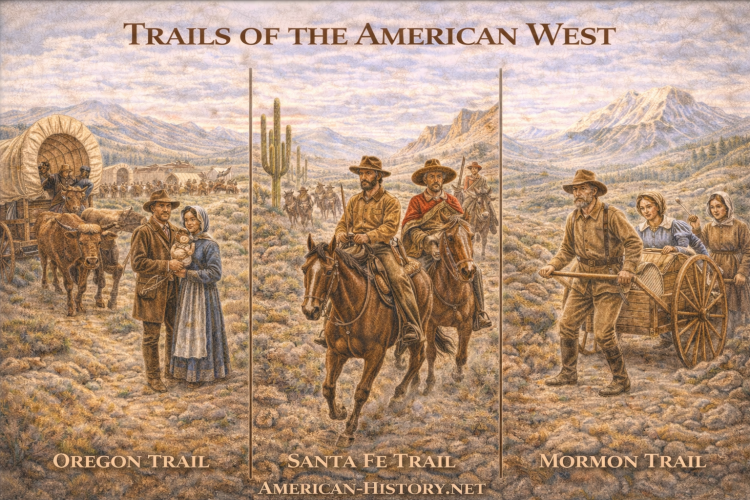
Explore the best-known routes used during 19th-century westward migration: Oregon Trail, Mormon Trail, Santa Fe Trail, and the California Trail.
The Oregon Trail
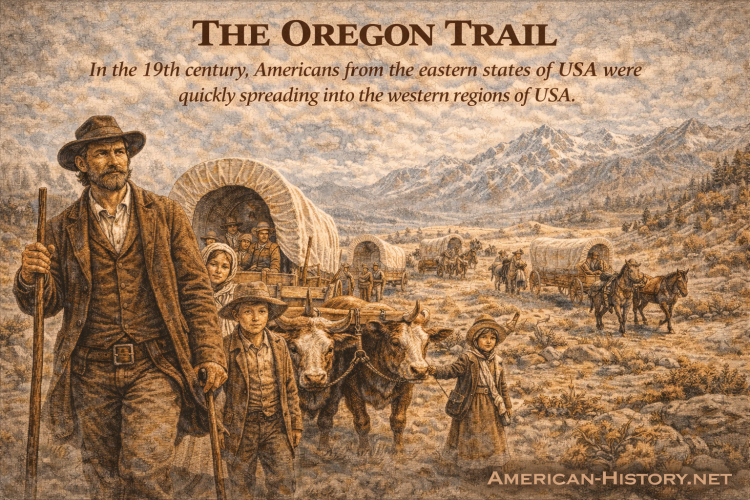
The Oregon Trail was one of the most famous and heavily traveled migration routes in American history. Beginning in Missouri and ending in the Oregon Valley, the trail stretched roughly 2,000 miles. It crossed a wide variety of landscapes, including prairies, mountains, deserts, and river crossings.
Many pioneers traveled together in groups known as wagon trains, which offered safety in numbers and shared labor. Despite its popularity, the Oregon Trail was notoriously dangerous, and thousands of travelers died from illness, accidents, or exhaustion along the route.
The Mormon Trail
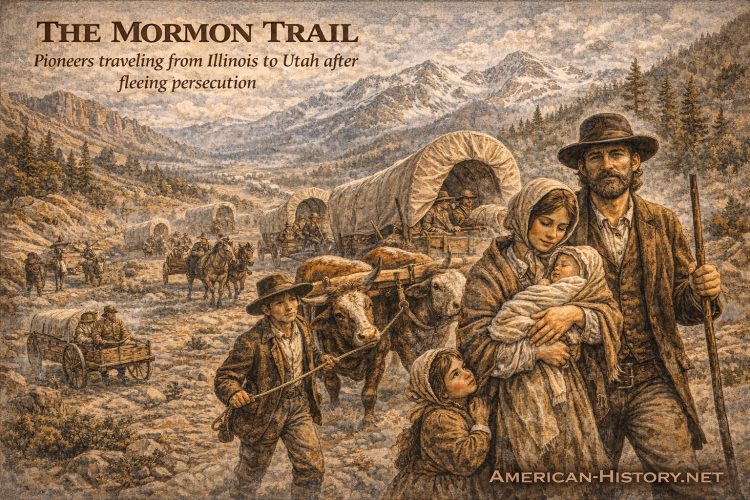
The Mormon Trail was established by members of The Church of Jesus Christ of Latter-day Saints as they sought refuge from persecution in the eastern United States. Beginning in Nauvoo, Illinois, the trail ended in Salt Lake City, Utah, covering approximately 1,300 miles.
Used primarily between 1846 and 1870, the trail played a critical role in the settlement of the Great Basin. Mormon pioneers traveled in organized groups and built way stations along the route, helping future migrants survive the journey.
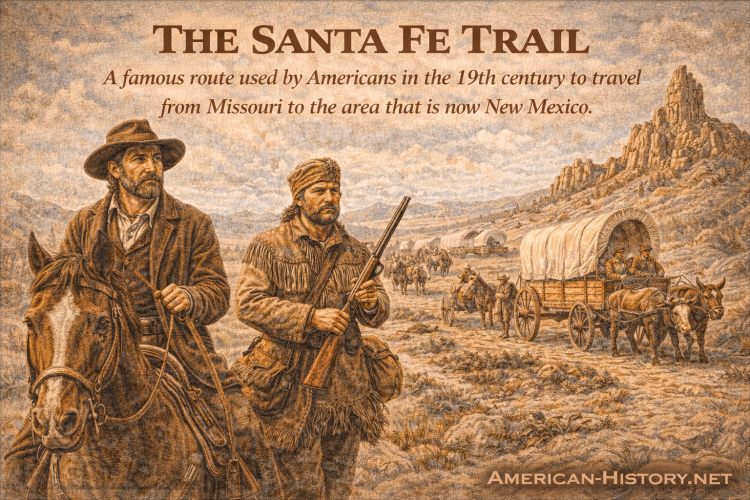
The Santa Fe Trail
The Santa Fe Trail connected Missouri with Santa Fe, New Mexico, serving as both a migration route and a major commercial highway. Unlike some other trails, it was heavily used for trade, transporting goods between the United States and the Southwest.
After the United States acquired new territories following the Mexican–American War, the Santa Fe Trail became an important route for settlers, merchants, and military forces moving into newly claimed lands.
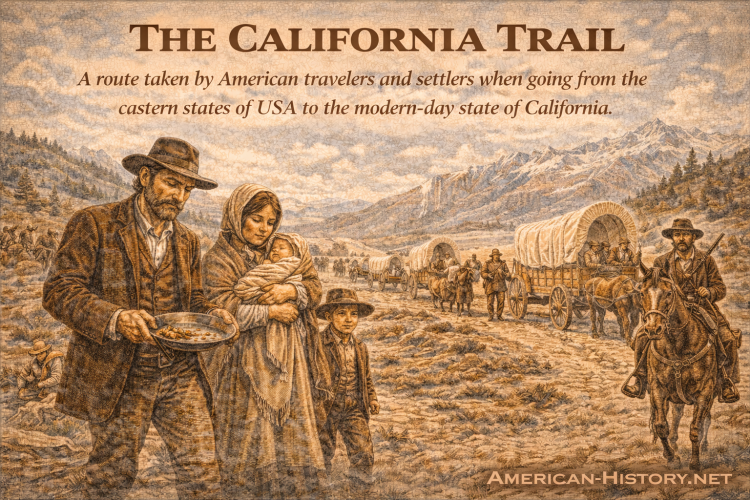
The California Trail
The California Trail was one of the longest and most heavily traveled routes of westward expansion, stretching nearly 3,000 miles. It shared much of its early path with the Oregon Trail before branching southwest toward California.
The trail became especially significant during the California Gold Rush of 1848, when more than 200,000 people used it in hopes of finding gold. Though dangerous and exhausting, the California Trail played a crucial role in populating the American West and accelerating economic growth.
Legacy of the Westward Trails
The westward trails reshaped the United States, enabling territorial expansion and the creation of new states. At the same time, this movement had devastating consequences for Native American nations, whose lands were taken and whose way of life was permanently disrupted.
Today, the westward trails remain powerful symbols of determination, sacrifice, and change, representing both the promise and the cost of America’s expansion across a continent.
Learn more about individual routes by exploring the Oregon Trail, Mormon Trail, Santa Fe Trail, and California Trail.