The 19th century was a period of almost continuous conflict for the United States. As the nation expanded westward, defended its sovereignty, fought internal divisions, and emerged as an international power, warfare played a central role in shaping America’s borders, politics, and identity.
From Native American resistance and frontier wars to international conflicts and the devastating American Civil War, the wars of this century reshaped both the nation and the lives of millions of people.
This hub provides an overview of the major categories of warfare during the 1800s, with links to detailed articles on individual wars, battles, and events.
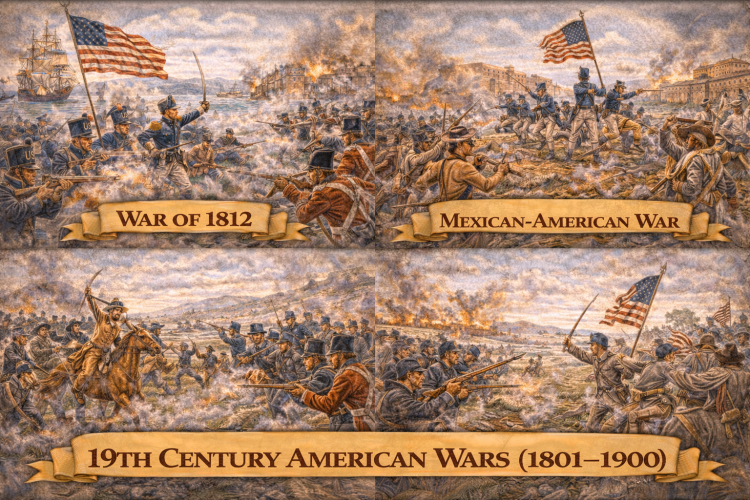
🪶 Native American Wars of the 19th Century
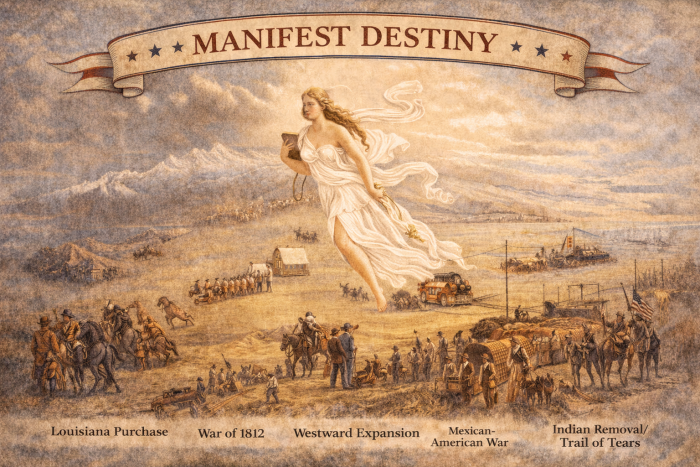
A significant portion of 19th-century warfare involved conflicts between the United States Army and Native American tribes. These wars were driven by westward expansion, broken treaties, land seizures, and federal policies that forced Indigenous peoples onto reservations.
Major Native American conflicts of the 19th century include:
- Tecumseh’s War
- Creek War
- Seminole Wars
- Black Hawk War
- Cayuse War
- Dakota War of 1862
- Colorado War
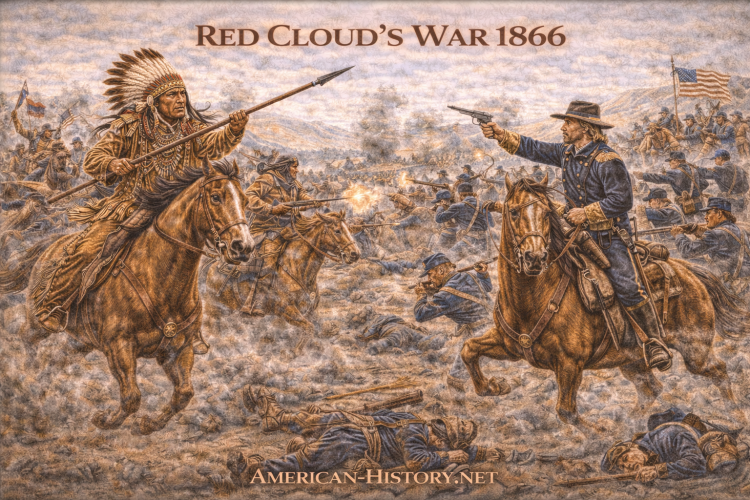
- Red Cloud’s War
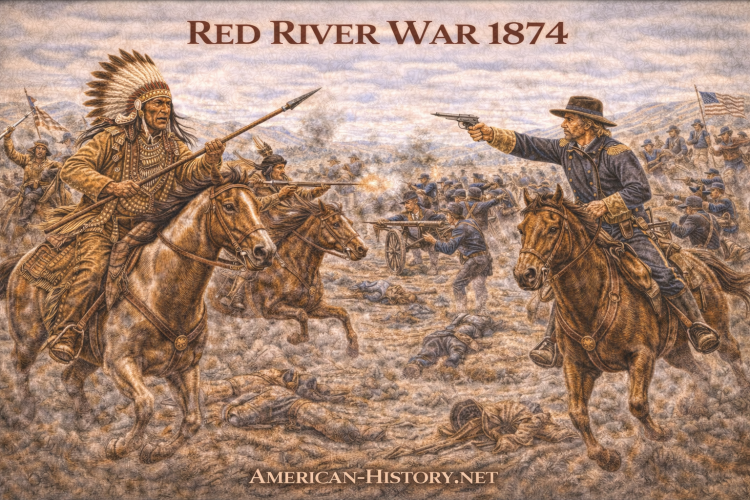
- Red River War
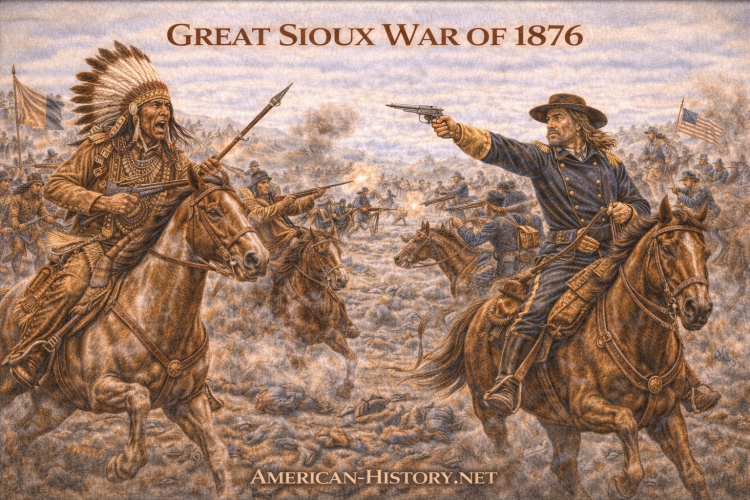
- Great Sioux War (Black Hills War)
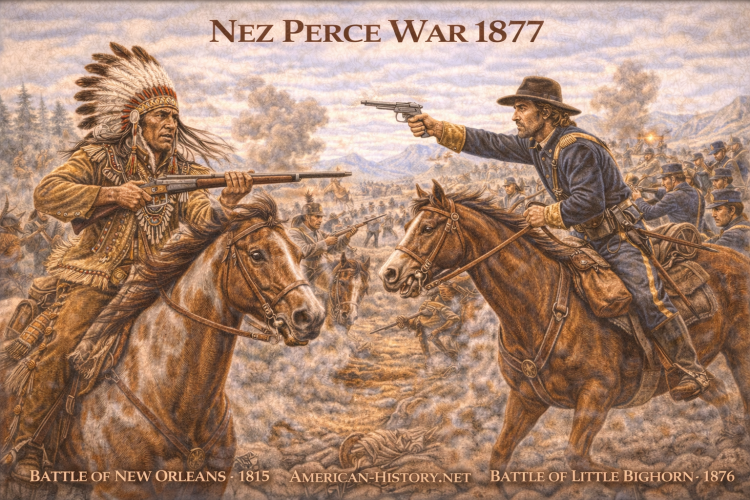
- Nez Perce War
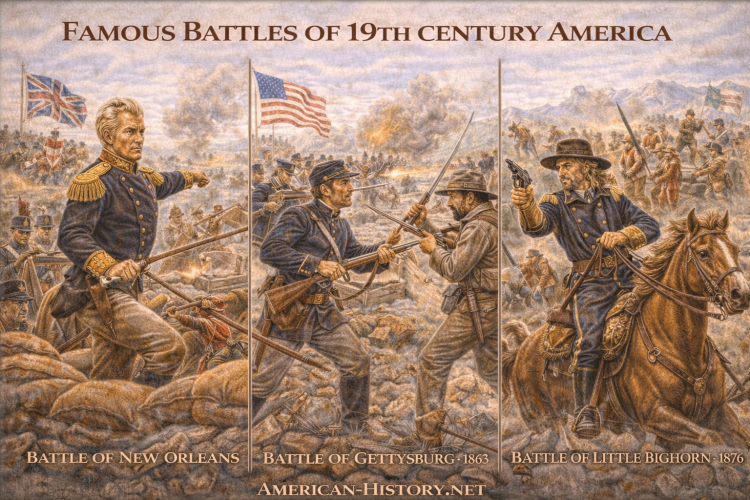
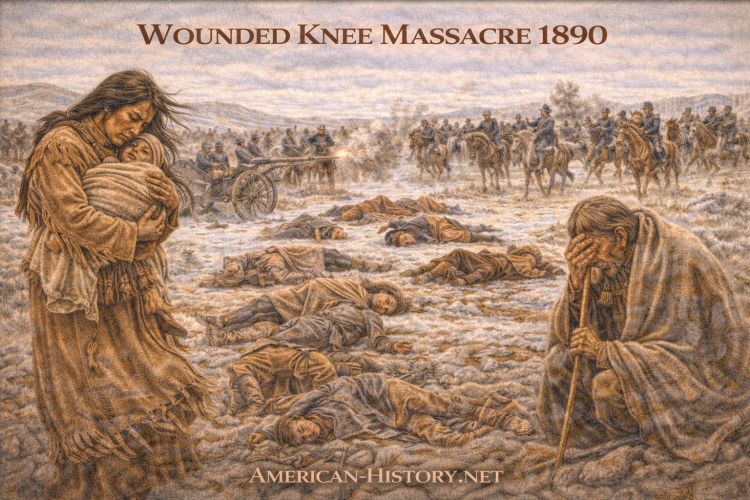
These conflicts led to the displacement, confinement, and devastation of many Native nations, culminating in tragic events such as the Battle of Little Bighorn (1876) and the Wounded Knee Massacre (1890).
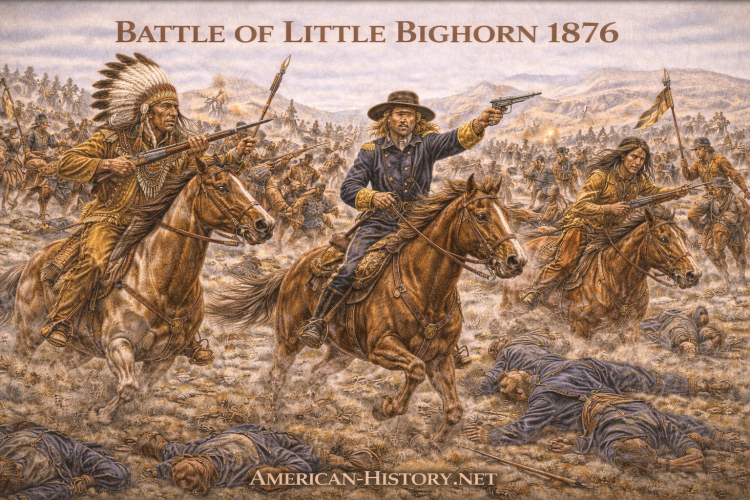
⚓ Wars Against Britain
Although the United States gained independence in the late 18th century, British influence in North America remained strong throughout the early 1800s— particularly in Canada and along key maritime trade routes.
The most important conflict of this era was:
- War of 1812 — fought over trade restrictions, naval impressment, and national sovereignty
Later disputes included smaller, mostly bloodless confrontations such as:
- The Aroostook War (1838–1839)
- The Pig War (1859)
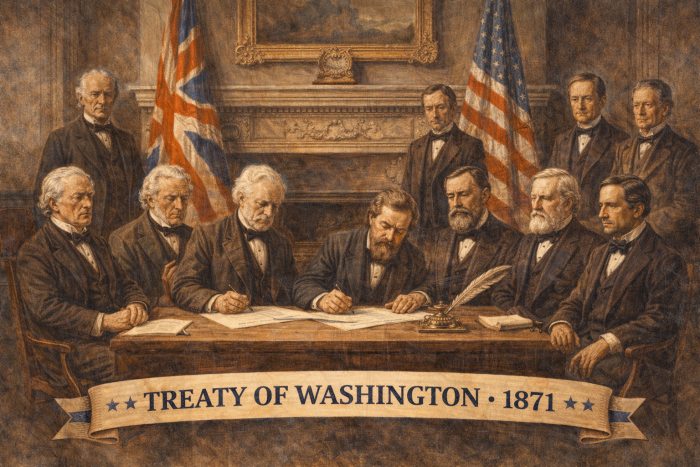
While these later conflicts never escalated into full-scale wars, they highlighted ongoing diplomatic and territorial tensions between the United States and Britain well into the 19th century.
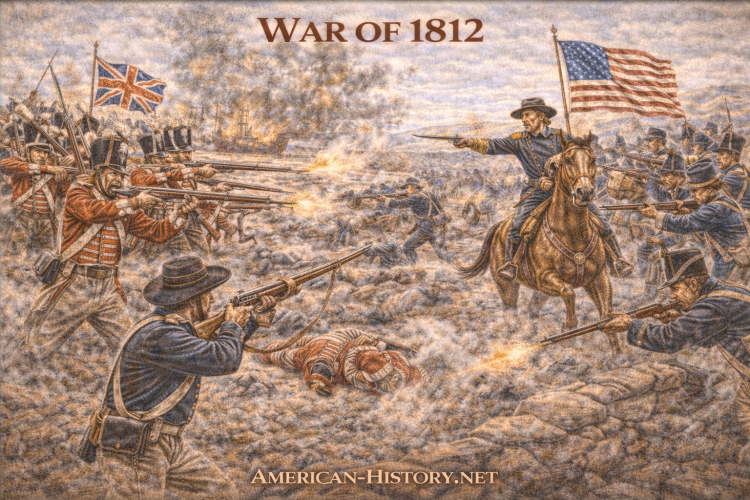
Expansion and Border Wars
As the United States expanded beyond its original borders, conflicts erupted with neighboring nations and territories.
Key wars and confrontations include:
- Mexican–American War (1846–1848)
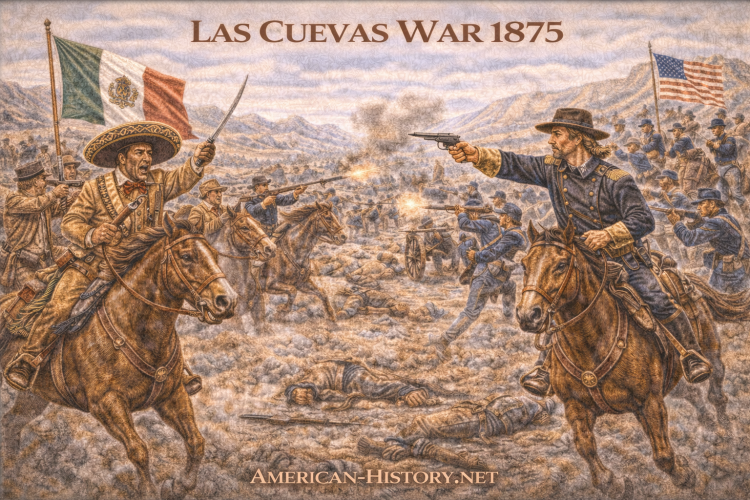
- Las Cuevas War (1875)
These conflicts resulted in massive territorial gains for the United States and permanently altered the political map of North America.
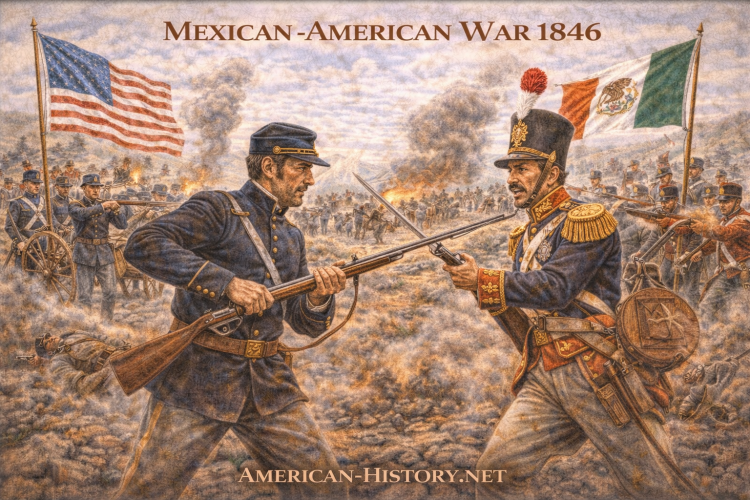
The American Civil War (1861–1865)
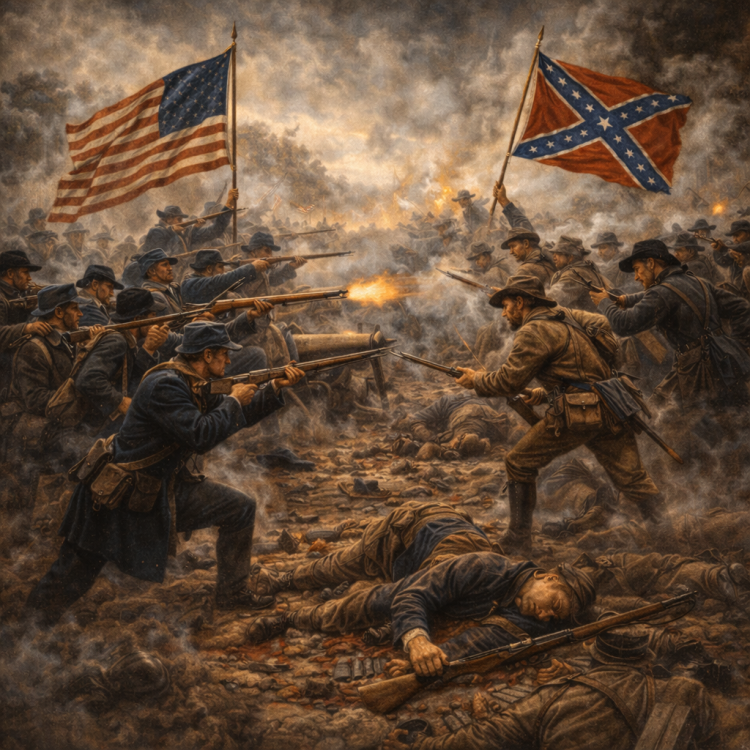
The American Civil War was the largest and most destructive conflict in U.S. history. Fought between the Union (Northern states) and the Confederacy (Southern states), the war centered on the issues of slavery, states’ rights, and national unity.
The war resulted in:
- Over 600,000 deaths
- The abolition of slavery
- A permanent transformation of federal authority
The Civil War remains the defining conflict of the 19th century and a turning point in American history.
🌍 Overseas and Late-Century Conflicts
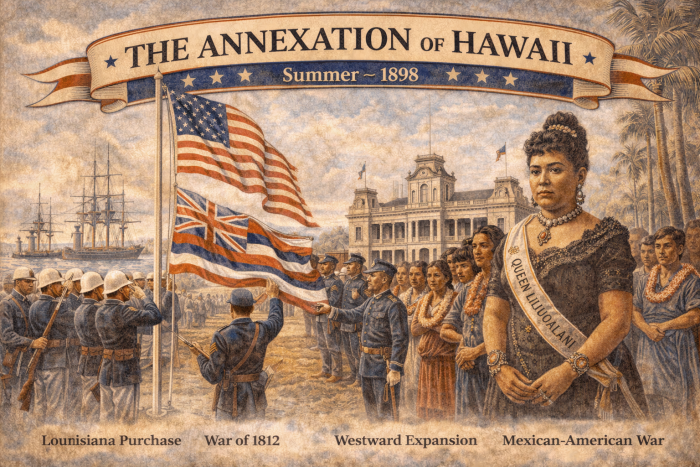
By the end of the 19th century, the United States began to assert itself beyond North America, extending its military and political influence overseas.
Major late-century conflicts include:
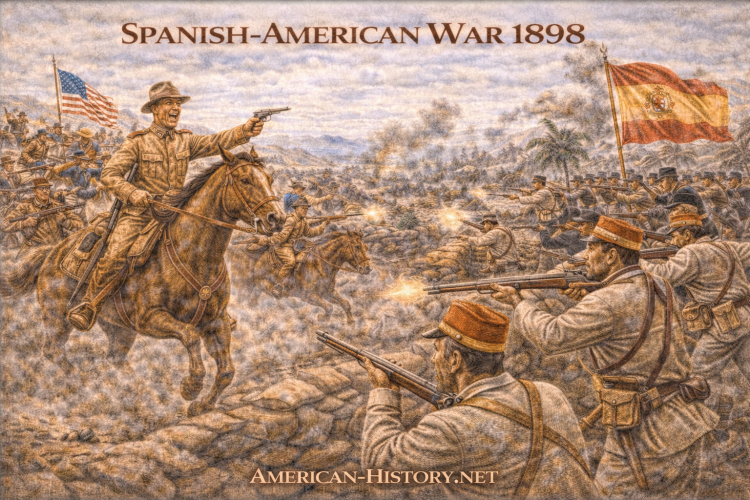
- Spanish–American War (1898)
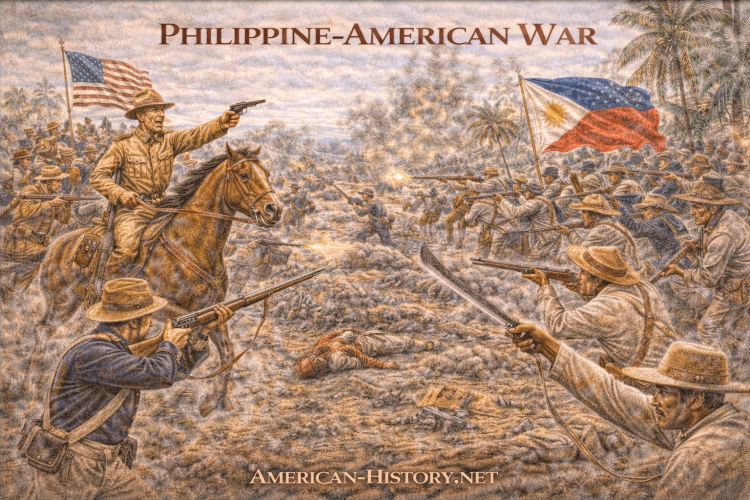
- Philippine–American War (1899–1902)
These wars marked the emergence of the United States as a global power and signaled a new phase in American military and foreign policy history.
Battles, Massacres, and Key Events
In addition to full-scale wars, the 19th century was shaped by pivotal battles and tragic events, including:
- Battle of Little Bighorn (1876)
- Wounded Knee Massacre (1890)
These events had lasting consequences and remain central to discussions of U.S. military history and Native American resistance.
Conclusion
The wars of the 19th century transformed the United States from a young republic into a continental and global power. These conflicts reshaped borders, destroyed nations, ended slavery, and left deep scars—especially among Native American communities.
Understanding these wars is essential to understanding modern America, its expansion, and its enduring struggles over power, identity, and justice.
❓ 19th-Century U.S. Wars — Frequently Asked Questions
What wars did the United States fight in the 19th century?
During the 19th century, the United States fought a wide range of conflicts, including wars against Native American tribes, Britain, Mexico, and overseas powers. Major wars included the War of 1812, the Mexican–American War, numerous Native American wars, the American Civil War, and the Spanish–American War.
Why were there so many Native American wars in the 1800s?
Many Native American wars were driven by westward expansion, broken treaties, land seizures, and federal policies that forced Indigenous peoples onto reservations. As settlers moved west, conflicts erupted over territory, resources, and sovereignty.
What was the most important war of the 19th century?
The American Civil War (1861–1865) is widely considered the most important war of the 19th century. It determined the survival of the United States as a unified nation, ended slavery, and permanently reshaped American politics, society, and military power.
How did the War of 1812 affect the United States?
The War of 1812 strengthened national identity and reduced British influence in North America. Although the war ended without major border changes, it confirmed the United States’ ability to defend its independence and sovereignty.
What wars marked the United States becoming a global power?
The Spanish–American War (1898) and the Philippine–American War (1899–1902) helped launch the United States as a global power. These conflicts signaled a shift toward overseas involvement and a new phase in American military and foreign policy history.
How did 19th-century wars shape modern America?
19th-century wars shaped America’s borders, strengthened federal authority, transformed the economy, and expanded the nation’s role in the world. They accelerated westward expansion, ended slavery, and helped lay the foundation for America’s rise as a major power in the 20th century.