
📜 Laws & Treaties of 19th-Century America
The 19th century was shaped not only by wars and expansion, but by key legislation and treaties that defined America’s borders, economy, and social structure. Below is an overview of the most influential acts of Congress and international agreements that transformed the nation.
Below is an overview of the most important legislation and treaties of the 1800s, each of which played a decisive role in American history.
🏛️ Major Acts of 19th-Century Legislation
These acts of Congress addressed trade, slavery, territorial expansion, and Native American policy. Many intensified sectional tensions that eventually led to the Civil War.
- Embargo Act of 1807 — Restricted foreign trade during European wars
- Missouri Compromise (1820) — Balanced free and slave states
- Indian Removal Act (1830) — Forced relocation of Native tribes
- Fugitive Slave Act (1850) — Required return of escaped slaves
- Kansas–Nebraska Act (1854) — Allowed popular sovereignty on slavery
Major Domestic Acts & Compromises of the 19th Century
As the United States expanded, a series of landmark laws and compromises attempted to manage growing tensions over slavery, statehood, and federal authority. These measures temporarily preserved balance, but ultimately revealed deep divisions that led to civil war.
Missouri Compromise (1820)
The Missouri Compromise addressed rising tensions between free and slave states. Missouri entered as a slave state while Maine was admitted as a free state, preserving balance in Congress. It also established a geographic line restricting the expansion of slavery. Though effective temporarily, it exposed sectional divisions that would later erupt into civil war.
Indian Removal Act (1830)
Signed by President Andrew Jackson, this act authorized the forced relocation of Native American tribes from the southeastern United States to lands west of the Mississippi River. The policy resulted in the Trail of Tears, during which tens of thousands were displaced and thousands died, making it one of the darkest chapters in U.S. legislative history.
Fugitive Slave Act (1850)
This law required escaped enslaved people to be returned to their enslavers even if they had reached free states. It compelled citizens and local authorities to assist in enforcement, intensifying Northern opposition to slavery and deepening sectional hostility.
Kansas–Nebraska Act (1854)
This legislation allowed settlers in Kansas and Nebraska to vote on whether to permit slavery, a policy known as popular sovereignty. The result was violent conflict known as Bleeding Kansas, as pro-slavery and anti-slavery factions clashed. The act effectively repealed earlier compromises and accelerated the nation’s path toward civil war.
🌎 Treaties That Shaped U.S. Expansion
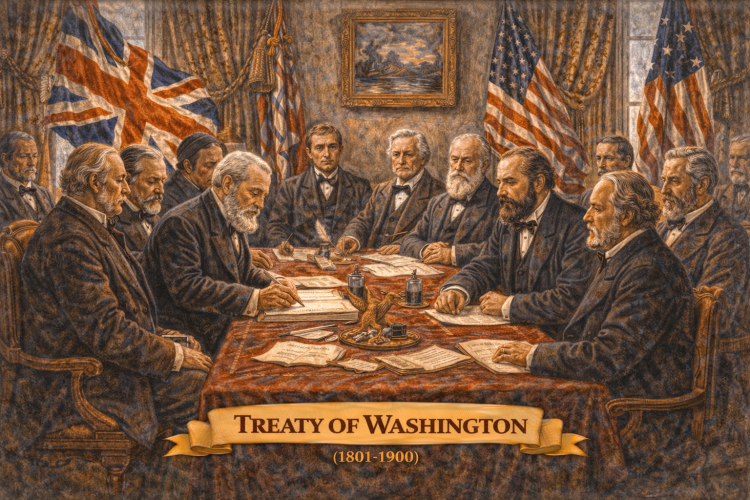
Through diplomacy and negotiation, the United States dramatically expanded its territory and global influence. These treaties reshaped borders and secured America’s place on the world stage.
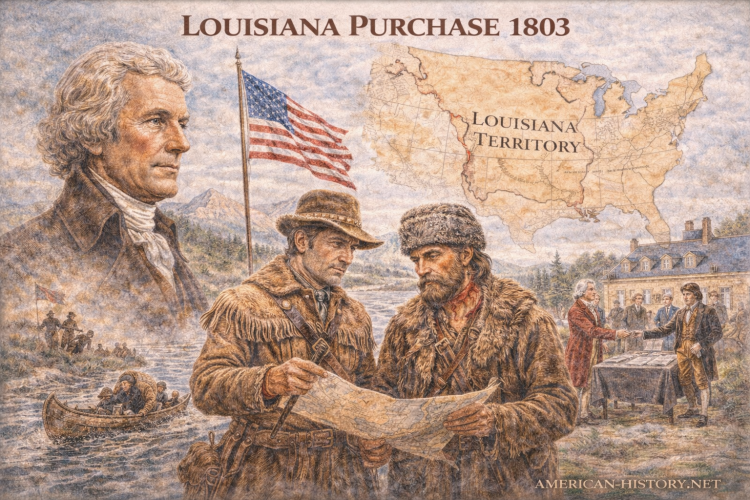
- Louisiana Purchase Treaty (1803)
- Adams–Onís Treaty (1819)
- Treaty of Ghent (1814)
- Treaty of Guadalupe Hidalgo (1848)
- Treaty of Amity and Commerce (1858)
- Alaska Treaty of Cession (1867)
- Treaty of Paris (1898)
⚖️ Why These Laws & Treaties Matter
Together, these laws and treaties reshaped the United States. They enabled westward expansion, intensified debates over slavery and states’ rights, displaced Native American nations, and propelled America from a young republic into a continental and global power. Understanding them is essential to understanding how the modern United States emerged.
⬆️ Explore detailed articles on each law and treaty above to learn how they shaped American history.