King Philip’s War was one of the most destructive and deadly conflicts in early American history. Fought between New England colonists and Native American tribes, primarily the Wampanoag, the war permanently altered the balance of power in colonial New England and had devastating consequences for Indigenous communities.
The conflict is named after Metacom, the Wampanoag leader known to English settlers as King Philip. Although the war lasted little more than a year, it resulted in widespread destruction, heavy casualties on both sides, and the collapse of Native resistance in southern New England.
Background and Causes
By the mid-17th century, tensions between Native American tribes and English colonists had been building for decades. Colonial expansion steadily encroached on Native lands, treaties were frequently violated, and Native leaders were increasingly subjected to English legal authority. Economic dependence on colonial trade further weakened tribal autonomy.
The immediate spark for war came in 1675, when several Wampanoag men were executed by colonial authorities. This act convinced Metacom and his allies that peaceful coexistence was no longer possible, leading to open rebellion against English settlements throughout New England.
Course of the War
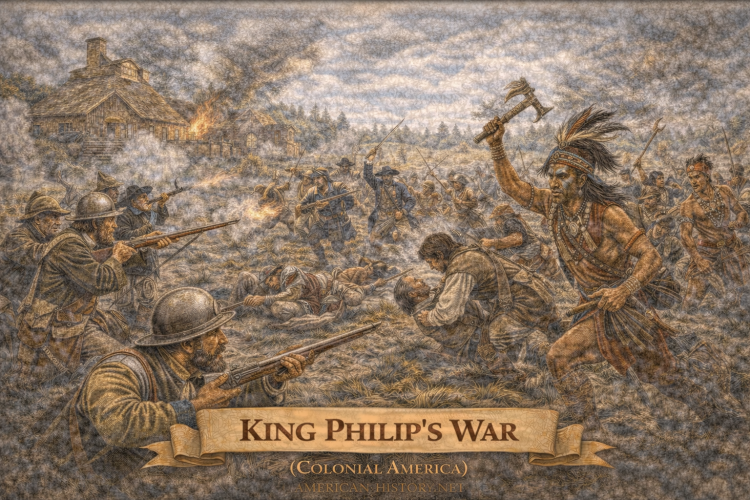
King Philip’s War quickly escalated into a widespread and brutal conflict. Native forces carried out coordinated attacks on frontier towns, while colonial militias responded with large-scale retaliatory campaigns. Entire communities were destroyed, crops burned, and civilians killed on both sides.
The fighting spread across present-day Massachusetts, Rhode Island, Connecticut, and parts of Maine, making it one of the most geographically extensive wars of the colonial period.
⚔️ Key Battles of King Philip’s War (1675–1676)
King Philip’s War included several major engagements that shaped the course of the conflict. Explore the key battles below.
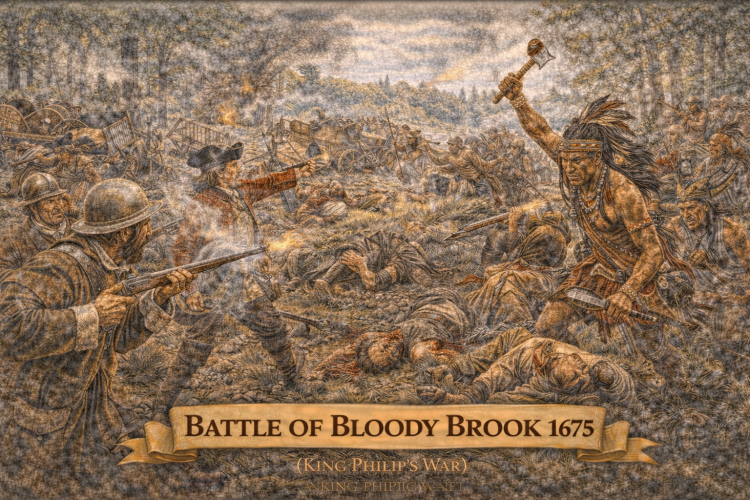
Battle of Bloody Brook (1675)
One of the deadliest ambushes of the war, resulting in heavy colonial losses.
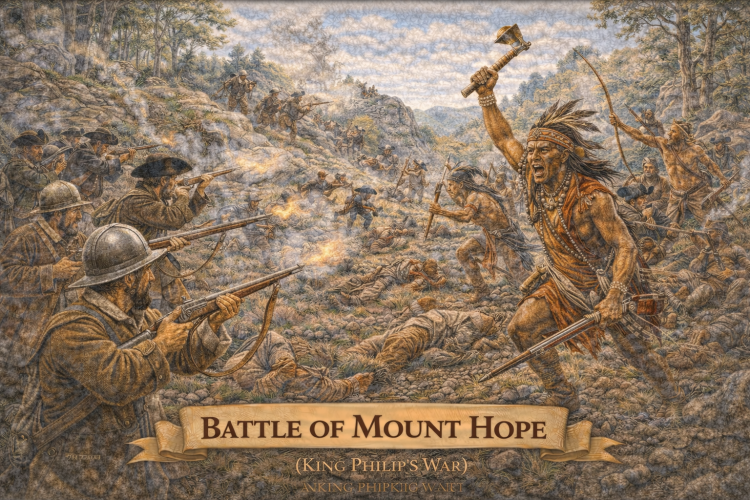
Battle of Mount Hope
A key early phase of the conflict centered near Metacom’s homeland.
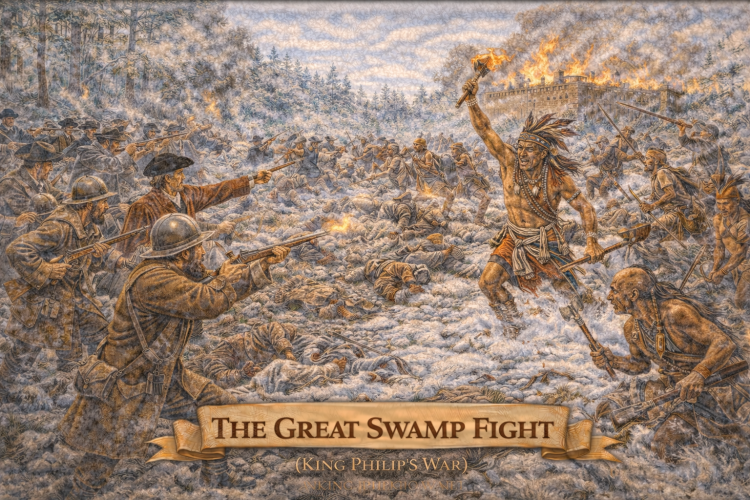
The Great Swamp Fight (1675)
The largest and most famous battle of the war, marking a major turning point.
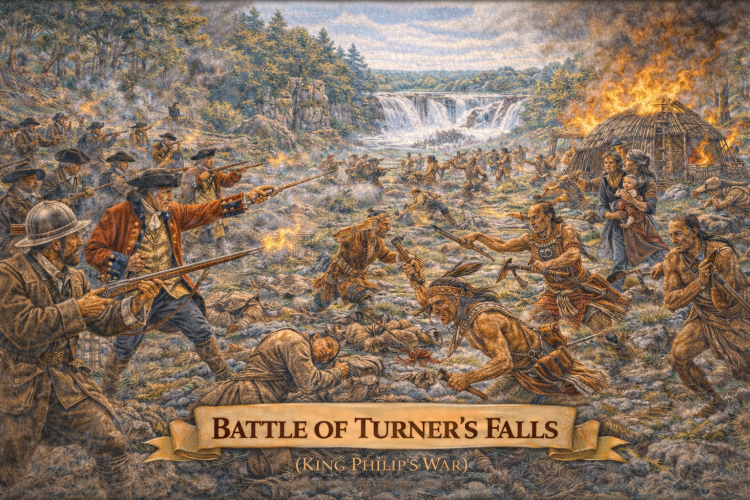
Battle of Turner’s Falls (1676)
A major colonial victory that helped end large-scale resistance in the region.
Impact on Native Americans
The effects of King Philip’s War on Native American communities were catastrophic. Entire villages were destroyed, populations were decimated, and many survivors were displaced from their ancestral lands. Thousands were killed, enslaved, or forced into submission under colonial rule.
The war marked the effective end of Native independence in southern New England and paved the way for unchecked English expansion throughout the region.
Impact on Colonial Society
For colonial settlers, King Philip’s War was equally transformative. More than half of New England’s towns were attacked, and many were completely destroyed. The war resulted in one of the highest per-capita death tolls of any conflict in American history.
Colonial militias gained valuable combat experience, frontier communities became more militarized, and attitudes toward Native Americans hardened. These developments influenced later colonial policies and contributed to the growing sense of self-reliance that would emerge in the following century.
Death of Metacom and the End of the War
In August 1676, Metacom was killed by colonial forces. His death effectively ended organized Native resistance. Without unified leadership, remaining Native groups were quickly defeated or scattered.
The war officially ended later that year, leaving New England permanently altered both demographically and politically.
Why King Philip’s War Matters
King Philip’s War is often overlooked, but it was a turning point in American colonial history. It ended Native dominance in southern New England, strengthened colonial military institutions, and established patterns of violence and displacement that would continue throughout American expansion.
Understanding King Philip’s War is essential to understanding the foundations of colonial America and the tragic human cost of settlement and empire-building.