
Religion has played a central role in the development of the United States, shaping its culture, laws, social movements, and national identity. From Indigenous spiritual traditions that predate European contact to faiths introduced through colonization, slavery, and immigration, American religious life has always been diverse and evolving
Today, the United States is one of the most religiously pluralistic societies in the world. While Christianity has historically been the dominant faith, the nation is also home to Judaism, Islam, Eastern religions, new religious movements, and a rapidly growing population of Americans who identify as agnostic, atheist, or non-religious.
This hub page introduces the major religions and belief systems present in American history, providing context for deeper exploration in dedicated articles.
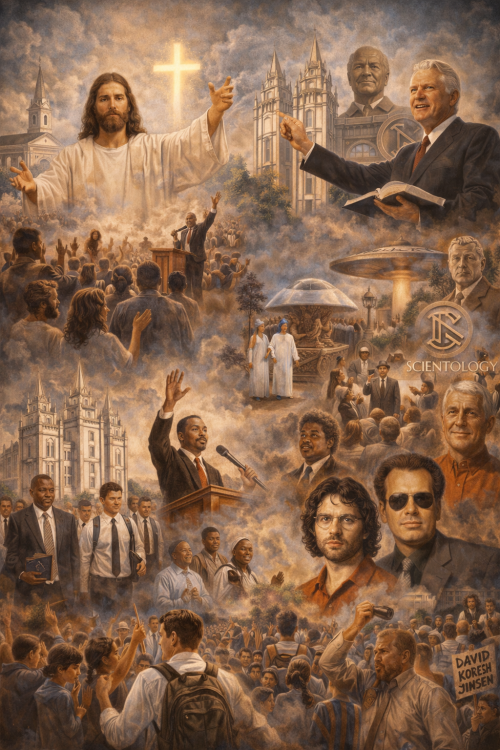
✨ Click to Reveal: Religions in American History
Religious Diversity in the United States
American religious life developed through Indigenous traditions, colonization, slavery, and immigration, creating one of the most religiously pluralistic societies in the world.
Judaism
Jewish communities have existed in America since the 17th century, shaped by religious practice, ethnic identity, and immigration, making the U.S. home to one of the world’s largest Jewish populations.
Christianity
Introduced through European colonization, Christianity expanded through revivals, denominations, and constitutional religious freedom, becoming the nation’s historically dominant faith.
Islam
Islam has been present since the colonial era, including among enslaved African Muslims. Today it is the third-largest religion in the United States.
Buddhism
Buddhism arrived through Asian immigration in the 19th century and later attracted American converts, especially within Zen and Tibetan traditions.
Hinduism, Jainism & Sikhism
These South Asian religions expanded significantly after 20th-century immigration reforms, with temples and gurdwaras serving as cultural and religious centers.
Native American Spiritual Traditions
Indigenous religions emphasize nature, ancestors, ritual, and community, reflecting spiritual systems that long predate European settlement.
African American Religious Movements
Movements such as the Nation of Islam combined religion, identity, and political activism within the African American experience.
New Religious Movements
Groups such as Scientology, Druidry, and the Baháʼí Faith emerged or expanded in the U.S., reflecting experimentation and spiritual innovation.
Non-Religious Belief Systems
Atheism, agnosticism, and humanism have grown rapidly, with nearly one-third of Americans now reporting no formal religious affiliation.
Abrahamic Religions in America
Judaism
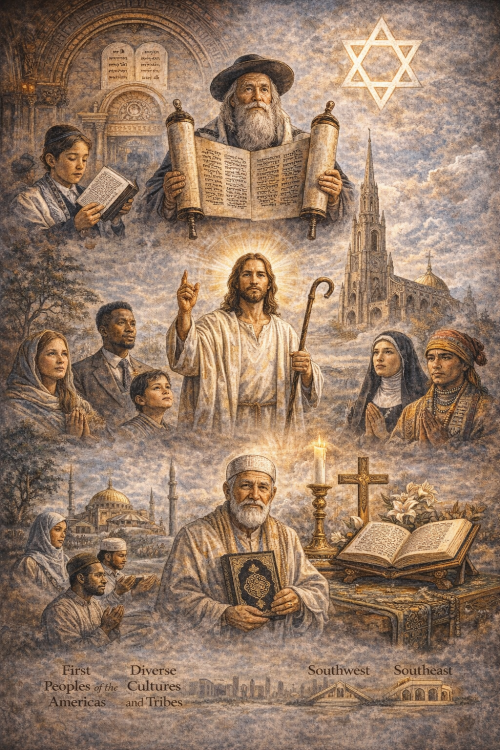
Judaism is the oldest of the Abrahamic religions in the United States. Jewish religious life centers on the Torah, supported by the broader Hebrew Bible (Tanakh) and the Talmud, which preserves centuries of legal and theological interpretation.
Jewish communities have existed in North America since the mid-17th century, with early settlements in colonial ports such as New Amsterdam (New York). The Plantation Act of 1740 allowed Jews in British colonies to become citizens, accelerating settlement.
Today, the United States has one of the largest Jewish populations in the world, with communities shaped by both religious practice and ethnic identity, particularly among Ashkenazi Jews of Central and Eastern European descent.
Christianity
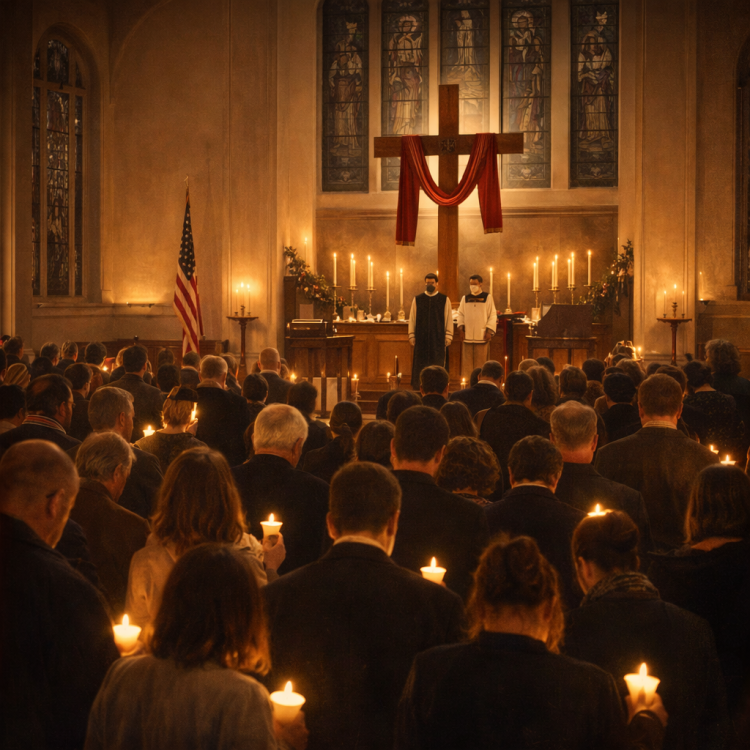
Christianity was introduced to North America through European colonization in the 16th and 17th centuries. Spanish and French settlers brought Catholicism, while British and German colonists established a wide range of Protestant traditions.
Religious diversity expanded rapidly after independence. The First Amendment prevented the establishment of a national church, encouraging pluralism and revival movements such as the Great Awakenings.
Today, American Christianity includes Catholic, Mainline Protestant, and Evangelical traditions, along with numerous independent churches that have played key roles in education, reform movements, and politics.
Islam
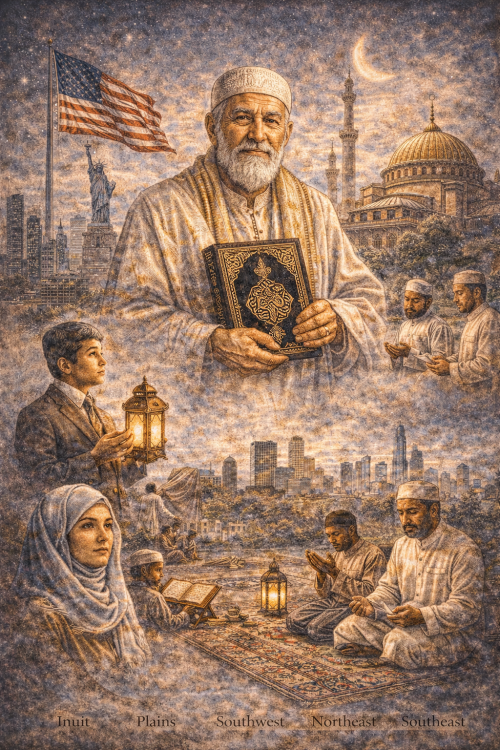
Islam has been present in America since the early colonial period. Some of the earliest Muslims were enslaved Africans, many of whom practiced Islam before their forced migration.
Historical records from the American Revolution document Muslim individuals such as Yarrow Mamout, a formerly enslaved West African Muslim who later became a property owner in Georgetown.
Modern American Islam expanded through immigration, conversion, and African American religious movements. Today, Islam is the third-largest religion in the United States, with diverse communities reflecting global Islamic traditions.
Religions Originating in South and East Asia
Buddhism
Buddhism arrived in the United States through Asian immigration, particularly from China and Japan. The first Buddhist temples were established in the mid-19th century.
American Buddhism today includes immigrant communities, teachers who introduced Buddhism to Western audiences, and a significant number of American converts, especially within Zen and Tibetan traditions.
Hinduism, Jainism, and Sikhism
Hinduism in the United States is largely practiced by immigrants from South Asia, with growth accelerating after immigration reforms in the late 20th century. Hindu temples now serve as major cultural and religious centers.
Jainism and Sikhism also established communities in the U.S. during the late 19th and early 20th centuries. Sikh immigrants, in particular, formed visible agricultural and religious communities, especially in California.
Indigenous and African American Religious Traditions
Native American Spiritual Traditions
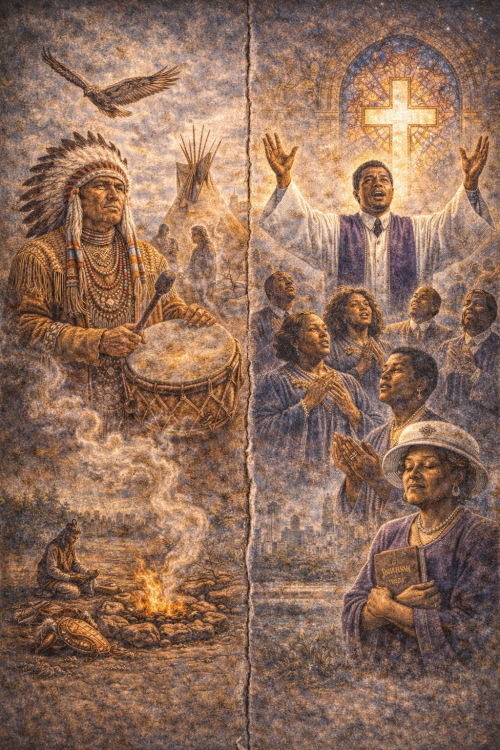
Native American religions reflect the spiritual beliefs of Indigenous peoples who inhabited North America long before European arrival. These traditions vary widely by tribe and region.
Spiritual systems such as the Ghost Dance, Earth Lodge, Longhouse, and Indian Shaker movement emphasize connections to nature, ancestors, and communal responsibility.
The Nation of Islam
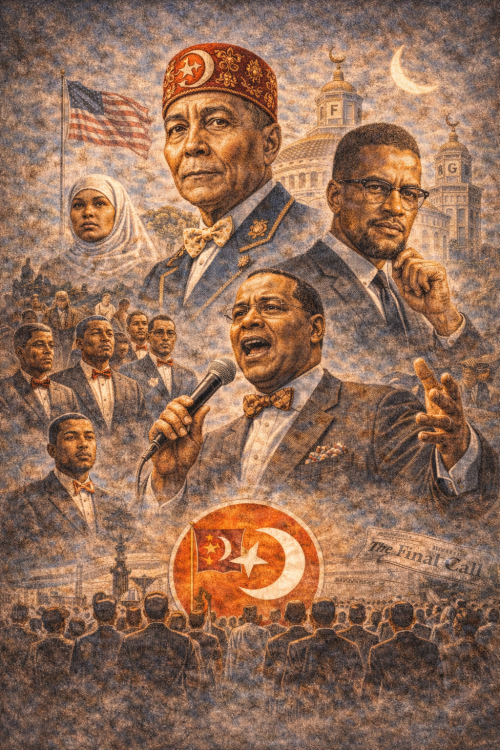
Founded in 1930 in Detroit, the Nation of Islam is both a religious and political movement rooted in the African American experience. While distinct from mainstream Islam, it has played a major role in Black self-determination, identity, and civil rights activism.
Leaders such as Elijah Muhammad and Malcolm X brought national attention to the movement during the 20th century.
New Religious Movements in America
The Church of Scientology
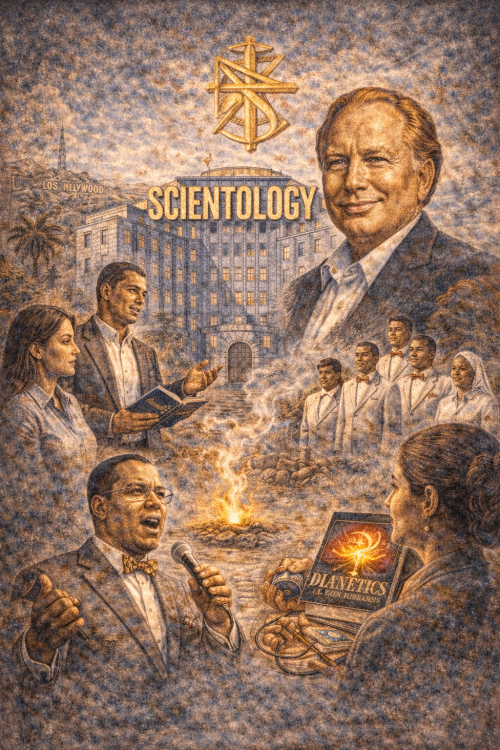
The Church of Scientology was founded in the 1950s by L. Ron Hubbard, emerging from earlier self-help and philosophical writings. It became one of the most controversial new religious movements in American history, noted for its beliefs, organizational structure, and legal battles.
Druidry
Modern Druidry is a revivalist spiritual movement that emphasizes nature, ritual, and harmony with the natural world. Though inspired by ancient Celtic traditions, organized Druid groups in the U.S. date to the late 19th century.
The Baháʼí Faith
The Baháʼí Faith was introduced to the United States in the late 19th century and emphasizes unity, equality, and global peace. American Baháʼí communities played a significant role in spreading the faith to Western audiences.
Non-Religious Belief Systems
Atheism, Agnosticism, and Humanism
A growing number of Americans identify as non-religious, including atheists, agnostics, and humanists. These perspectives have become increasingly visible due to cultural shifts, education, and legal protections for freedom of belief.
Surveys show that nearly one-third of Americans now report no formal religious affiliation, marking one of the most significant changes in American religious history.
Religion in the United States reflects the nation’s broader history of migration, conflict, reform, and cultural exchange. From ancient Indigenous traditions to modern secular worldviews, American religious life continues to evolve.
As new movements emerge and older traditions adapt, religion remains a powerful force shaping identity, values, and public life in the United States.
❓ Religion in the United States — Frequently Asked Questions
Why is religion so important in American history?
Religion shaped colonization, law, reform movements, education, and identity. It influenced everything from settlement patterns to civil rights activism.
What religions existed in America before European contact?
Native American spiritual traditions varied by tribe and region and emphasized nature, ancestors, ritual, and communal responsibility.
How did Christianity become dominant in the United States?
Christianity spread through European colonization, revival movements such as the Great Awakenings, and constitutional protections for religious practice.
Has Islam always been present in America?
Yes. Islam has been present since the colonial era, including among enslaved West African Muslims, and expanded through immigration and conversion.
Why is the United States considered religiously pluralistic?
The First Amendment, immigration, and cultural diversity allowed many religions and belief systems to coexist and grow.
Are non-religious beliefs part of American religious history?
Yes. Atheism, agnosticism, and humanism have grown significantly, with nearly one-third of Americans reporting no religious affiliation.
🧠 Religion in American History — Knowledge Quiz
Test your understanding of religious diversity, history, and belief systems in the United States. Click Submit to reveal answers — green = correct, red = incorrect.
📚 Glossary: Religion in American History
Religious Pluralism
The coexistence of multiple religions and belief systems within a single society.
First Amendment
The constitutional amendment guaranteeing freedom of religion, speech, press, and assembly.
Great Awakening
A series of religious revivals emphasizing personal faith and emotional worship.
Nation of Islam
An African American religious and political movement founded in 1930.
Baháʼí Faith
A modern religion emphasizing unity, equality, and global peace.
Secularism
The principle of separating religious institutions from government and public policy.