The period from 1500 to 1700 marks the beginning of sustained interaction between Indigenous peoples of North America and European powers, setting in motion profound transformations that reshaped the continent. Long before European arrival, diverse Native societies thrived across North America, maintaining complex political systems, economies, and cultures.
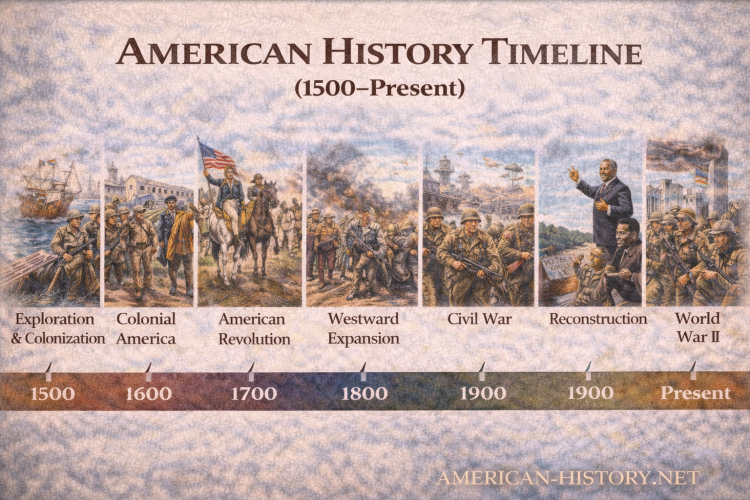
This timeline traces key developments during the early colonial era, including European exploration, the establishment of permanent settlements, evolving systems of governance, economic expansion, and conflicts that emerged as European colonization intensified. These events laid the foundations for colonial society and the future United States.
1492 — Christopher Columbus Reaches the Americas
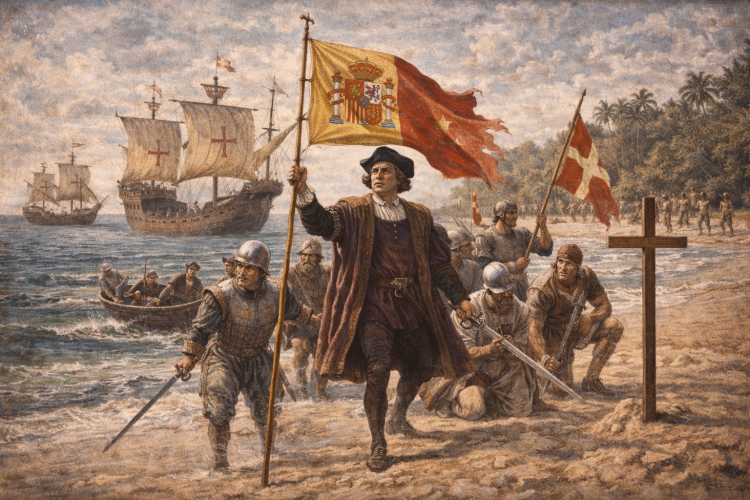
In 1492, Christopher Columbus, sailing under the Spanish crown, reached islands in the Caribbean during his search for a westward route to Asia. While Indigenous peoples had lived throughout the Americas for thousands of years, Columbus’s voyage marked the beginning of sustained European contact with the Western Hemisphere.
This encounter initiated centuries of exploration, colonization, cultural exchange, and conflict that would dramatically alter Indigenous societies and European global ambitions.
1513 — Juan Ponce de León Explores Florida
Spanish explorer Juan Ponce de León landed on the Florida peninsula in 1513, becoming one of the first Europeans to explore what is now the southeastern United States. He claimed the region for Spain, expanding Spanish influence in North America.
Spanish exploration contributed to the establishment of trade routes, missionary activity, and future colonial settlements throughout the region.
1565 — St. Augustine Founded
In 1565, Spain established St. Augustine, Florida, under the leadership of Pedro Menéndez de Avilés. This settlement became the oldest continuously inhabited European-established city in what is now the United States.
St. Augustine served as a military outpost and center of Spanish power, helping protect shipping routes and counter rival European claims.
1607 — Jamestown Established
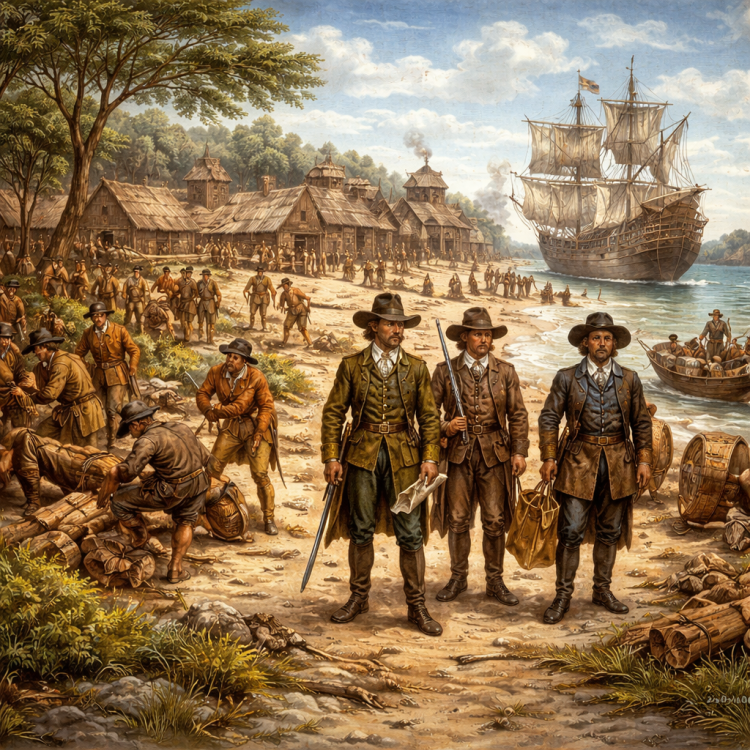
The English founded Jamestown, Virginia, in 1607, creating the first successful permanent English settlement in North America. Sponsored by the Virginia Company, the colony struggled initially with disease, food shortages, and conflict with local Indigenous groups.
Despite early hardships, Jamestown survived and became the foundation of England’s expanding colonial presence in the New World.
1613 — Dutch Trading Post Established on Manhattan
In 1613, Dutch traders established a trading post on Manhattan Island, focused primarily on the profitable fur trade. This outpost later became part of the colony of New Netherland, with New Amsterdam as its central settlement.
Dutch commercial priorities shaped the region’s economic development and left a lasting imprint on future New York.
1619 — House of Burgesses Formed in Virginia
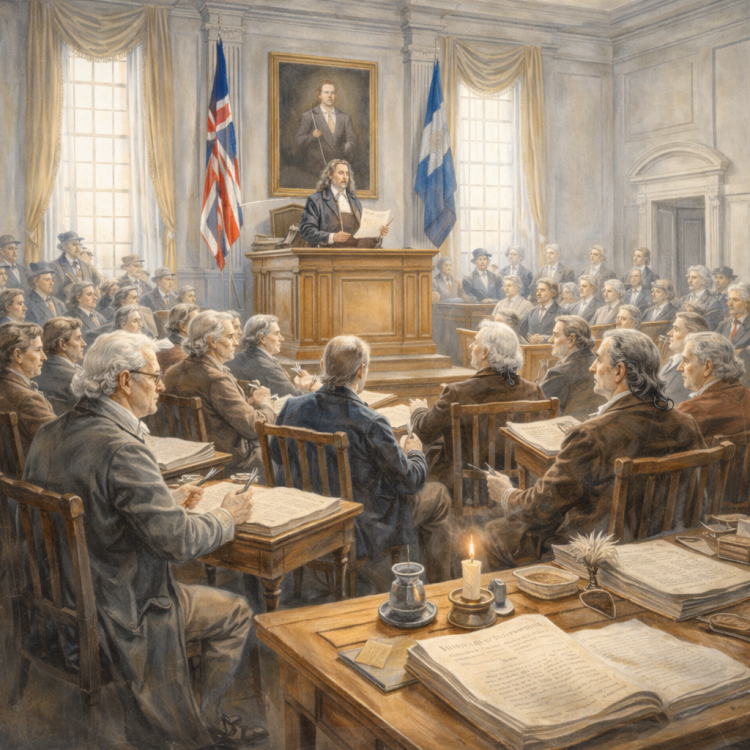
The House of Burgesses, established in 1619, became the first representative legislative assembly in English North America. Colonists elected members to participate in lawmaking, marking an early step toward self-government.
Although its authority was limited, the House of Burgesses set an important precedent for representative democracy in the colonies.
1619 — Africans Brought to Virginia
In 1619, a group of Africans were brought to Virginia by English privateers. Initially treated under systems similar to indentured servitude, their status gradually evolved into racially based hereditary slavery.
This development laid the groundwork for slavery’s central role in colonial and later American society, with lasting social and economic consequences.
1620 — Plymouth Colony Founded and Mayflower Compact Signed
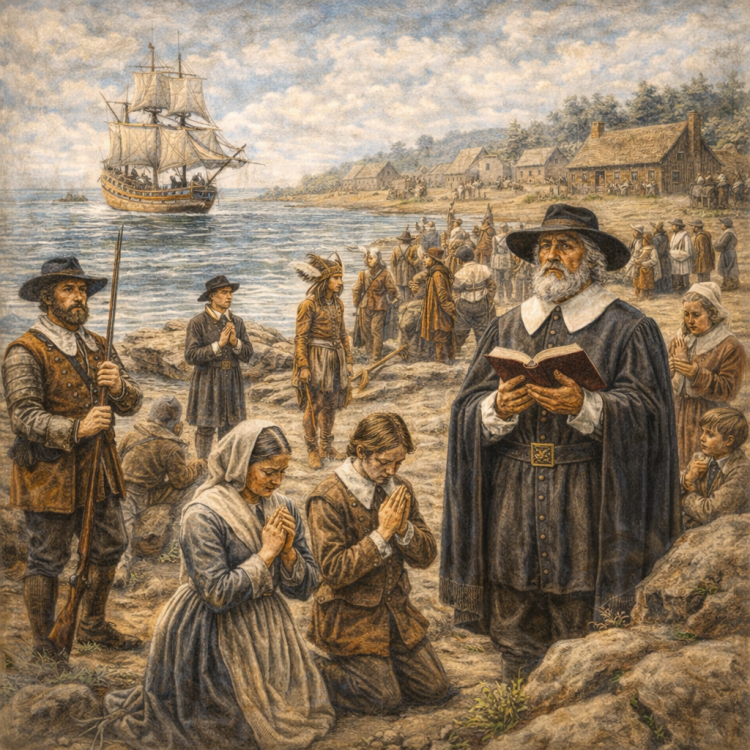
In 1620, English settlers known as the Pilgrims established Plymouth Colony in present-day Massachusetts. Before disembarking, they signed the Mayflower Compact, an agreement outlining self-governance based on majority rule.
The Compact is often cited as an early example of constitutional government in North America.
1624 — New Amsterdam Established
The Dutch West India Company formally established New Amsterdam in 1624. Located at the southern tip of Manhattan Island, the colony became a major trading center.
Dutch policies of relative religious tolerance and commercial openness influenced the region’s diverse population.
1628 — Massachusetts Bay Colony Founded
The Massachusetts Bay Colony was founded in 1628 by Puritan settlers seeking religious reform. Governed by Puritan leaders, the colony grew rapidly and became a dominant force in New England.
Its religious and political institutions strongly influenced colonial culture and governance.
1630 — Boston Established
In 1630, Puritan settlers founded Boston, which soon became the capital of the Massachusetts Bay Colony. Its strategic harbor supported trade and economic growth.
Boston later played a central role in political and intellectual life during the American Revolution.

1634–1638 — The Pequot War
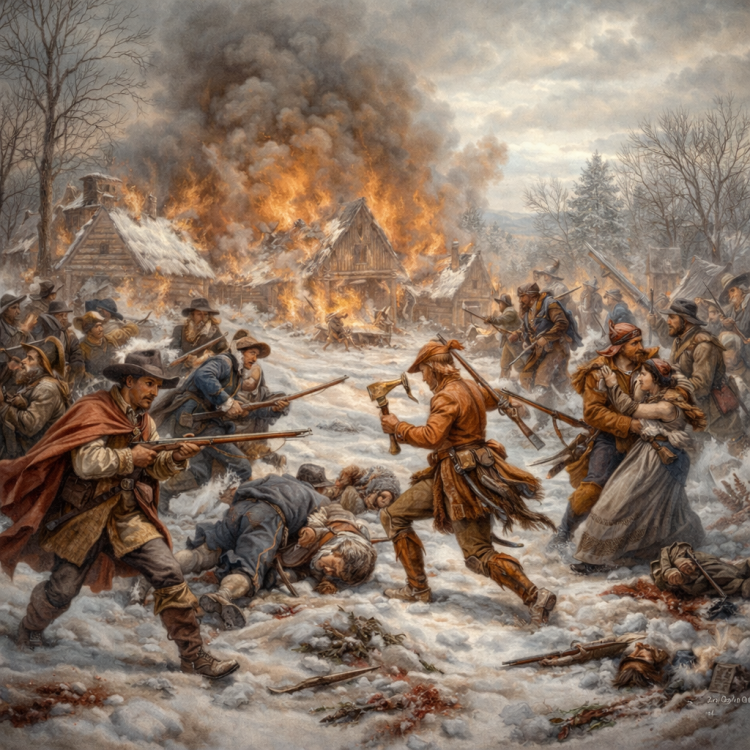
The Pequot War erupted as English colonists and their Native allies clashed with the Pequot people over trade, land, and political power in New England. The conflict culminated in devastating violence, including the Mystic Massacre of 1637.
The war effectively destroyed the Pequot as a political entity and demonstrated the increasing use of total warfare in colonial-Indigenous relations.
1636 — Connecticut Colony Established
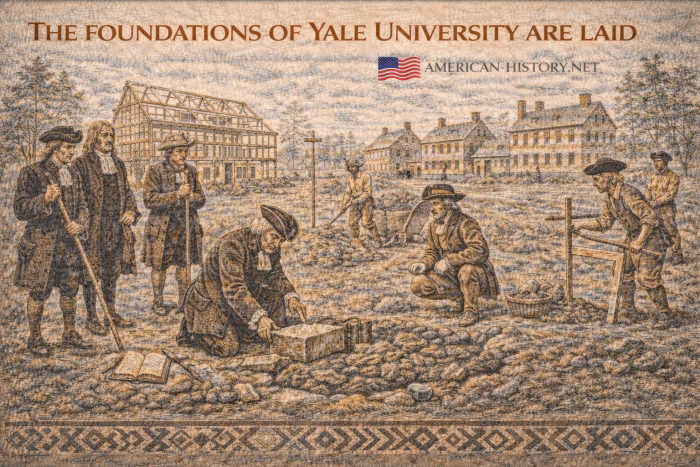
In 1636, Puritan settlers led by Thomas Hooker established the Connecticut Colony. The colony emphasized representative government and religious freedom relative to Massachusetts.
Connecticut later adopted the Fundamental Orders, an early framework for self-governance.
1638 — New Haven Colony Founded
The New Haven Colony was established in 1638 by Puritan settlers seeking a theocratic society governed strictly by biblical law.
Although eventually absorbed into Connecticut, the colony reflected the diversity of religious and political experimentation in early New England.
1664 — English Capture New Amsterdam
In 1664, English forces seized New Amsterdam from the Dutch without major resistance. The colony was renamed New York in honor of the Duke of York.
The transfer consolidated English control over the Atlantic coast and reshaped colonial power dynamics.
1676 — Bacon’s Rebellion
Bacon’s Rebellion erupted in 1676 when frontier settlers in Virginia protested colonial leadership over land access and Native relations. The rebellion highlighted tensions between elite planters and poorer colonists.
Its aftermath accelerated the shift toward enslaved labor and stricter social hierarchies.
📝 Click to Reveal: Quick Knowledge Check
Which colony was founded in 1607?
Answer: Jamestown
What document helped establish self-government in Plymouth?
Answer: The Mayflower Compact
Which European nations were most active in early colonization?
Answer: Spain, England, France, and the Netherlands
What economic activity drove early colonial expansion?
Answer: Trade, agriculture, and resource extraction
1681 — Pennsylvania Founded
The colony of Pennsylvania was established in 1681 by William Penn as a haven for religious freedom, particularly for Quakers. Penn promoted tolerance, fair treatment of Native peoples, and representative government.
Pennsylvania quickly became one of the most diverse and prosperous colonies.
1689–1697 — King William’s War
King William’s War, part of a broader European conflict, involved English and French colonists and their Native allies fighting for territorial control in North America.
The war ended with the Treaty of Ryswick in 1697, restoring prewar boundaries without resolving underlying tensions.
Conclusion
By 1700, European colonization had permanently altered North America’s political, social, and economic landscape. Indigenous societies faced displacement and violence, while colonial institutions took root and expanded. The patterns established during this era shaped future conflicts, governance, and the eventual emergence of the United States.
❓ Early American History (1500–1700) — Frequently Asked Questions
Why is 1492 considered a turning point in American history?
The year 1492 marked sustained European contact with the Americas, beginning widespread exploration, colonization, and long-term global exchange between continents.
What was the first permanent English colony in North America?
Jamestown, founded in 1607 in present-day Virginia, was the first successful permanent English settlement in North America.
Why did Europeans establish colonies in America?
European nations sought wealth, land, religious freedom, and political power, leading to intense competition for territory.
How were Native American societies affected by colonization?
Indigenous peoples experienced displacement, disease, warfare, and cultural disruption, while also resisting and adapting to European settlement.
What forms of self-government developed during this period?
Colonial assemblies such as the House of Burgesses and agreements like the Mayflower Compact laid early foundations for representative government.
🧠 Early American History (1500–1700) — Knowledge Quiz
Test your understanding of early exploration, colonization, and the foundations of American society.
📚 Glossary: Early American History (1500–1700)
Columbian Exchange
The exchange of crops, animals, people, and diseases between Europe and the Americas.
Colony
A settlement governed by a distant parent country.
Mayflower Compact
An agreement establishing self-government in Plymouth Colony.
House of Burgesses
The first representative assembly in English North America.
Indentured Servitude
A labor system where individuals worked for a fixed term in exchange for passage or support.