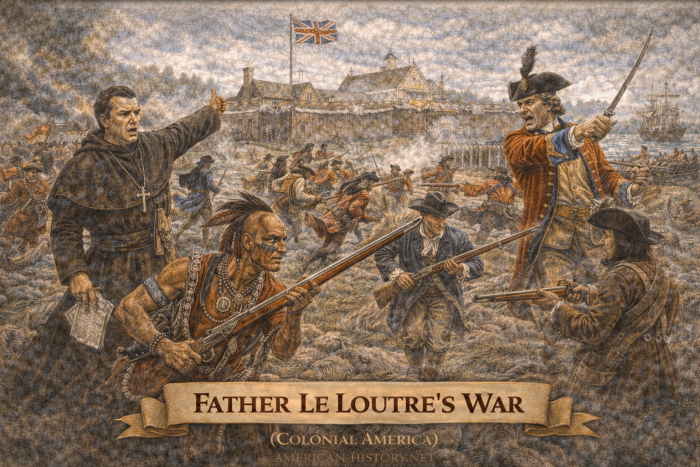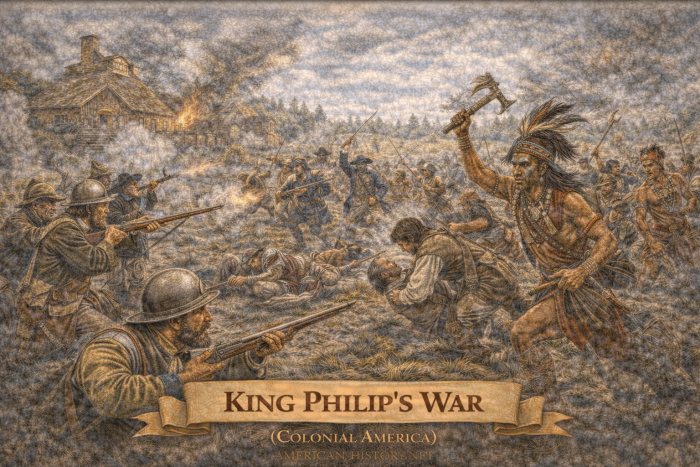
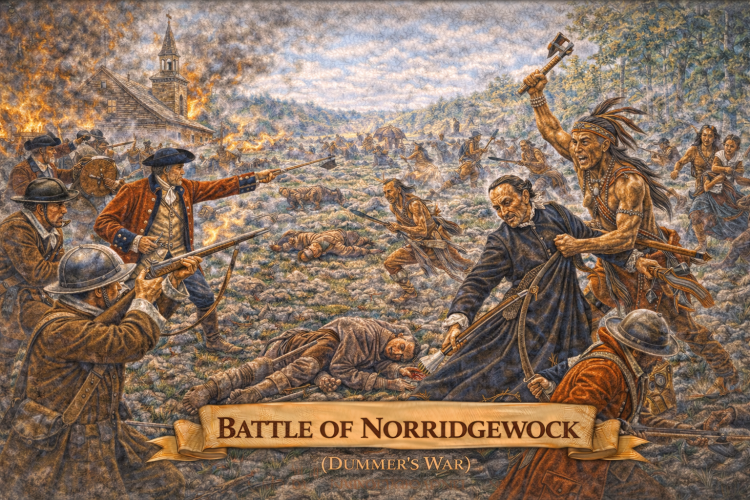
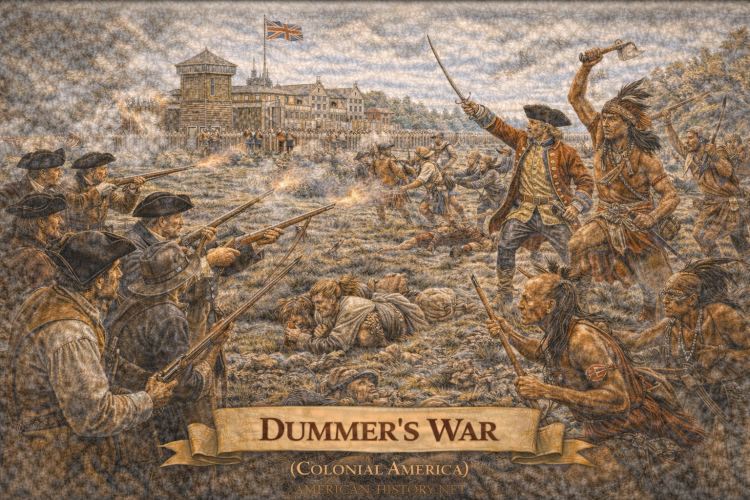
Dummer’s War, also known as Father Rale’s War, was a prolonged and violent conflict fought along the northern frontier of British North America from 1722 to 1725. The war took place primarily in New England, Maine, New Hampshire, and Nova Scotia, involving British colonial forces and their Native allies against the Wabanaki Confederacy, with indirect support from France.
The conflict was part of the broader struggle between European empires and Indigenous nations for control of land, sovereignty, and trade in northeastern North America.
When and Where the War Took Place
Dummer’s War was fought between 1722 and 1725 along the contested frontier between British and French colonial territories. The fighting stretched across:
- Maine and New Hampshire
- Western Massachusetts and Vermont
- Parts of Nova Scotia and the Canadian Maritimes
The war unfolded in multiple theaters, making it one of the most geographically widespread conflicts of the colonial period.
🏷️ Other Names for Dummer’s War
Dummer’s War is known by several names, reflecting different participants, regions, and perspectives.
Each name highlights a different aspect of the conflict—whether colonial leadership, Native resistance, or the regional theaters where fighting occurred.
Who Fought in the War
The war was fought between British colonial forces and allied Native tribes on one side, and the Wabanaki Confederacy on the other.
British-allied tribes included the Mohawk, while the Wabanaki Confederacy consisted primarily of the Abenaki, Mi’kmaq, Maliseet, and Pequawket peoples. French support came largely through missionaries and supply networks rather than direct military intervention.
Background and Causes
The roots of Dummer’s War can be traced to the Treaty of Utrecht (1713), which transferred French Acadia to British control. The British reorganized the territory as the Province of Nova Scotia, but the Indigenous peoples living there—particularly the Wabanaki—were never consulted and refused to recognize the treaty.
As British settlers moved into the disputed lands between the Kennebec River and the Isthmus of Chignecto, tensions escalated. To the Wabanaki, these settlements represented illegal occupation of their ancestral territory. Raids on British settlements increased as Native leaders attempted to resist further encroachment.
Why It Was Called Dummer’s War
The conflict was named after William Dummer, Lieutenant Governor of the Province of Massachusetts Bay. Dummer oversaw Massachusetts’ military response and became the most prominent British colonial official associated with the war, even though the fighting extended far beyond Massachusetts itself.
Events Leading to the War
As raids intensified, British colonial authorities attempted diplomacy. In 1717, colonial governors met with Wabanaki leaders in an effort to negotiate peace. At the meeting, the Wabanaki reaffirmed their claim to the disputed lands, and no lasting agreement was reached.
By the early 1720s, British officials grew convinced that French Jesuit missionaries were encouraging Native resistance. This suspicion led Governor Samuel Shute to authorize military action against Wabanaki villages and the arrest of missionary Father Sébastien Rale, triggering open warfare.
⚔️ The Fighting
When diplomacy failed, British colonial authorities turned to military force. Governor Samuel Shute believed that French Jesuit missionaries were encouraging Wabanaki resistance and ordered colonial troops to arrest Father Sébastien Rale. This action marked the official beginning of Dummer’s War.
Fighting quickly spread along the frontier and took the form of raids, ambushes, and retaliatory expeditions. Native forces relied on speed, surprise, and knowledge of the terrain, while British militias conducted punitive attacks against villages, supply routes, and fortified positions.
Major Theaters of the War
- Eastern Theater: Maine and New Hampshire frontier settlements
- Western Theater: Vermont and western Massachusetts
- Nova Scotia Theater: Mi’kmaq resistance along the Atlantic coast
The war lacked large, decisive set-piece battles and instead became a grinding frontier conflict. Cycles of attack and retaliation defined the fighting, exhausting both sides and contributing to the eventual push for peace.
Key Battles of Dummer’s War
Several major engagements defined the course of the war:
- Battle of Norridgewock – A decisive colonial attack on a Wabanaki settlement and the death of Father Rale
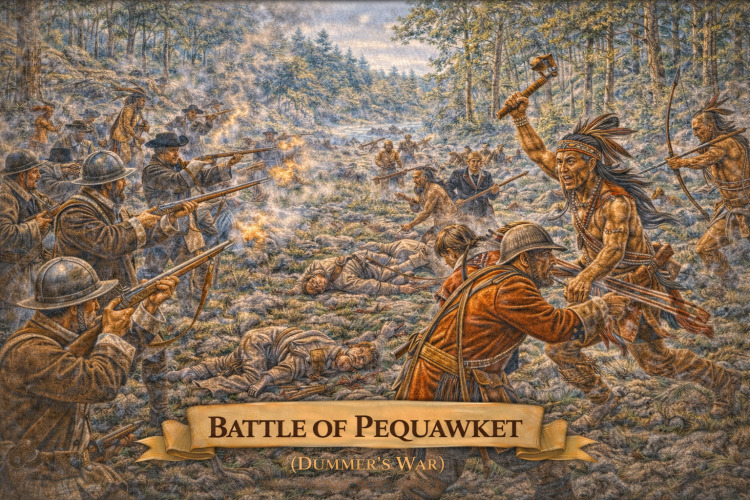
- Battle of Pequawket – A key clash involving colonial ranger forces and Native warriors
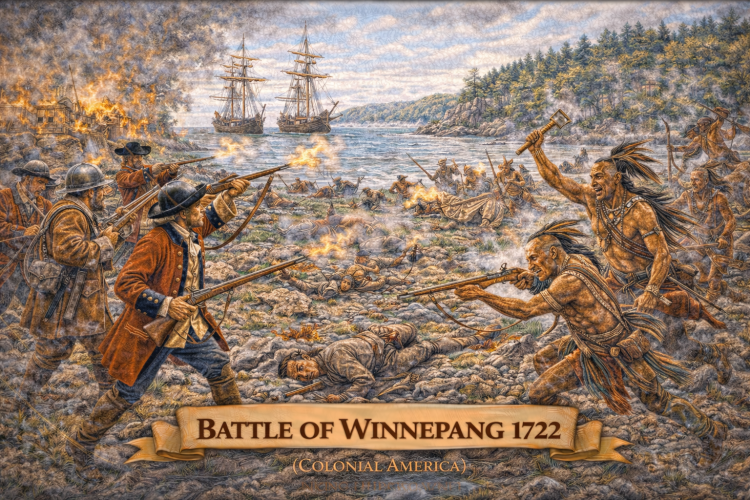
- Battle of Winnepang – Part of the fighting in the Nova Scotia theater
Each of these engagements played an important role in shaping the outcome of the conflict and is explored in greater detail in the linked articles.
Result and Aftermath
Despite years of fighting, neither side achieved a decisive military victory. Both the British colonies and the Wabanaki Confederacy were exhausted by 1724, and peace negotiations began soon after.
In 1725, a peace treaty was signed in which British authorities formally acknowledged the territorial rights of the Mi’kmaq and Maliseet peoples in Nova Scotia. Although the treaty brought an end to the war, tensions along the frontier remained unresolved and would resurface in later conflicts.
Why Dummer’s War Matters
Dummer’s War was a critical chapter in the long struggle between colonial expansion and Native resistance in northeastern North America. It demonstrated the limits of British military power on the frontier and highlighted the persistence of Indigenous sovereignty despite growing imperial pressure.
The war also set the stage for later conflicts, including King George’s War and the French and Indian War, making it an essential part of understanding the broader history of colonial America.