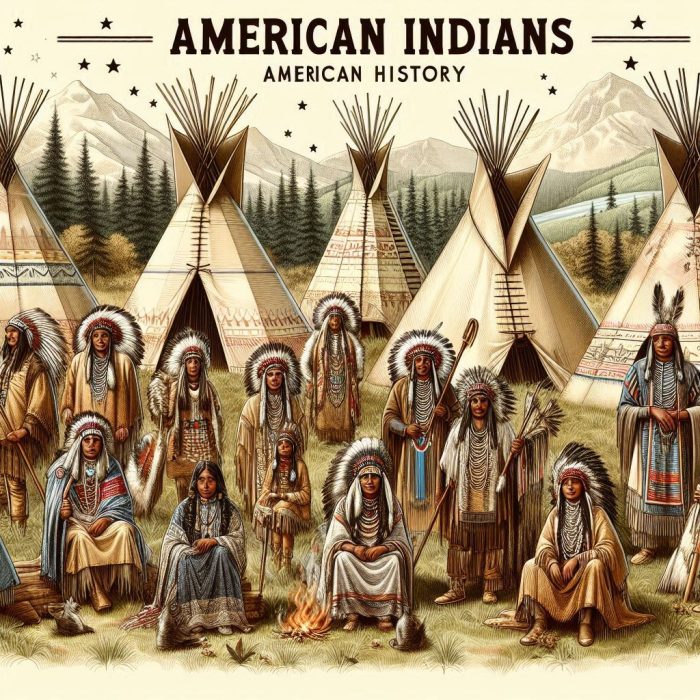
Throughout American history, Native American leaders played a vital role in shaping relations between Indigenous nations and European settlers, colonial powers, and the United States. These men and women defended their people, negotiated treaties, led resistance movements, and left lasting cultural and political legacies.
This page provides a brief overview of several of the most well-known Native American leaders, with links to detailed articles exploring their lives, leadership, and historical impact across different periods of American history.
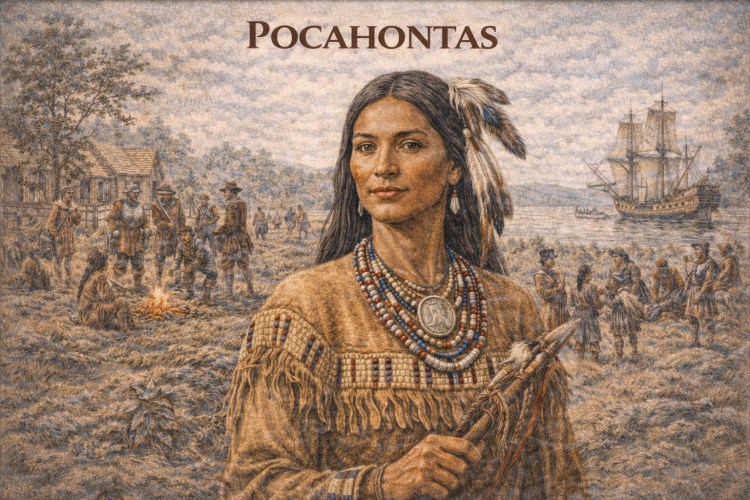
Pocahontas
Pocahontas was the daughter of a powerful chief of the Powhatan Confederacy, which lived along the eastern coast of present-day Virginia. During the early 1600s, English settlers arrived in the region and established the Jamestown settlement, bringing tension and conflict with Native tribes.
According to historical accounts, Pocahontas played a role as an intermediary between her people and the English settlers, helping ease tensions during Jamestown’s early years. She later married John Rolfe, an English colonist, and traveled to England, where she became a symbol of Native American–European relations. She died in 1617 while preparing to return to Virginia.
Sitting Bull
Sitting Bull was one of the most famous leaders of the Sioux (Lakota) Nation and a central figure in Native American resistance during the 19th century. As the United States expanded westward, Sioux lands were increasingly threatened by settlers, railroads, and military forts.
Sitting Bull united warriors from multiple Sioux bands and played a key leadership role in conflicts with the U.S. Army, including the Battle of the Little Bighorn. After years of resistance, he surrendered in 1881 and lived on a reservation. In 1890, he was killed during an attempted arrest by Indian police.
Geronimo
Geronimo was an Apache leader whose name became synonymous with resistance and defiance. He lived in the region of present-day Arizona and northern Mexico, an area that changed hands from Mexican to U.S. control during the 19th century.
As American settlers moved into Apache lands, Geronimo repeatedly escaped from reservation confinement and led raids against military forces and settlements. His ability to evade capture embarrassed U.S. authorities for years. In 1886, Geronimo finally surrendered, marking the end of large-scale Apache armed resistance.
Crazy Horse
Crazy Horse was a respected war leader of the Lakota Sioux and a key figure in Native American resistance on the Great Plains. He fought to defend Lakota lands against encroaching settlers and U.S. military forces.
Crazy Horse played a major role in Native American victories during the Great Sioux War, including the Battle of the Little Bighorn. After years of conflict, he surrendered in 1877. Later that year, he was fatally wounded during an altercation while in military custody.
Tecumseh
Tecumseh was a Shawnee leader who sought to unite Native American tribes into a single confederation to resist U.S. expansion. Along with his brother Tenskwatawa, a spiritual leader known as “The Prophet,” Tecumseh organized political and military resistance across the Ohio Valley.
His efforts led to Tecumseh’s War, which ultimately failed after U.S. victories. Tecumseh later allied with the British during the War of 1812 and was killed in battle in 1813. His vision of pan-tribal unity remains one of the most ambitious resistance efforts in Native American history.
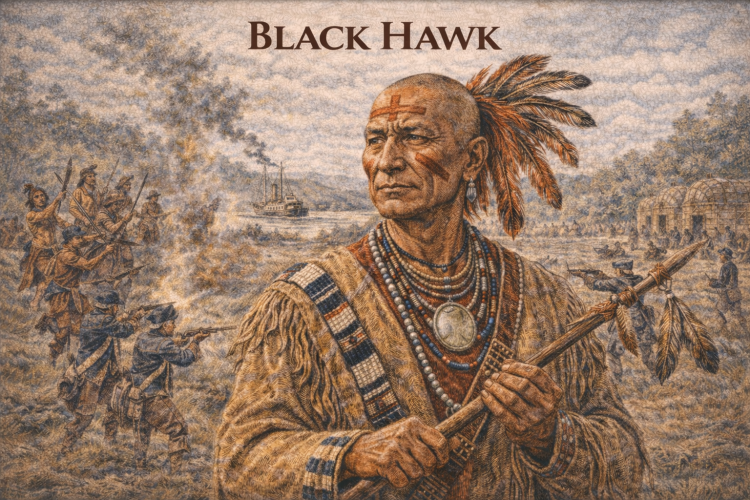
Black Hawk
Black Hawk was a leader of the Sauk tribe who resisted the forced removal of his people from their ancestral lands in the Midwest. He had earlier fought alongside British forces during the War of 1812.
In 1832, Black Hawk led a group of warriors in what became known as the Black Hawk War, attempting to reclaim tribal lands in Illinois and Wisconsin. The conflict ended in defeat, and Black Hawk was captured. Later in life, he dictated his autobiography, offering a rare Native American perspective on the conflict.
Chief Joseph
Chief Joseph was the leader of the Nez Perce tribe during the late 19th century. When the U.S. government ordered the Nez Perce to move to a reservation, Joseph and his people refused.
Instead, he led nearly 700 men, women, and children on a 1,170-mile journey toward Canada, hoping to find refuge. Along the way, they fought multiple engagements with U.S. forces. Just short of the Canadian border, Chief Joseph surrendered, delivering one of the most famous speeches in Native American history.
Red Cloud
Red Cloud was a Lakota leader who led one of the most successful Native American military campaigns against the United States. During the 1860s, the U.S. Army attempted to build roads and forts through Lakota territory in present-day Wyoming and Montana.
Red Cloud organized resistance that resulted in repeated U.S. defeats, forcing the government to negotiate. Red Cloud’s War ended with a treaty that temporarily secured Lakota control over key lands—one of the few wars in which Native Americans achieved their objectives through armed resistance.
Articles in Progress
This section is being expanded. Additional articles on influential Native American leaders will be added to broaden coverage across different tribes, regions, and historical periods.
- Osceola (Seminole)
- Geronimo (Expanded Biography)
- Chief Seattle
- Quanah Parker
- Sacagawea
- Hiawatha
- Red Jacket