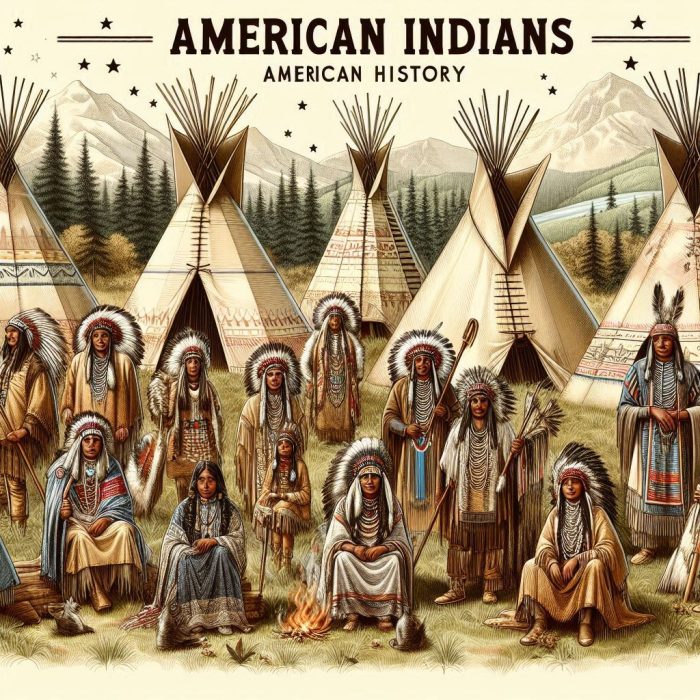
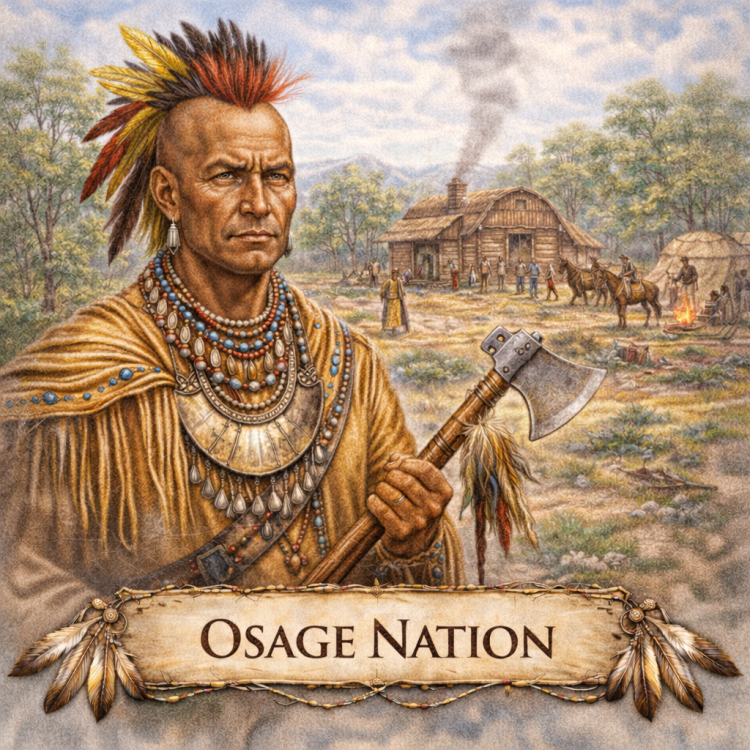
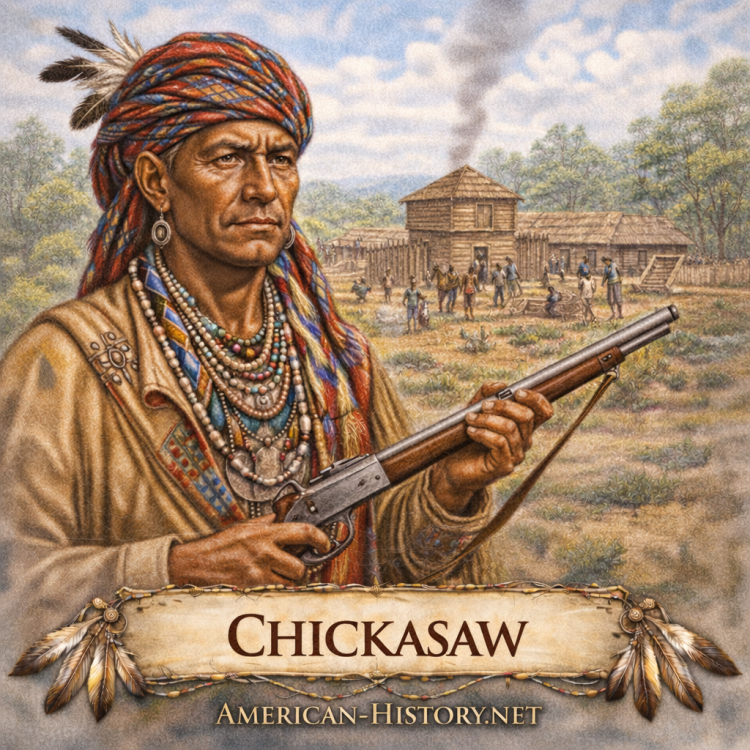
Throughout American history, Native American tribes played a central role in shaping the continent, long before and after European contact. Each tribe developed distinct cultures, economies, and ways of life tied closely to their environments. As European settlers and later the United States expanded westward, many tribes faced displacement, warfare, and forced relocation.
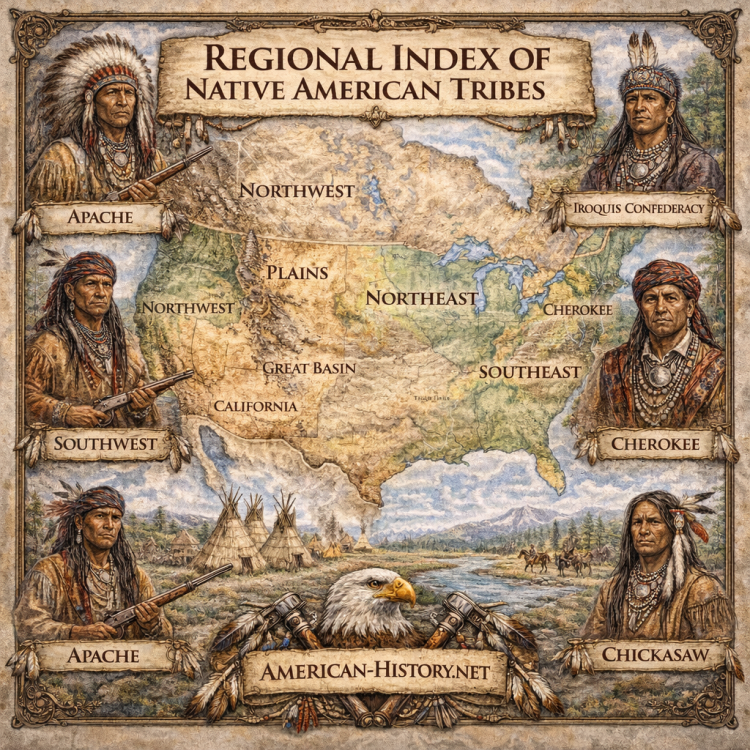
This page provides an overview of several of the most influential Native American tribes and confederations
in United States history. These tribes played major roles in shaping the political, cultural, and military history of North America.
The list below highlights representative and historically significant tribes rather than every Native American nation.
Each article explores tribal origins, ways of life, notable leaders, and key conflicts.
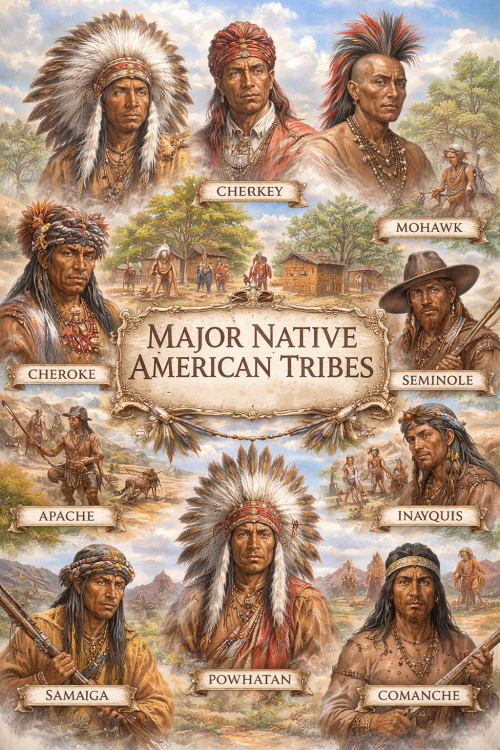
Sioux
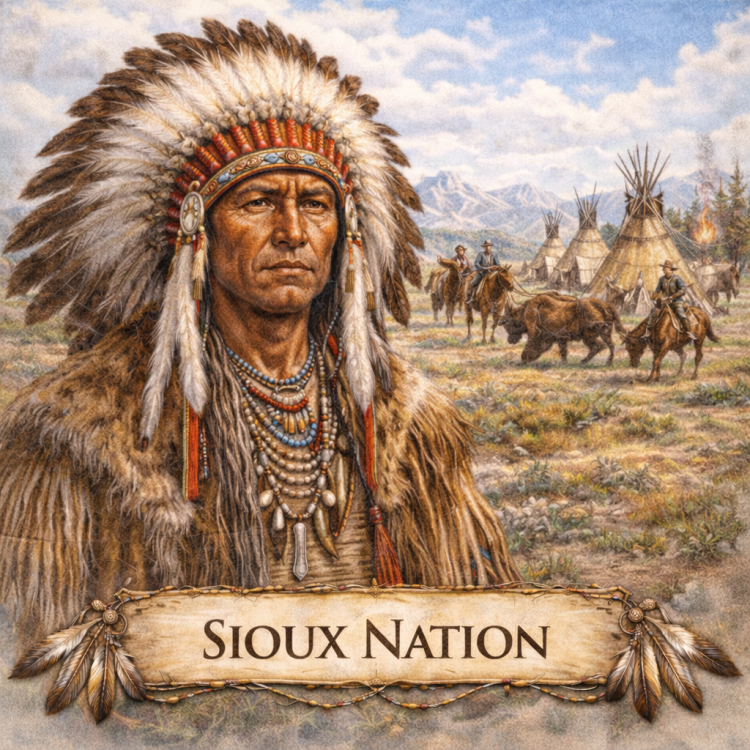
The Sioux were among the most powerful and influential Native American groups in North America. They were traditionally nomadic hunters, relying heavily on the buffalo for food, clothing, and shelter. Their territory stretched across the Great Plains, including present-day North and South Dakota, Minnesota, and surrounding regions.
As white settlers and the U.S. Army moved into Sioux lands, conflicts erupted. The Sioux fought to defend their territory in major conflicts such as Red Cloud’s War (1866–1868) and the Great Sioux War (1876–1877). Prominent Sioux leaders included Sitting Bull, Red Cloud, and Crazy Horse, who became symbols of Native American resistance.
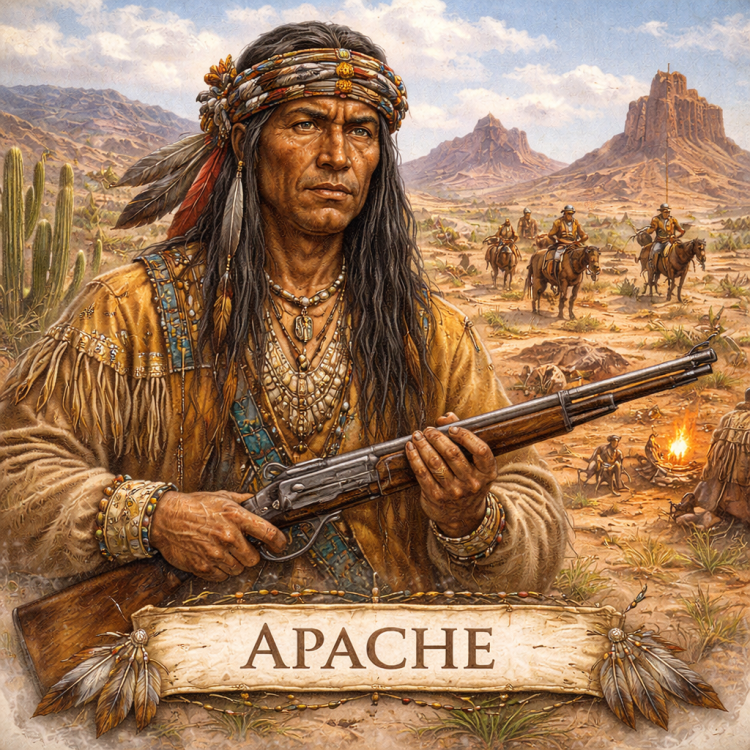
Apache
The Apache were a collection of related tribes who lived in the American Southwest, particularly in Arizona, New Mexico, and parts of Texas and Mexico. They maintained a nomadic lifestyle, relying on hunting, raiding, and trade.
During the 19th century, the U.S. government attempted to confine the Apache to reservations, leading to decades of conflict known as the Apache Wars (c. 1850–1886). One of the most famous Apache leaders was Geronimo, who resisted U.S. and Mexican forces for years before finally surrendering in 1886.
Cheyenne
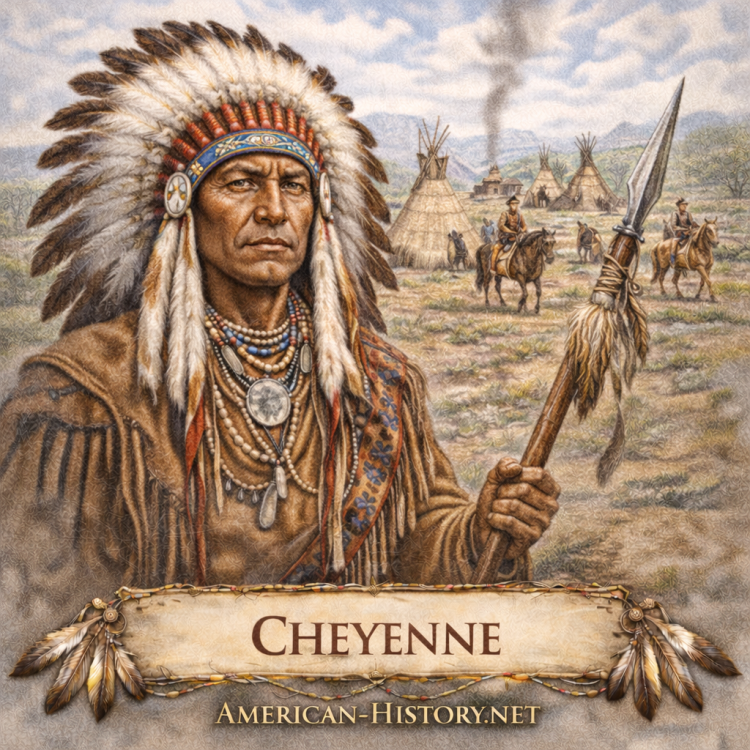
The Cheyenne were Plains Indians who traditionally lived as buffalo hunters across the Great Plains. They developed a strong warrior culture and complex social structures.
As settlers moved west in the 19th century, Cheyenne lands were increasingly encroached upon. The tribe suffered from warfare, broken treaties, and devastating diseases such as cholera. The Cheyenne fought alongside other tribes in major conflicts, including the Battle of the Little Bighorn (1876). Eventually, they were forced onto reservations, primarily in present-day Oklahoma and Montana.
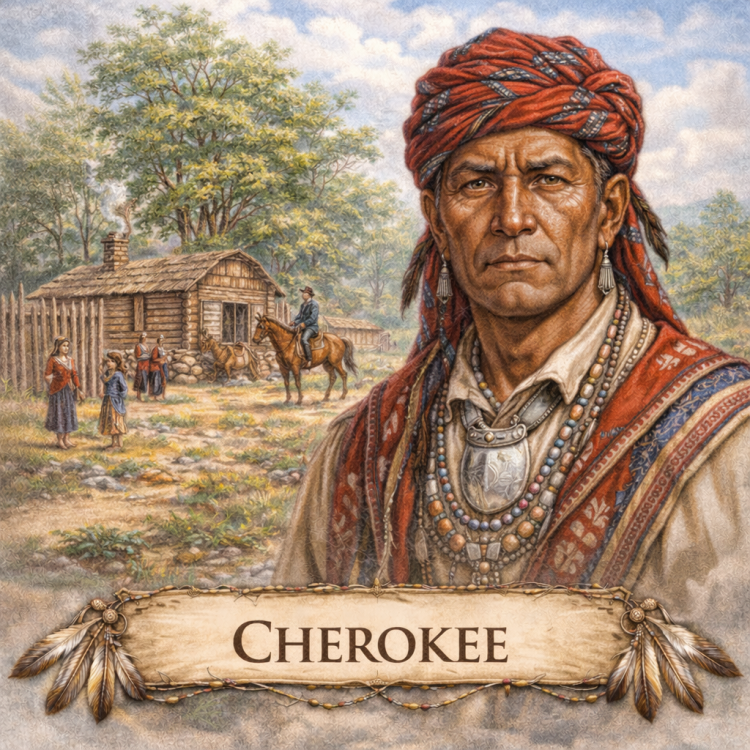
Cherokee
The Cherokee were one of the most politically organized Native American tribes and were often referred to as one of the “Five Civilized Tribes.” They adopted many European practices, including farming, written laws, and a written language developed by Sequoyah.
Despite these efforts, the U.S. government forced the Cherokee to relocate west under the Indian Removal Act. This forced migration, known as the Trail of Tears, resulted in the deaths of thousands of Cherokee people due to disease, starvation, and exposure.
Lakota
The Lakota, closely related to the Dakota and Nakota peoples, were a major Plains tribe who became expert horsemen and buffalo hunters after acquiring horses in the 18th century.
They played a key role in resistance to U.S. expansion, participating in conflicts such as the Battle of the Little Bighorn, where they defeated U.S. forces under General Custer. Later, the discovery of gold in the Black Hills, sacred Lakota land, led to treaty violations and renewed conflict. In 1890, the Lakota suffered the tragic Wounded Knee Massacre, marking the end of large-scale armed resistance on the Plains.
Shoshone
The Shoshone occupied a vast region covering parts of Nevada, Idaho, Wyoming, Utah, and Montana. They lived as hunter-gatherers, often using buffalo hides to construct cone-shaped tipis.
During the 19th century, the Shoshone were involved in conflicts such as the Snake War and the Bannock War. One of the most devastating events they experienced was the Bear River Massacre (1863), in which hundreds of Shoshone men, women, and children were killed by U.S. troops. Survivors were later confined to reservations.
Pawnee
The Pawnee were both farmers and hunters, living primarily along the Platte River in present-day Nebraska. Over time, pressure from rival tribes and settlers pushed them toward a more nomadic lifestyle.
The Pawnee frequently clashed with tribes such as the Sioux, Cheyenne, and Arapaho. Disease and warfare drastically reduced their population. In the late 19th century, many Pawnee served as scouts for the U.S. Army, assisting in campaigns against rival tribes.
Navajo
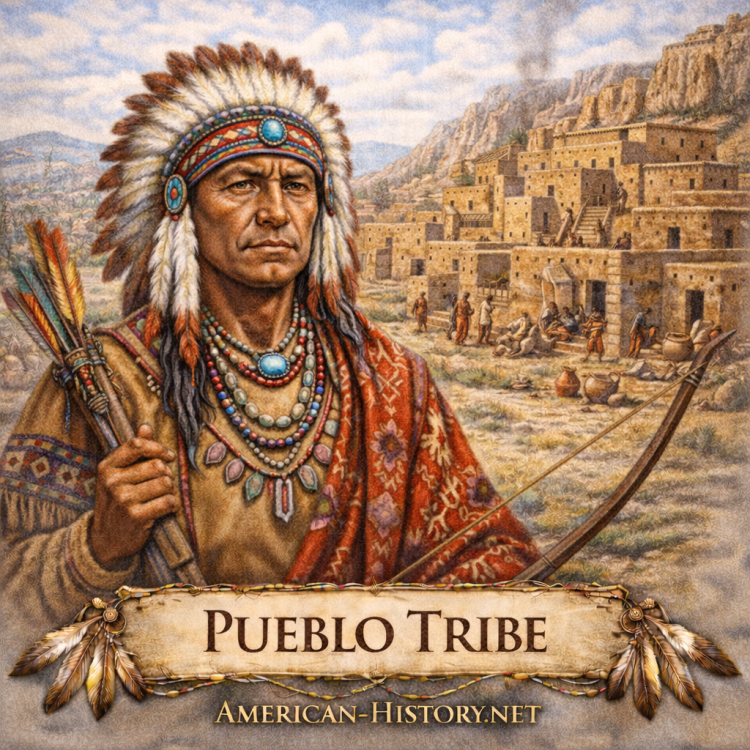
The Navajo lived in the Southwestern United States, inhabiting dome-shaped homes called hogans. They were skilled farmers, herders, and weavers, particularly known for sheep herding and textiles.
The Navajo suffered severe hardship during conflicts with both Mexican and U.S. forces. In the 1860s, they were forcibly removed from their homeland during the Long Walk, a brutal march to a reservation. Although they eventually returned, their society was permanently altered by displacement.
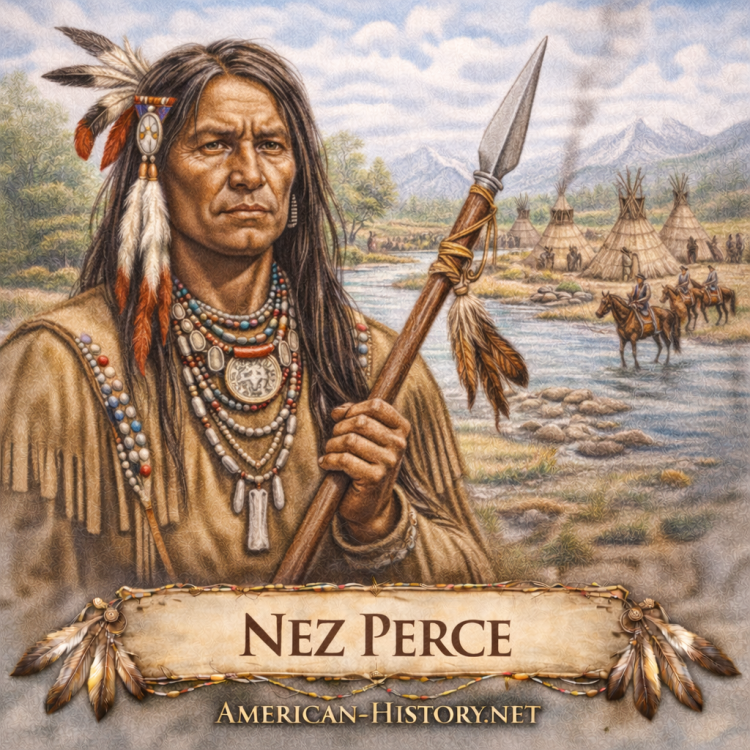
Nez Perce
The Nez Perce lived in the Pacific Northwest, maintaining seasonal lifestyles that included permanent winter villages and summer hunting camps.
In 1877, the U.S. government attempted to force the Nez Perce onto a reservation, leading to the Nez Perce War. Led by Chief Joseph, the tribe attempted to flee to Canada, fighting numerous engagements along the way. Despite their skill and determination, they were ultimately forced to surrender near the Canadian border.
🛠 Articles in Progress
The following Native American tribe articles are planned or currently being expanded. This section is used to track upcoming additions to this hub.
- Navajo (Diné) Tribe
- Choctaw Nation
- Creek (Muscogee) Confederacy
- Comanche Tribe
- Shawnee Tribe
- Ojibwe (Chippewa) People