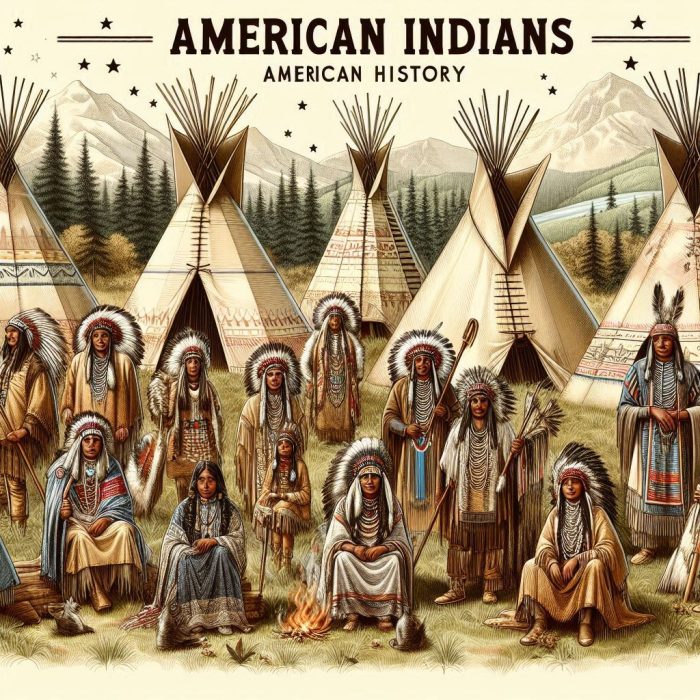
Native American history includes many influential leaders who resisted colonization, defended their people, and shaped the course of American expansion. These figures came from different tribes and regions, but each played a key role in conflicts between Native American nations, European powers, and later the United States.
This page provides a brief overview of several of the most well-known Native American leaders, with links to detailed articles exploring their lives, leadership, and historical impact.
Geronimo (Apache)
Geronimo was a prominent leader and warrior of the Apache, best known for his resistance against both Mexican and United States military forces in the American Southwest.
After Mexican soldiers killed members of his family, Geronimo took part in raids and resistance campaigns against Mexican authorities. When Arizona later came under U.S. control, the federal government attempted to force Apache groups onto reservations. Geronimo repeatedly escaped confinement and led small bands in guerrilla warfare.
After years of pursuit, he surrendered for the final time in 1886, marking the end of major armed Apache resistance in the region.
Chief Joseph (Nez Perce)
Chief Joseph was a leader of the Nez Perce tribe in the Pacific Northwest. During the 1870s, the U.S. government attempted to force the Nez Perce from their ancestral lands onto a reservation.
Refusing to comply, Chief Joseph led approximately 700 men, women, and children on a long retreat toward Canada, hoping to find refuge. Over a journey of more than 1,100 miles, the Nez Perce fought several engagements with U.S. forces while skillfully evading capture.
They were ultimately forced to surrender just short of the Canadian border. Chief Joseph became widely respected for his leadership, restraint, and humanitarian conduct during the conflict.
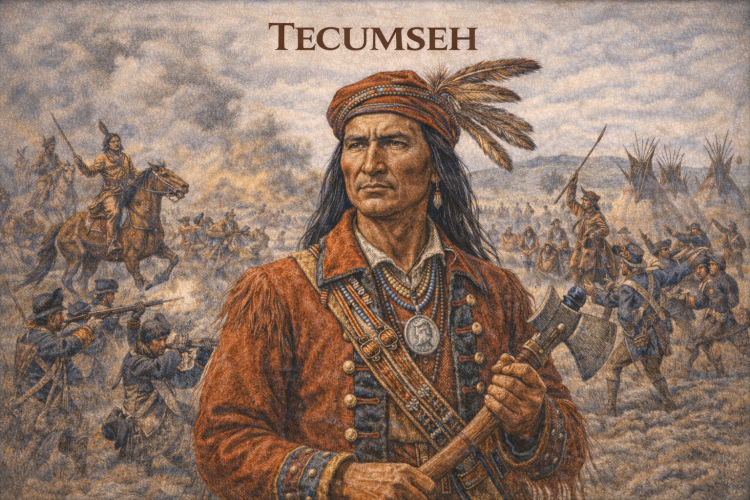
Tecumseh (Shawnee)
Tecumseh was a Shawnee leader who sought to unite Native American tribes into a confederation to resist U.S. expansion in the Ohio Valley.
After his people were pushed from their lands, Tecumseh organized a broad resistance movement that became known as Tecumseh’s War. Although defeated, he later allied with British forces during the War of 1812, believing Britain offered a better chance of halting American settlement.
Tecumseh was killed in 1813 at the Battle of the Thames, dealing a major blow to Native American resistance in the Old Northwest.
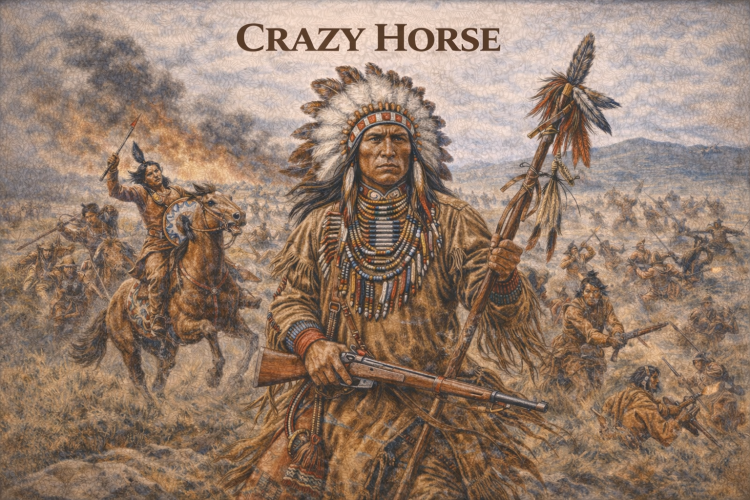
Crazy Horse (Lakota)
Crazy Horse was a respected war leader of the Lakota Sioux, known for his bravery and tactical skill.
He played a key role in resisting U.S. military campaigns in the Great Plains and was instrumental in Native American victories during the Great Sioux War, including the Battle of the Little Bighorn.
After years of fighting, Crazy Horse surrendered in 1877. Later that year, he was fatally wounded while in military custody, becoming one of the most iconic figures of Native American resistance.
Red Cloud (Lakota)
Red Cloud was a Lakota leader who successfully led Native American forces against the U.S. Army during Red Cloud’s War (1866–1868).
His campaign targeted U.S. forts and supply routes along the Bozeman Trail. Unlike most Native American conflicts, Red Cloud’s War ended in a clear Native American victory, forcing the U.S. government to abandon its forts and recognize Lakota control of the region.
Afterward, Red Cloud transitioned into a diplomatic role and lived on a reservation while continuing to advocate for his people.
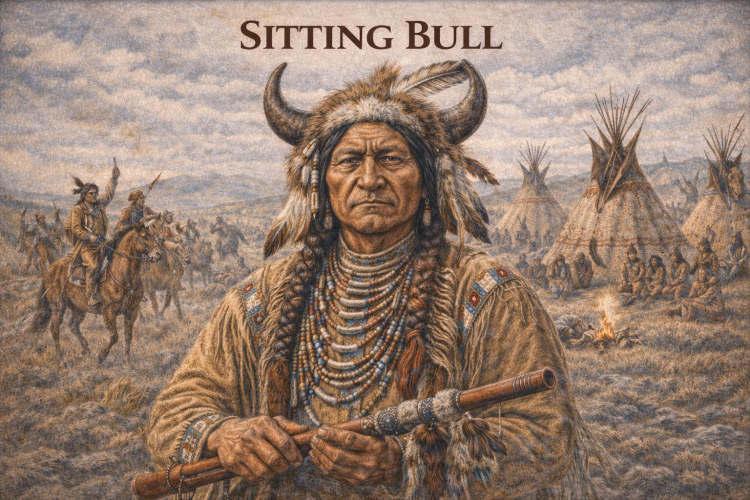
Sitting Bull (Lakota)
Sitting Bull was a spiritual leader and war chief of the Lakota Sioux, known for uniting Native American warriors during key conflicts.
He played a central role in resistance efforts during Red Cloud’s War and the Great Sioux War, and his leadership contributed to the Native American victory at the Battle of the Little Bighorn.
After years of resistance, Sitting Bull surrendered in 1881. He later traveled briefly with Buffalo Bill’s Wild West Show before returning to reservation life. In 1890, he was killed during an attempted arrest by reservation police.
Black Hawk (Sauk)
Black Hawk was a Sauk leader who resisted U.S. settlement in the Midwest. He fought to reclaim lands taken through disputed treaties and led resistance during the Black Hawk War of 1832.
After defeat, Black Hawk was captured and imprisoned. Later in life, he dictated an autobiography, providing one of the earliest Native American firsthand accounts of conflict with the United States.
Cochise (Apache)
Cochise was an Apache chief whose people lived in what is now southern Arizona and northern Mexico.
After escalating tensions with settlers and the U.S. military, Cochise led a prolonged resistance campaign marked by raids and small-scale engagements. In 1872, he negotiated a peace agreement that allowed his people to remain on a reservation in their traditional territory.
Articles in Progress
This section is being expanded. Additional articles on Native American leaders will be added to provide broader biographical coverage and historical context.
- Geronimo (expanded biography)
- Chief Joseph – Nez Perce Leadership
- Tecumseh and the Native American Confederacy
- Crazy Horse and the Great Sioux War
- Sitting Bull after Little Bighorn
- Red Cloud and Treaty Resistance
- Cochise and the Apache Wars