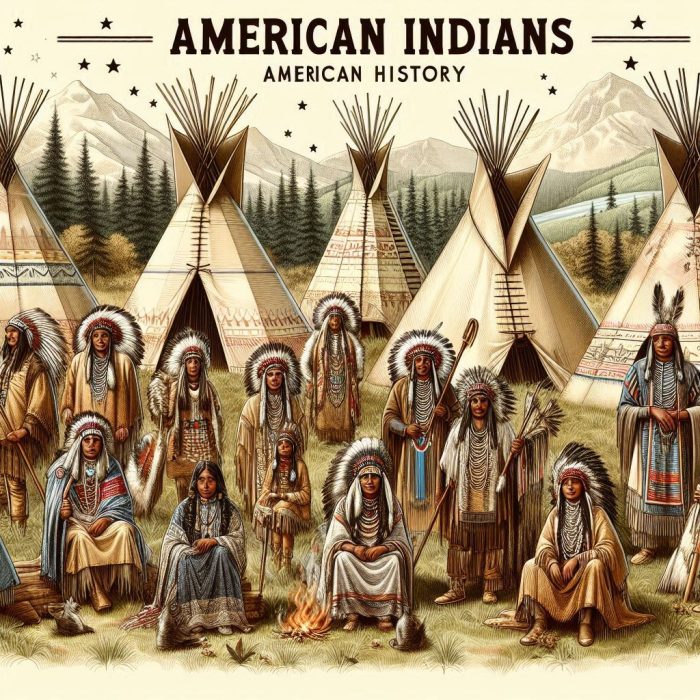
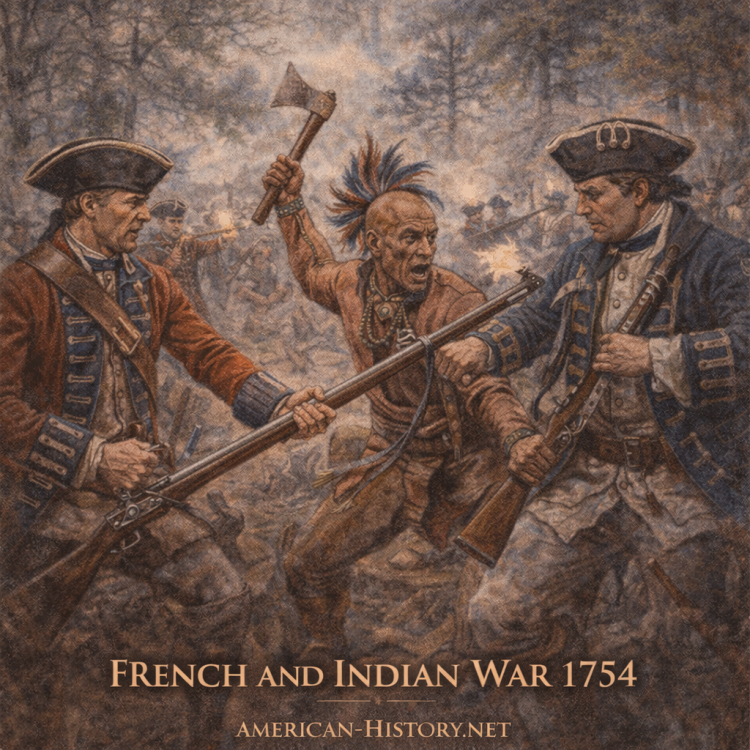
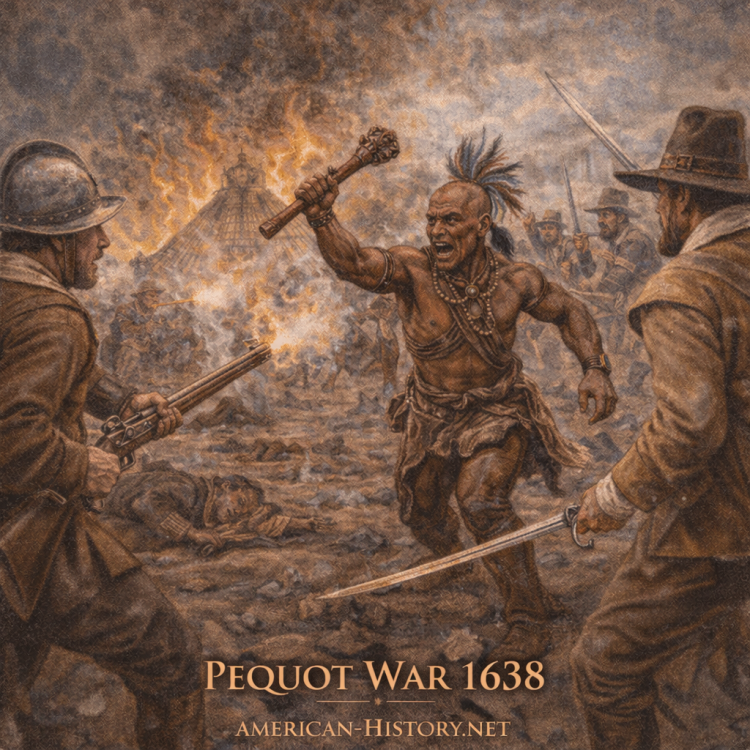
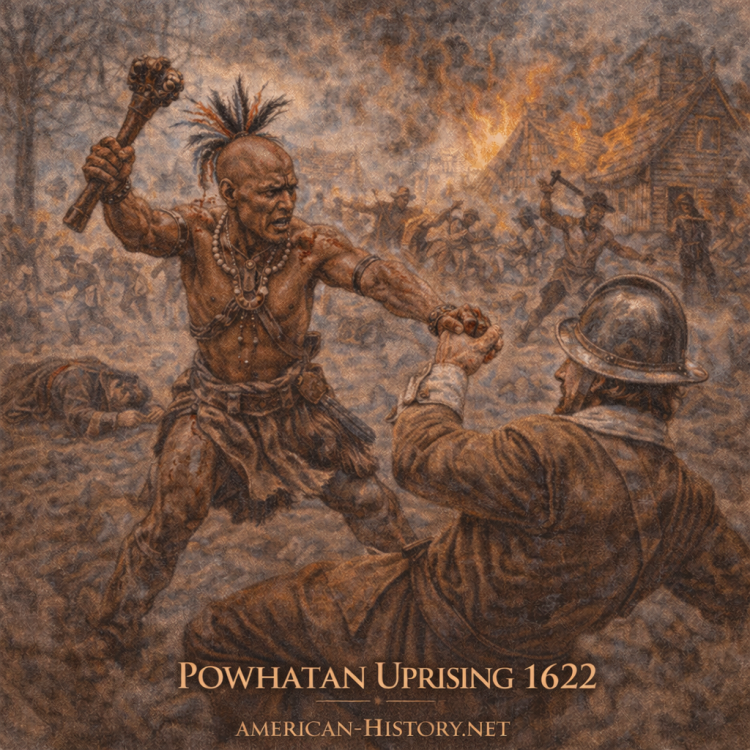
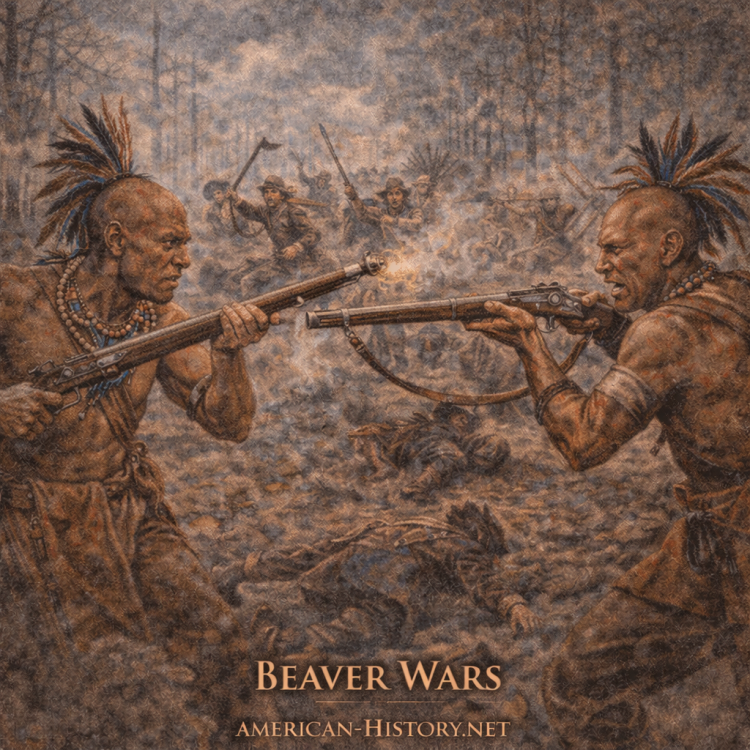

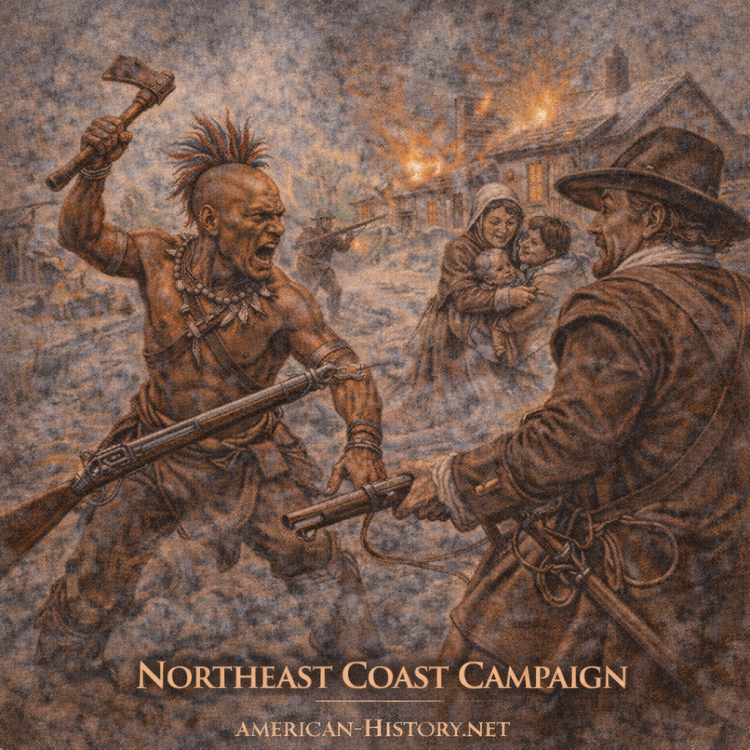
From the earliest years of European colonization to the closing of the American frontier, Native American tribes fought numerous wars to defend their lands, cultures, and independence. These conflicts unfolded over centuries—beginning in the colonial era, intensifying during westward expansion, and continuing into the late 19th century as the United States consolidated control over the continent. This page provides a chronological overview of the major wars and armed conflicts involving Native Americans, with links to detailed articles on each conflict.
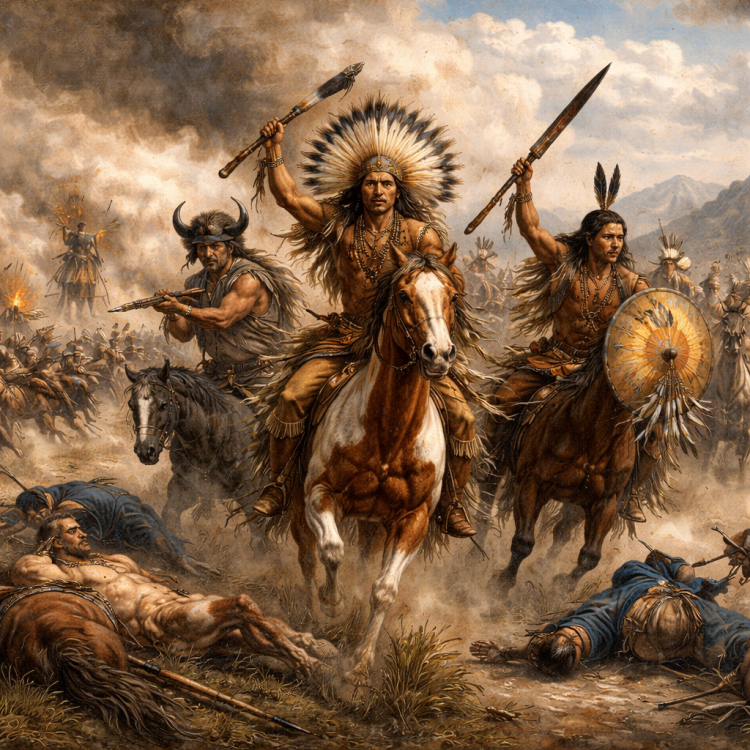
Many early Native American wars occurred during the colonial period and are known by different names depending on region or historical source. Some conflicts overlapped or formed part of larger wars between European powers. This hub focuses on major uprisings, resistance movements, and wars involving Native American tribes during early North American settlement.
Native Americans and the American Revolutionary War (1775–1783)
Although the American Revolutionary War was primarily fought between Britain and the American colonies, Native American tribes were deeply affected and actively involved. Many tribes sided with Britain, believing British rule offered better protection against colonial expansion.
When Britain lost the war, it ceded vast territories to the newly formed United States—lands that included Native American homelands. As a result, many tribes lost territory and autonomy, setting the stage for future conflicts.
Northwest Indian War (1785–1795)
As the United States expanded westward after independence, settlers moved into the Northwest Territory. Native American tribes such as the Shawnee, Miami, and Ottawa resisted this expansion.
U.S. forces initially suffered major defeats, but a reorganized army eventually defeated the Native American confederation at the Battle of Fallen Timbers in 1794. The following year, tribes were forced to sign a treaty surrendering much of their land.
Black Hawk War (1832)
The Black Hawk War was led by Black Hawk, a Sauk war chief, who resisted U.S. efforts to force his people off their ancestral lands in present-day Illinois and Iowa.
After initial Native American successes, U.S. military forces overwhelmed Black Hawk’s band. By August 1832, most of the Native American fighters were killed or captured, and Black Hawk was imprisoned.
Apache Wars (c. 1850–1900)
The Apache Wars were a series of conflicts between Apache tribes and the United States in the Southwest. These wars lasted for decades and involved repeated military campaigns.
One of the most famous Apache leaders was Geronimo, who resisted U.S. forces until his surrender in 1886. The Apache Wars marked one of the final phases of armed Native American resistance in the region.
Second Seminole War (1835–1842)
The Second Seminole War took place in Florida and was fought over U.S. attempts to forcibly remove the Seminole people from their lands.
Led by Osceola, the Seminoles used guerrilla tactics to ambush U.S. troops, making the war one of the most costly Native American conflicts for the United States. Eventually, most Seminoles were forced west, though some remained hidden in Florida.
Red Cloud’s War (1866–1868)
Red Cloud’s War was fought along the Bozeman Trail, which crossed Native American lands in present-day Wyoming and Montana.
Led by the Lakota chief Red Cloud, Native American forces successfully attacked U.S. forts and supply routes. This conflict ended with a rare Native American victory, forcing the U.S. to abandon its forts and recognize tribal control of the region.
Great Sioux War (1876–1877)
After gold was discovered in the Black Hills—land guaranteed to the Sioux by treaty—the U.S. government attempted to seize the territory.
Native American forces won notable victories, including the Battle of the Little Bighorn, but were eventually defeated. The Sioux were forced onto reservations, and their lands were taken.
Nez Perce War (1877)
The Nez Perce War began when the U.S. government ordered the Nez Perce tribe to leave their ancestral lands in the Pacific Northwest.
Led by Chief Joseph, the Nez Perce attempted to flee to Canada, fighting numerous engagements along the way. Despite tactical successes, they were ultimately forced to surrender near the Canadian border.
Texas–Indian Wars (c. 1820–1875)
The Texas–Indian Wars involved tribes such as the Comanche and Kiowa, who fought first against Spanish and Mexican authorities and later against the United States.
After Texas joined the U.S., American forces intensified efforts to subdue Native American resistance. By 1875, most Native American groups in Texas had been defeated and confined to reservations.
Why These Wars Matter
The Native American wars were not isolated conflicts but part of a broader struggle over land, sovereignty, and survival. Together, they shaped the expansion of the United States and had lasting consequences for Native American communities that continue to be felt today.
Articles in Progress
This section is being expanded. Additional articles related to Native American wars and conflicts will be added to provide broader coverage and historical context.
- King Philip’s War
- First Seminole War
- Third Seminole War
- Yamasee War
- Creek War (1813–1814)
- Sand Creek Massacre
- Wounded Knee (1890)