
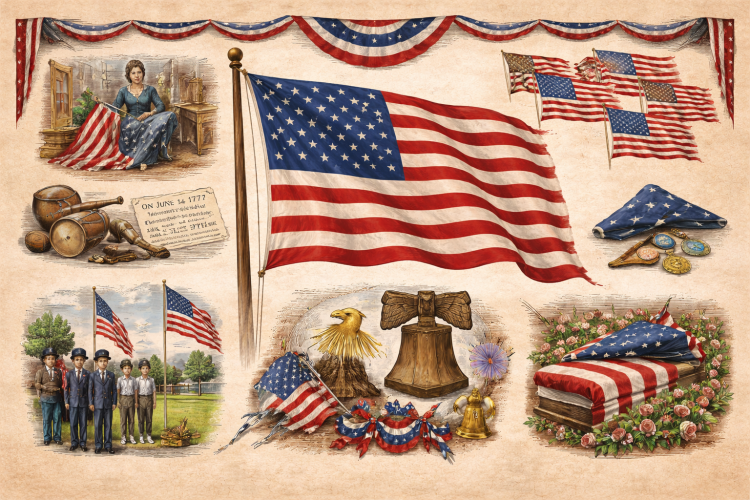
The American flag is one of the most recognizable national symbols in the world. Known as the Stars and Stripes, it represents the founding ideals of the United States, the growth of the nation, and the sacrifices made in its defense. This hub page provides an overview of the history, design, meaning, and evolution of the U.S. flag, while linking to deeper articles that explore each topic in detail.
From its origins during the American Revolutionary War to its modern 50-star design, the flag has changed alongside the nation it represents. Below, you’ll find the key moments that shaped the American flag and the stories behind its most important transformations.
Origins of the American Flag
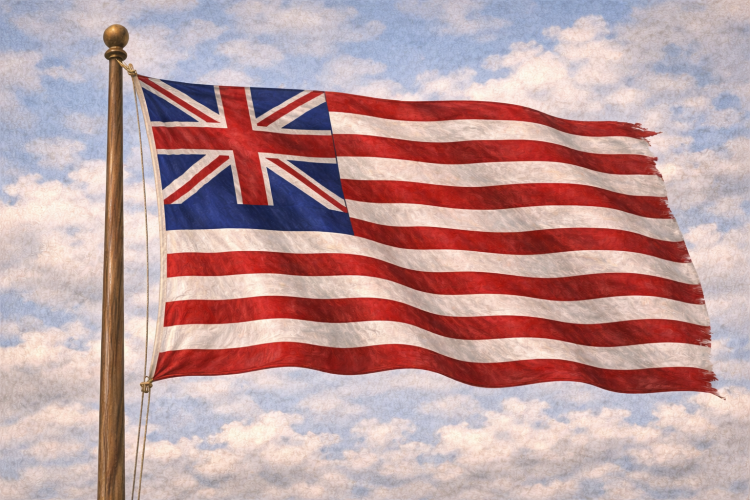
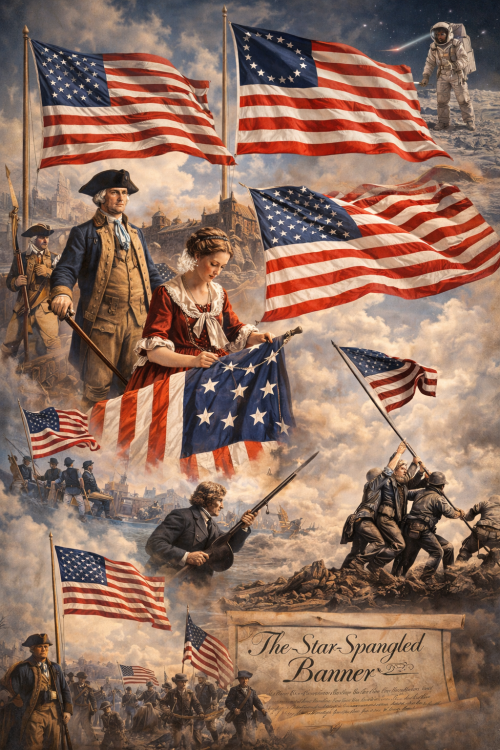
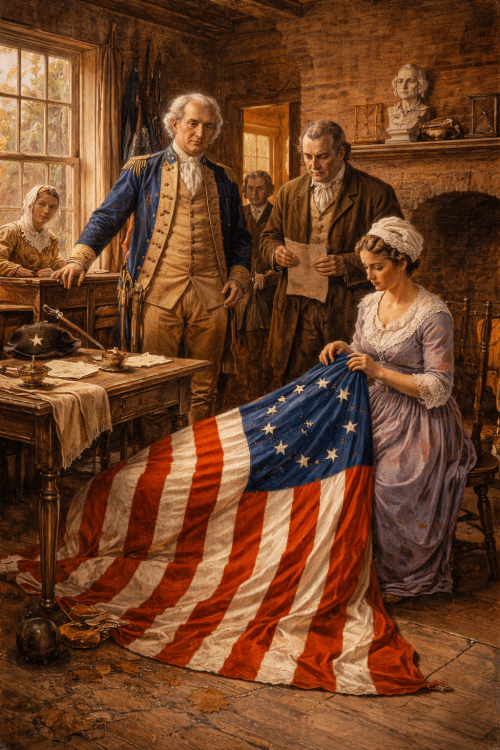
The origins of the American flag are closely tied to the American Revolution (1775–1783). As the thirteen colonies moved toward independence from British rule, they required a unifying symbol to represent their shared cause.
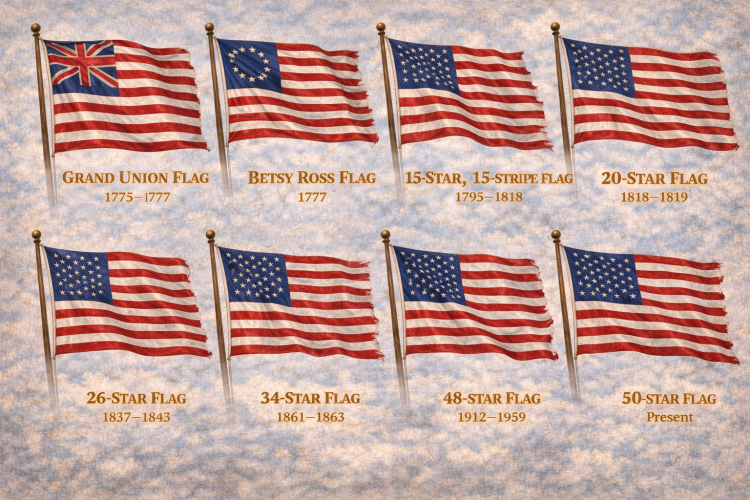
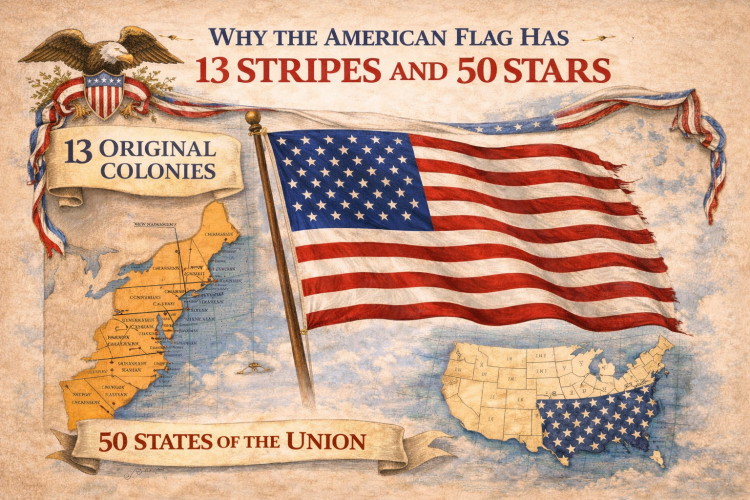
In June 1777, the Second Continental Congress passed a formal resolution establishing a national flag. This resolution stated that the flag would feature thirteen alternating red and white stripes and thirteen white stars on a blue field, representing the original thirteen colonies.
This moment marked the first official recognition of a national flag for the United States.
Meaning of the Flag’s Design
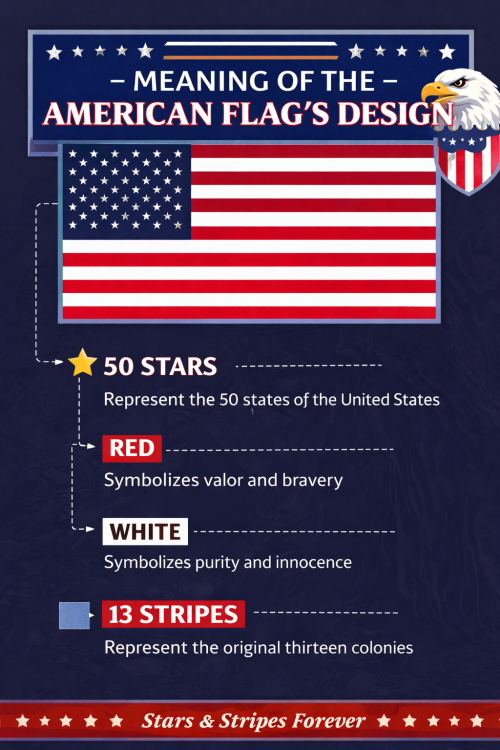
Every element of the American flag carries symbolic meaning:
- Thirteen stripes represent the original colonies that declared independence
- Stars represent the states of the Union
- Blue symbolizes vigilance, perseverance, and justice
- Red represents valor and bravery
- White signifies purity and ideals
Although these meanings were later formalized, the flag quickly became a powerful symbol of unity and national identity.
Evolution of the Flag Over Time
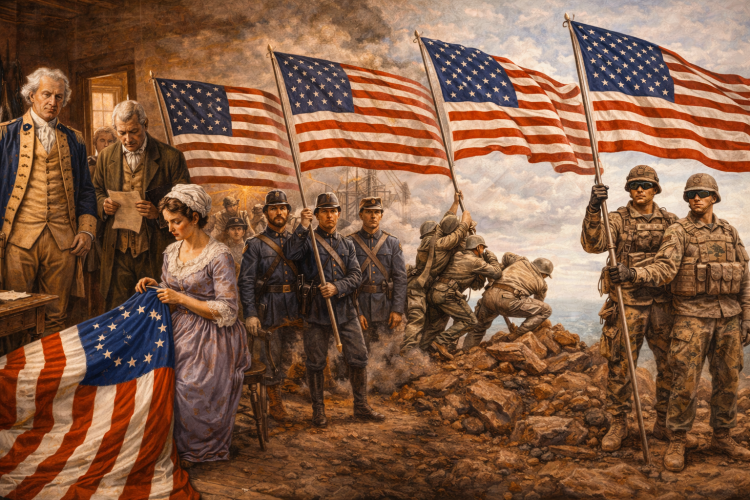
As the United States expanded, the flag evolved to reflect the nation’s growth.
Early Changes
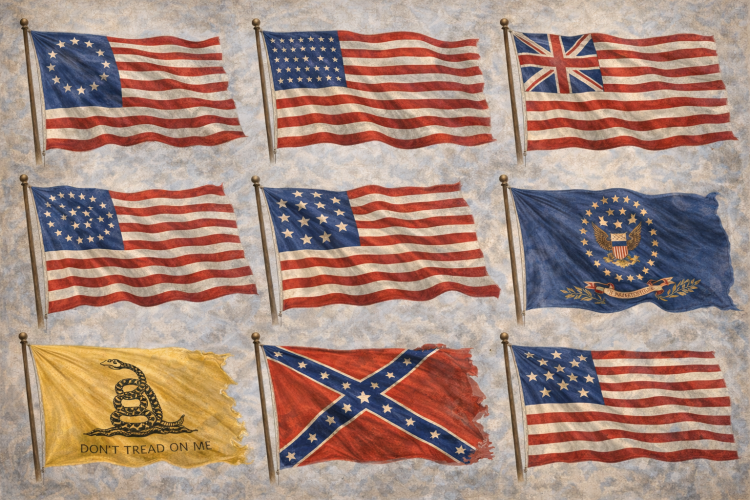
- In 1795, the flag was altered to include 15 stars and 15 stripes after Vermont and Kentucky joined the Union.
- This design proved impractical as more states were added.
The 1818 Flag Act
In 1818, Congress passed legislation restoring the stripes to thirteen permanently while allowing the number of stars to increase as new states joined the Union.
From that point forward, a new star would be added for each state, officially taking effect on July 4 following a state’s admission.
Betsy Ross and Flag Legends
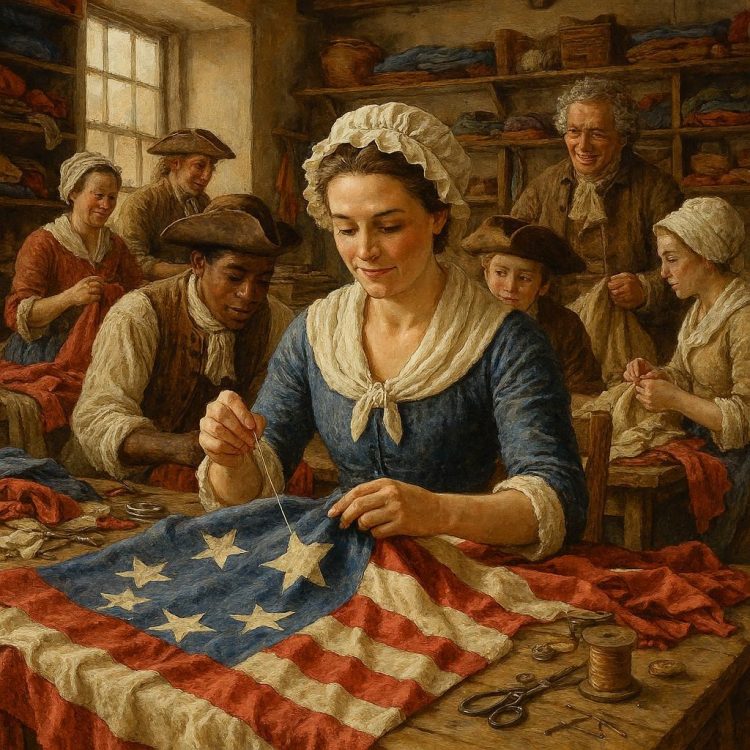
One of the most enduring stories associated with the American flag involves Betsy Ross, a Philadelphia seamstress often credited with sewing the first flag.
While this story remains popular in American culture, there is no definitive historical evidence confirming her role. Most historians consider the tale part of American folklore rather than established fact.
Despite this uncertainty, Betsy Ross remains an important symbolic figure in the history of the flag.
The Star-Spangled Banner
The American flag became permanently linked to national identity during the War of 1812.
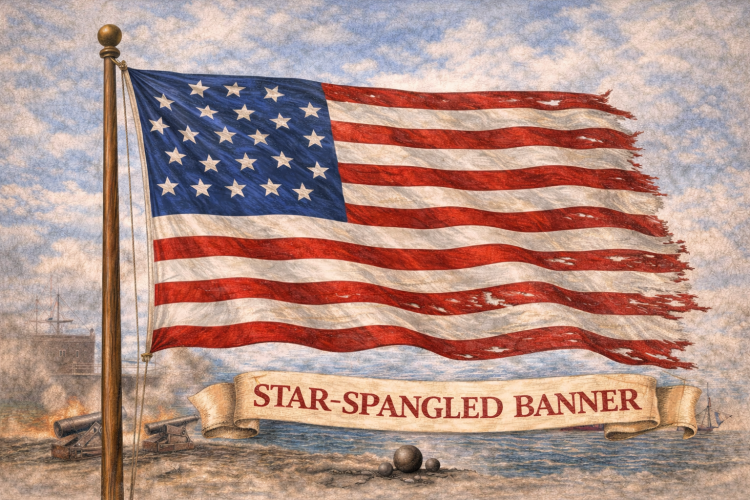
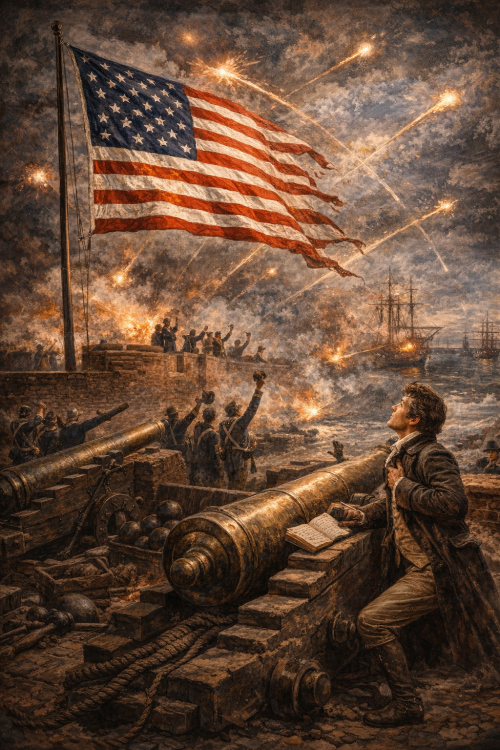
In 1814, a large American flag flew over Fort McHenry during the British bombardment of Baltimore. Witnessing the flag still flying after the attack, Francis Scott Key wrote a poem inspired by the scene. That poem later became “The Star-Spangled Banner,” which was adopted as the national anthem of the United States.
This moment cemented the flag’s role as a symbol of resilience and national pride.
The Modern American Flag
The current version of the American flag features 50 stars, representing the fifty states. This design was adopted in 1960, following Alaska and Hawaii’s admission to the Union.
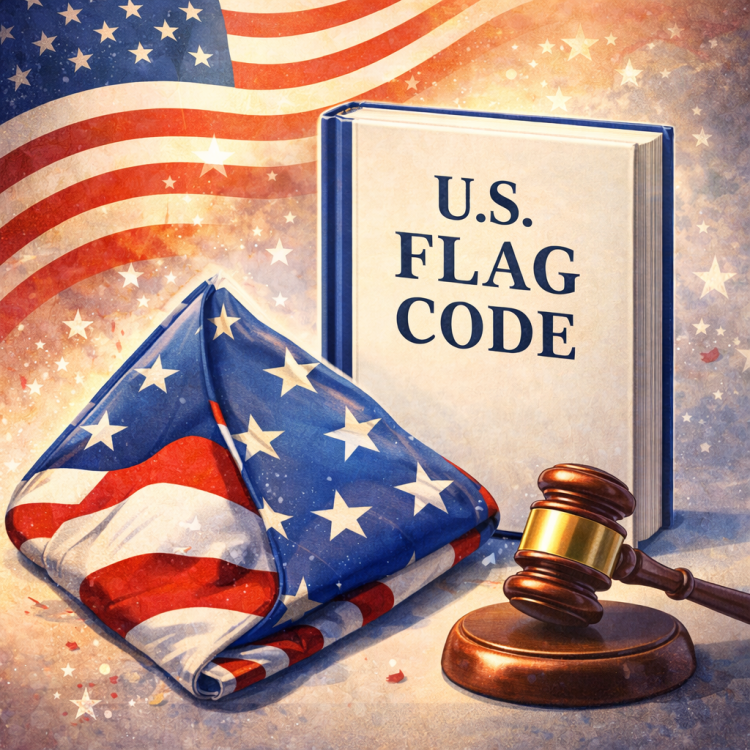
Today, the flag is governed by the U.S. Flag Code, which outlines proper display, handling, and respect for the national flag.
The American flag continues to serve as a symbol of:
- National unity
- Democratic ideals
- Military sacrifice
- Civic identity

Explore Related Topics
This hub connects to more detailed articles covering key aspects of the American flag’s history:
- The American Revolutionary War
- The U.S. Flag Code and etiquette
- Betsy Ross and flag myths
- The War of 1812 and Fort McHenry
- Changes in flag design through history
Each of these topics expands on the foundation introduced here.
Why the American Flag Still Matters
More than two centuries after its creation, the American flag remains a powerful national symbol. It reflects the nation’s origins, its expansion, and its ongoing struggles and achievements. Understanding the history of the flag provides deeper insight into the broader story of the United States itself.
🇺🇸 Frequently Asked Questions
When was the first American flag officially adopted?
The first official U.S. flag was adopted on June 14, 1777, by the Second Continental Congress.
Why are there 13 stripes on the flag?
The stripes represent the original thirteen colonies that declared independence from Britain.
What do the stars symbolize?
Each star represents a U.S. state. The current flag has 50 stars for the 50 states.
Why is the flag linked to the national anthem?
During the War of 1812, Francis Scott Key saw the flag still flying over Fort McHenry, inspiring “The Star-Spangled Banner.”
📝 Quick Knowledge Quiz
- How many stars are on the current American flag?
A) 48 B) 49 C) 50 - What event inspired the national anthem?
A) Declaration of Independence
B) Battle of Fort McHenry
C) Civil War - What do the stripes represent?
A) States B) Colonies C) Presidents
Answers: 1) C 2) B 3) B
📖 Key Terms Glossary
Second Continental Congress — The governing body of the American colonies during the Revolutionary War.
Stars and Stripes — A common nickname for the American flag.
Fort McHenry — A U.S. fort in Baltimore where the flag inspired the national anthem.
National Anthem — A patriotic song officially representing a country.
Union — The collective states of the United States of America.