The American Revolution was the result of growing political, economic, and military tensions between Great Britain and its North American colonies. Rather than being sparked by a single incident, the revolution unfolded through a series of interconnected events that gradually pushed the colonies toward independence.
This page serves as an overview of the most important developments leading up to, during, and immediately after the American Revolution. Several of these events are explored in greater detail in dedicated articles.
Background: British Colonies in North America
Beginning in the early 17th century, British settlers established permanent colonies along the Atlantic coast of North America. Over time, these colonies grew in population, wealth, and political confidence.
By the mid-18th century, Britain sought to exert tighter control over its colonies and benefit more directly from their economic success. This shift in policy created increasing friction between colonial assemblies and the British government.
The French and Indian War (1754–1763)
The French and Indian War was fought between Britain and France, along with their respective Native American allies. Britain emerged victorious, gaining significant territory in North America.
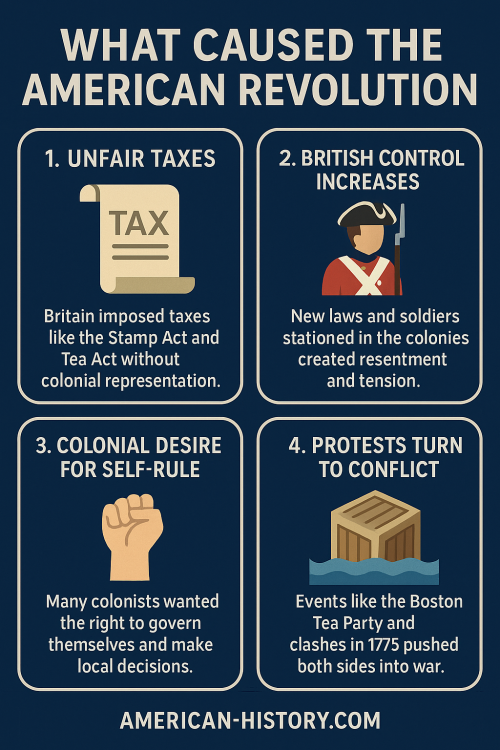
However, the war left Britain deeply in debt and required the continued stationing of British troops in the colonies. To cover these costs, Parliament turned to taxing the colonies—an action that would have far-reaching consequences.
Taxation Without Representation
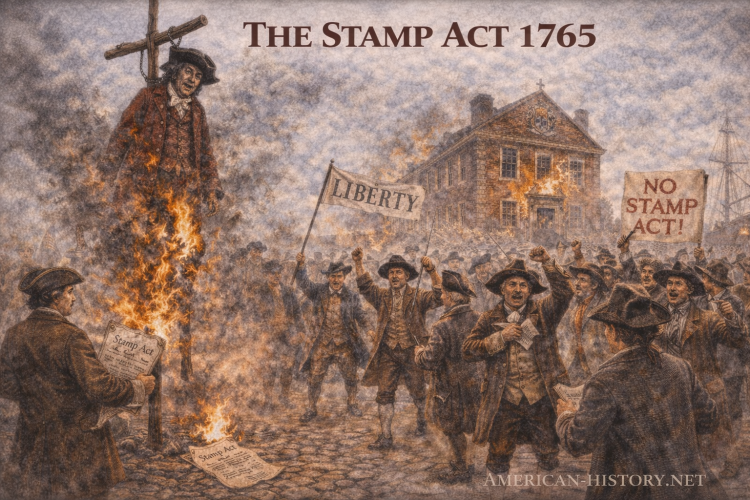
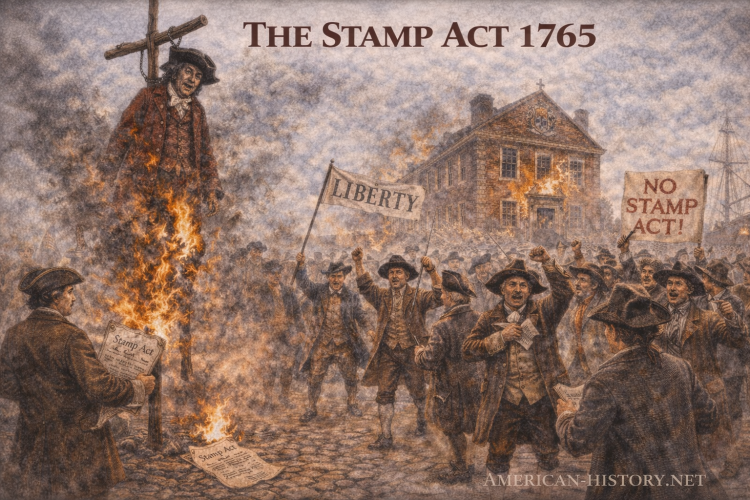
After 1763, Parliament introduced a series of new taxes on the colonies, including the Stamp Act, Sugar Act, and Townshend Acts. These measures were imposed without colonial representation in Parliament.
Colonists protested these taxes through boycotts, petitions, and public demonstrations, arguing that taxation without representation violated their rights as British subjects.
👉 Learn more:
- The Stamp Act of 1765
🧭 Click to Reveal: Why the Colonies Moved Toward Revolution
Why did Britain tighten control after 1763?
Britain emerged from the French and Indian War heavily in debt and believed stronger control over the colonies would increase revenue and maintain imperial authority.
Why did colonists oppose British taxes so strongly?
Colonists argued that taxes imposed by Parliament were illegitimate because the colonies had no direct representation in the British government.
Why did protests become confrontational?
Boycotts and petitions failed to bring change, and the presence of British troops in colonial cities increased tension, leading to violent encounters.
Did colonists initially want independence?
Most colonists first sought reform within the British Empire, but repeated failures to resolve disputes gradually convinced many that independence was the only solution.
Rising Tensions in Boston
The Boston Massacre (1770)
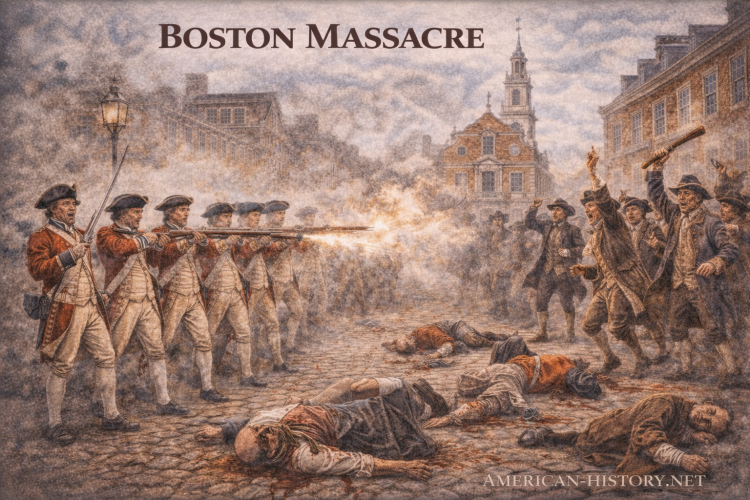
To enforce tax laws and maintain order, British troops were stationed in Boston. On March 5, 1770, tensions erupted when a confrontation between soldiers and civilians ended with five colonists dead.
The incident, later known as the Boston Massacre, intensified anti-British sentiment and became a powerful symbol of colonial resistance.
👉 Read the full article:
- The Boston Massacre
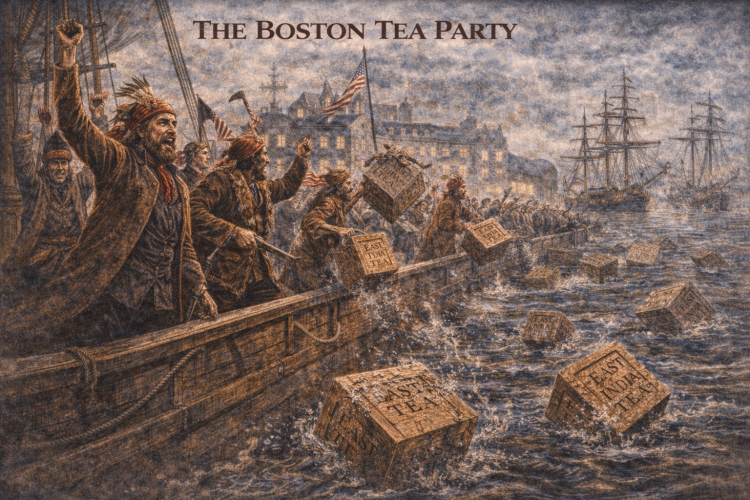
The Boston Tea Party (1773)
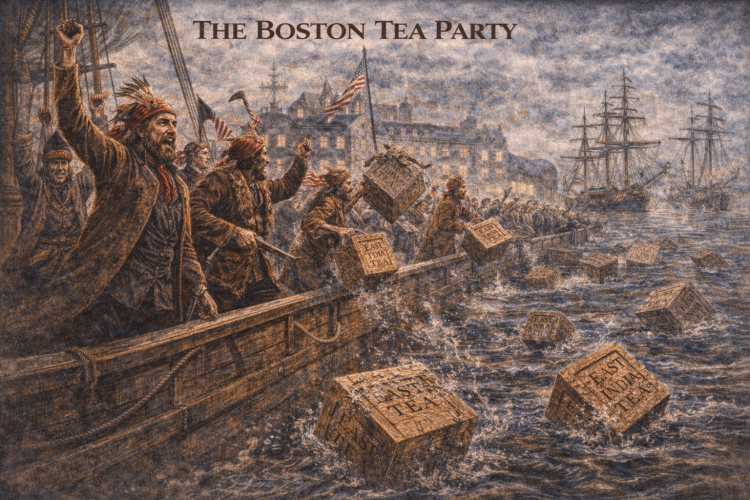
In 1773, Parliament passed the Tea Act, granting the British East India Company a monopoly on tea sales in the colonies. Colonists viewed this as another attempt to impose unfair taxes and control colonial trade.
In response, protesters boarded British ships in Boston Harbor and dumped large quantities of tea into the water—an act that became known as the Boston Tea Party.
👉 Read the full article:
- The Boston Tea Party
Loyalists and Patriots
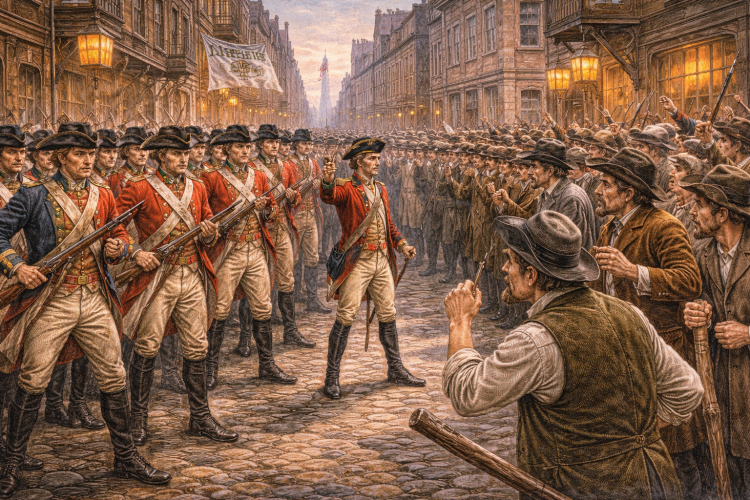
As tensions escalated, colonists became increasingly divided.
- Loyalists supported remaining part of the British Empire.
- Patriots favored independence and self-government.
While many colonists initially sought compromise, British refusal to address colonial grievances pushed more Americans toward the Patriot cause.
The American Revolutionary War (1775–1783)
Open warfare began in 1775 with the Battles of Lexington and Concord. Though the early fighting produced no decisive winner, it marked the beginning of a prolonged conflict between Britain and the colonies.
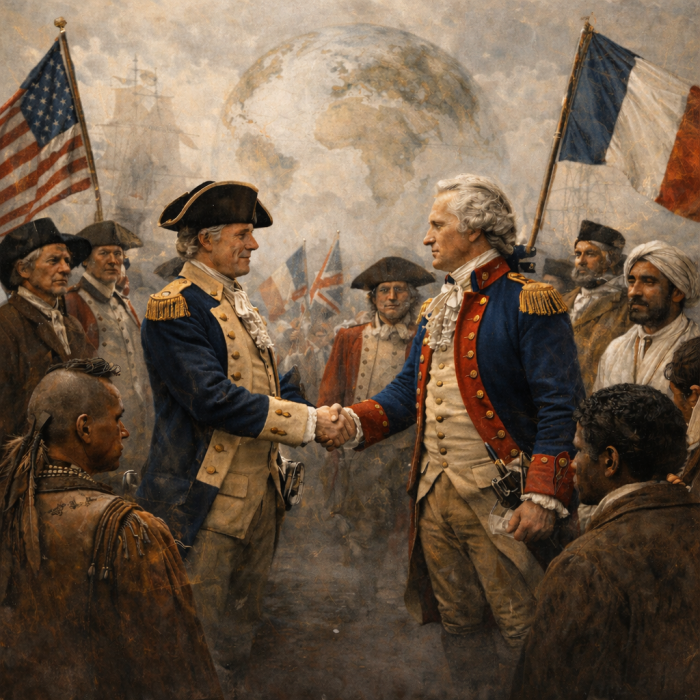
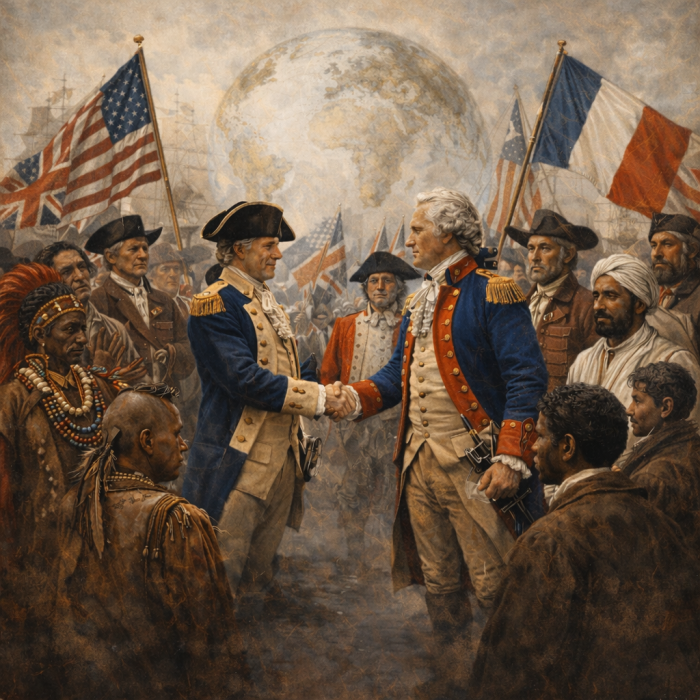
Under the leadership of George Washington, the Continental Army gradually improved in strength and organization. The war expanded into a global conflict when France allied with the American cause.
The Continental Congresses
First Continental Congress (1774)
Delegates from the thirteen colonies met to coordinate resistance to British policies and petitioned King George III for relief from oppressive laws.
Second Continental Congress (1775–1781)
After fighting began, the Second Continental Congress assumed the role of a central governing body. It organized the Continental Army, managed diplomacy, and directed the war effort.
Declaration of Independence (1776)
On July 4, 1776, the Second Continental Congress formally adopted the Declaration of Independence, announcing that the thirteen colonies were no longer part of the British Empire.
This declaration asserted the principles of natural rights and self-government and marked the official birth of the United States.
The End of the Revolutionary War
Although Britain won early victories, American forces gained momentum with French military support. In 1781, British General Cornwallis surrendered at Yorktown, effectively ending major fighting.
The war formally concluded in 1783 with the signing of the Treaty of Paris, in which Britain recognized American independence.
Legacy of the American Revolution
The American Revolution established the United States as an independent nation founded on republican ideals. While it resolved colonial rule, it left unresolved issues—such as federal authority, economic inequality, and slavery—that would continue to shape American history and eventually contribute to internal conflict, including the American Civil War.
❓ Causes of the American Revolution — Frequently Asked Questions
Why did Britain begin taxing the American colonies?
After the French and Indian War, Britain faced heavy debt and believed the colonies should help pay for their own defense and administration.
What did “taxation without representation” mean?
Colonists argued that Parliament had no right to tax them because they had no elected representatives in the British government.
Why was Boston central to colonial resistance?
Boston was a major port city with strong traditions of political activism, making it a focal point for protests against British authority.
Did all colonists support independence?
No. Many colonists remained loyal to Britain or hoped for compromise. Support for independence grew gradually as tensions escalated.