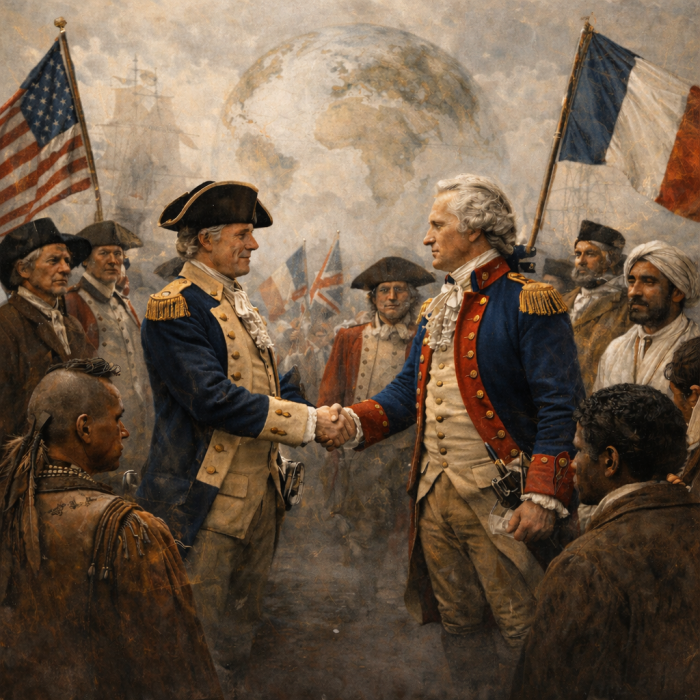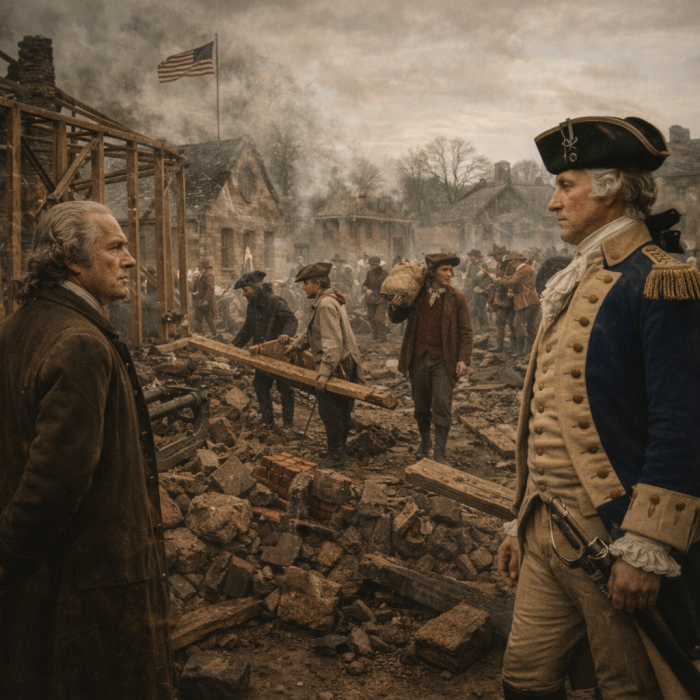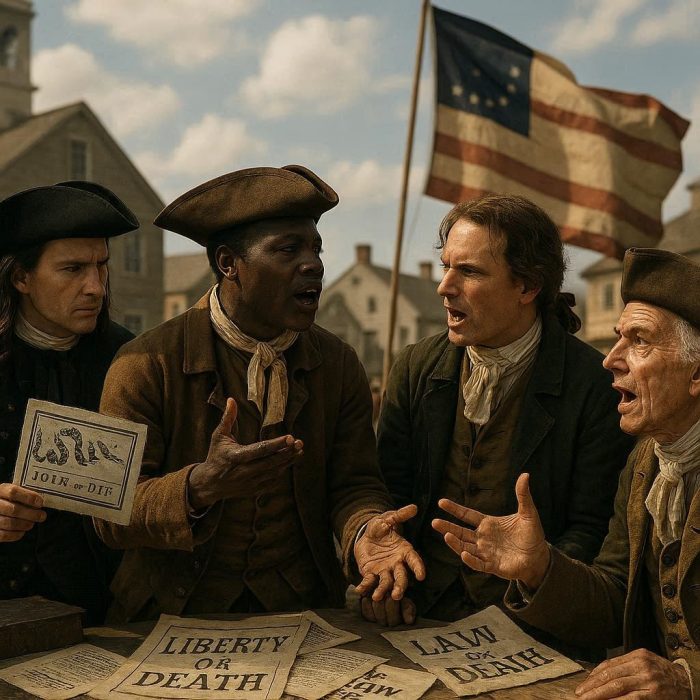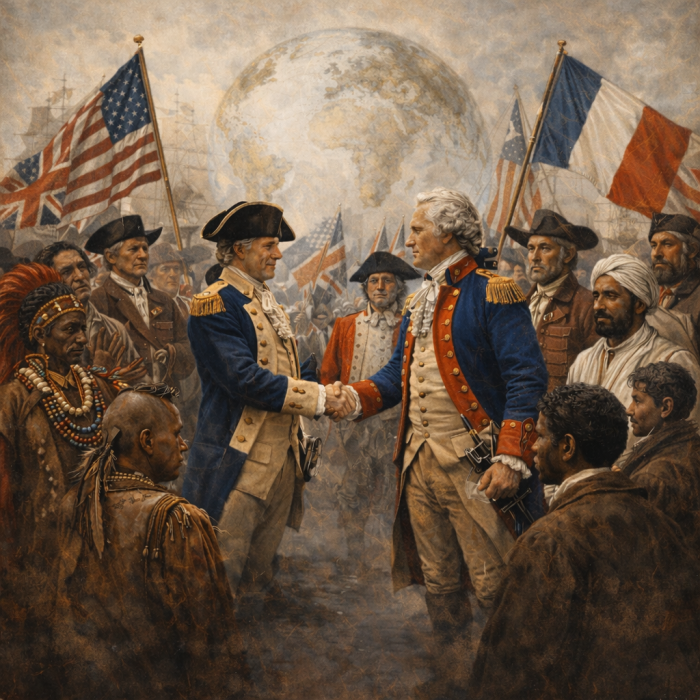

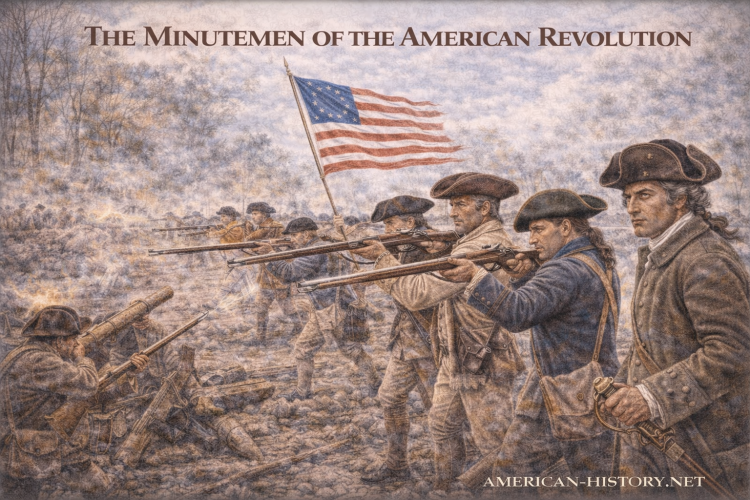
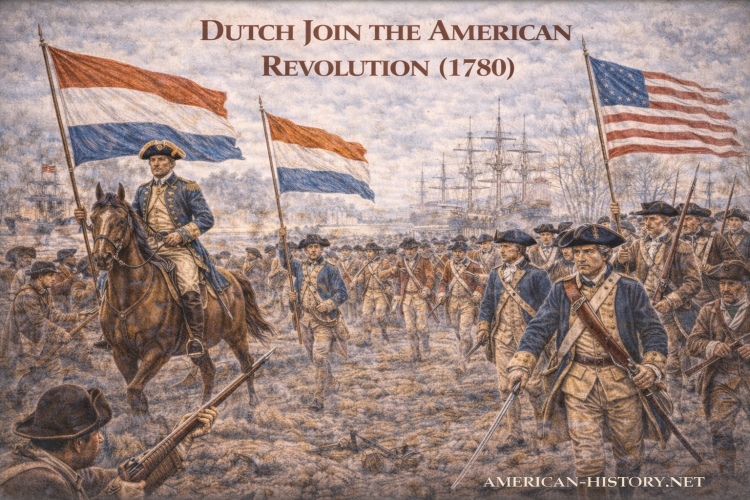
The American Revolutionary War was fought between Great Britain and its thirteen American colonies from 1775 to 1783. What began as resistance to British authority gradually developed into a full-scale war for independence. Fighting spread across North America and eventually drew in major European powers, turning the conflict into a global war.
Below is an overview of the key phases and battles of the American Revolutionary War, highlighting how the conflict evolved from early skirmishes to final victory.
🧭 Explore the American Revolutionary War
The Revolutionary War unfolded in distinct phases. Use the sections below to explore major battles, campaigns, and turning points of the conflict.
⚔️ The War Begins (1775–1776)
The first clashes between British troops and colonial militias that turned protest into open war.
Jump to battles →🔁 Turning Point (1777–1778)
Campaigns that changed the course of the war and brought foreign allies to the American cause.
Jump to battles →🌍 The Southern Campaign (1778–1780)
Britain shifted focus south in hopes of rallying Loyalist support and regaining momentum.
Jump to battles →🏁 Victory & Independence (1781)
Final campaigns and decisive engagements that forced Britain to seek peace.
Jump to battles →🧭 Click to Reveal: The American Revolutionary War at a Glance
How did the war begin?
Armed conflict began in 1775 after years of tension between Britain and the colonies, turning protests and boycotts into open warfare.
Why was 1777 a turning point?
Major battles in 1777 weakened British forces and convinced France that the American cause was strong enough to support.
Why did the war move south?
Britain shifted its strategy southward hoping to gain Loyalist support, but faced growing resistance from American forces.
How did the war end?
A decisive defeat at Yorktown in 1781 forced Britain to negotiate, leading to American independence.
The American Revolutionary War was fought between Great Britain and its thirteen American colonies from 1775 to 1783. What began as resistance to British authority gradually developed into a full-scale war for independence. Fighting spread across North America and eventually drew in major European powers, turning the conflict into a global war.
Below is an overview of the key phases and battles of the American Revolutionary War, highlighting how the conflict evolved from early skirmishes to final victory.
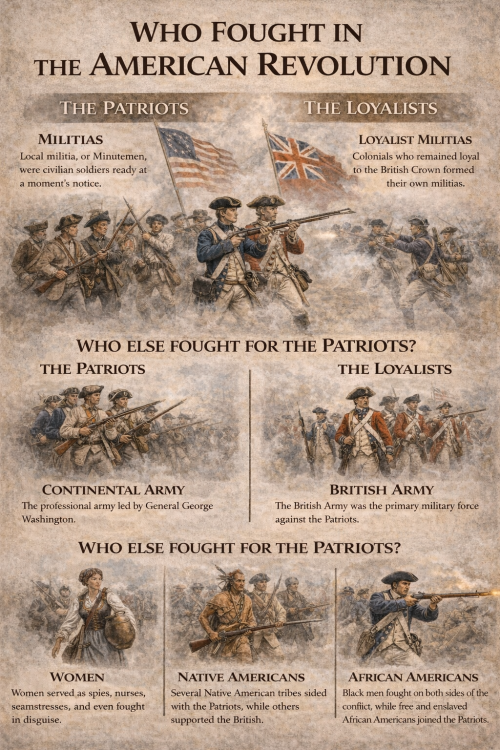
Phase I: The War Begins (1775–1776)
The war opened with sudden clashes between British troops and colonial militias in Massachusetts. These early battles demonstrated that armed conflict had become unavoidable.
Battles of Lexington and Concord (1775)
The first open fighting of the war occurred when British troops attempted to seize colonial weapons. Colonial militias resisted, forcing the British to retreat to Boston and marking the beginning of armed rebellion.
Battle of Fort Ticonderoga (1775)
Colonial forces captured the strategically important fort in New York, securing valuable artillery that later proved crucial to the American war effort.
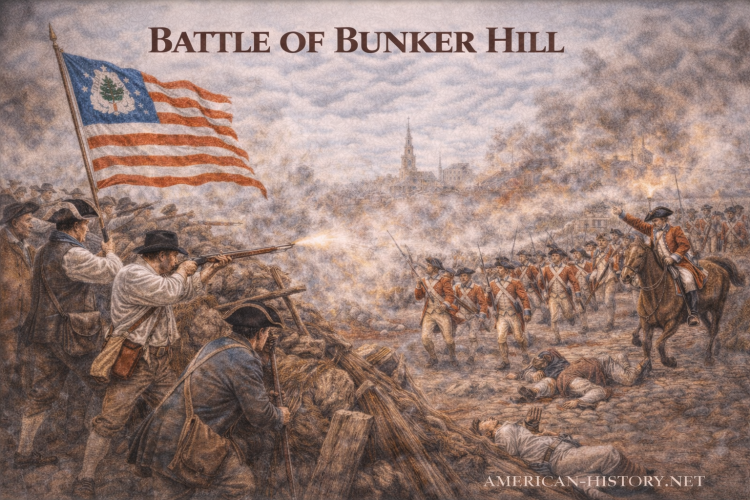
Battle of Bunker Hill (1775)
Although the British won the field, they suffered heavy casualties, proving that American forces could stand against trained British troops.
Battle of Quebec (1775)
An American attempt to bring Canada into the revolution failed after a difficult winter assault, ending hopes of expanding the rebellion northward.
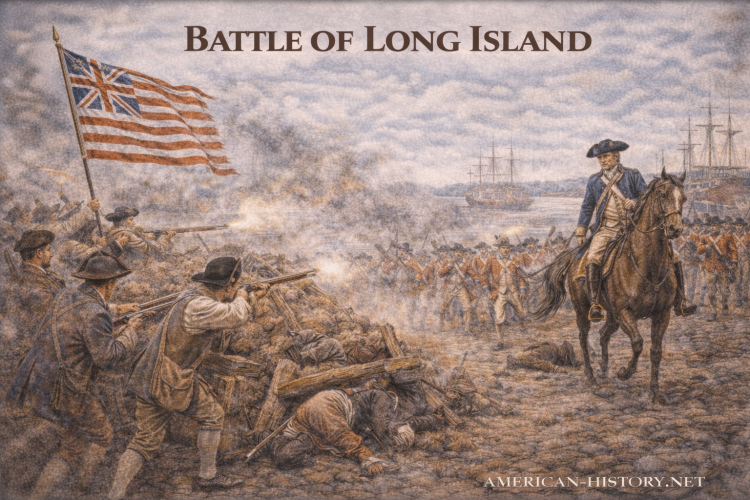
Battle of Long Island (1776)
The first major battle of the war resulted in a decisive British victory and forced George Washington’s army to retreat from New York.
Battle of White Plains (1776)
British forces continued their advance through New York, pushing the Continental Army further back after a series of engagements.
Battle of Fort Washington (1776)
One of the worst American defeats of the war, resulting in the capture of nearly 3,000 Continental soldiers.
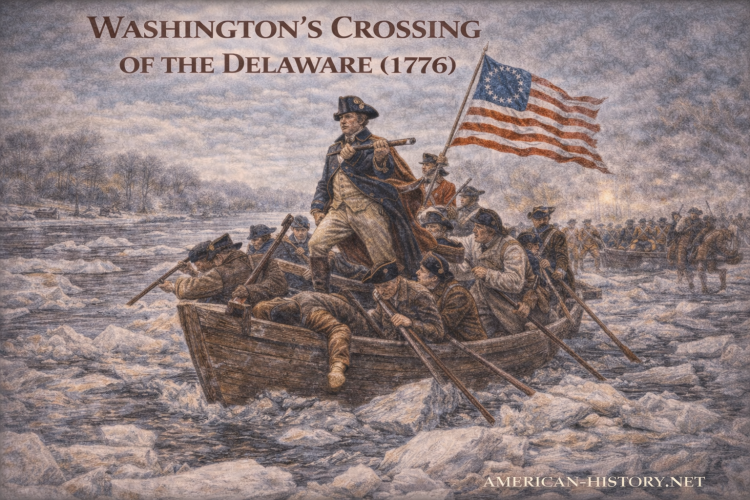
Battle of Trenton (1776)
George Washington crossed the Delaware River and surprised Hessian troops, winning a crucial victory that revived American morale.
Battle of Princeton (1777)
Another American success that followed Trenton, further boosting confidence in the Continental Army.
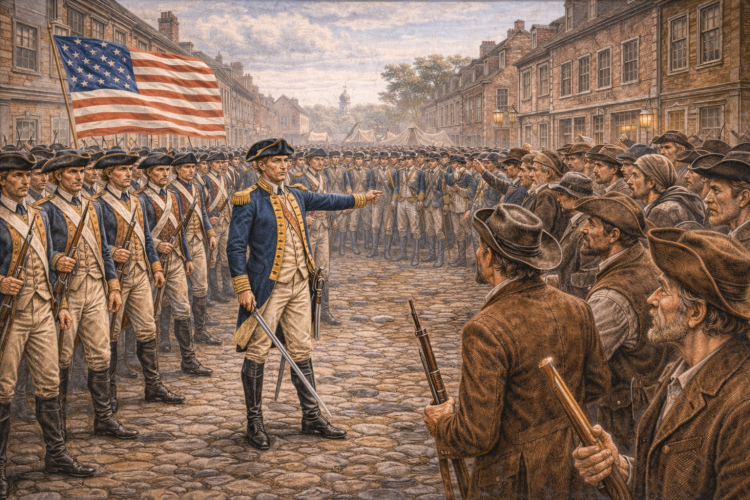
Phase II: The Turning Point (1777–1778)
By 1777, Britain sought to divide the colonies by cutting off New England. Instead, this strategy led to a decisive turning point in the war.
Battle of Brandywine (1777)
The largest battle of the war allowed British forces to defeat Washington’s army and move toward Philadelphia.
Battle of Germantown (1777)
A bold but unsuccessful American attack that demonstrated the growing confidence and capability of the Continental Army.
Battles of Saratoga (1777)
A major American victory that forced a British army to surrender, convincing France that the American cause was viable and leading to a formal alliance.
Battle of Monmouth (1778)
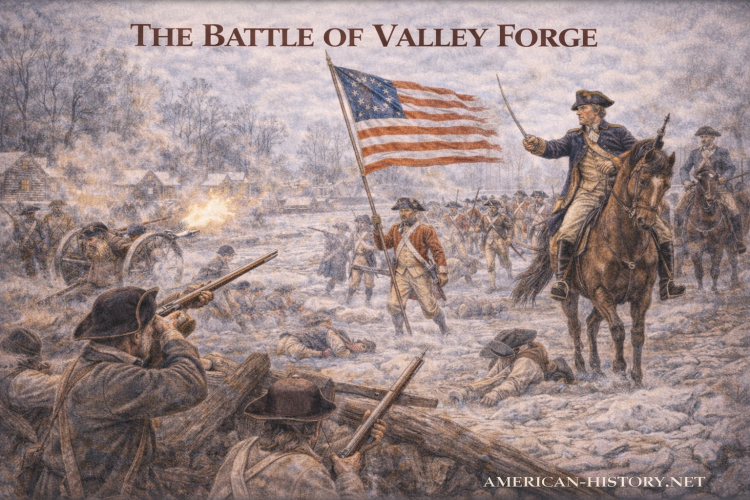
Fought after the harsh winter at Valley Forge, this battle showed the improved discipline and effectiveness of American troops.
Phase III: The War Moves South (1778–1780)
After setbacks in the North, Britain shifted its focus to the Southern colonies, hoping to rally Loyalist support.
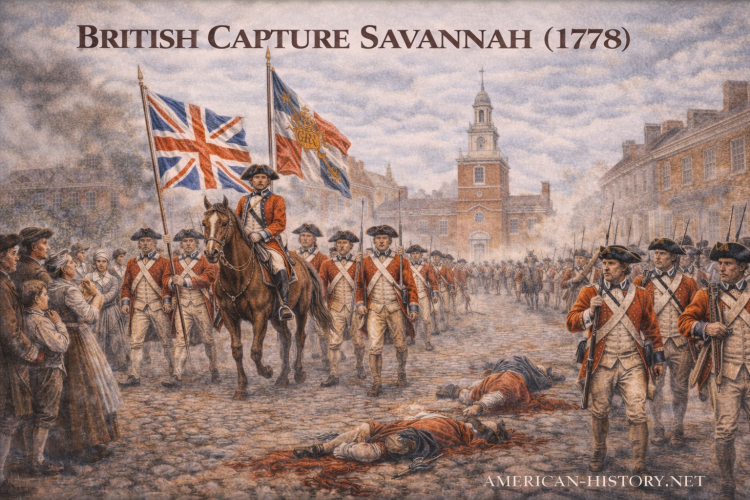
Siege of Savannah (1779)
A failed attempt by American and French forces to retake the city from British control.
Siege of Charleston (1780)
One of the greatest American defeats of the war, resulting in the surrender of thousands of Continental troops.
Battle of Kings Mountain (1780)
A decisive Patriot victory over Loyalist forces that disrupted British plans in the South and revived American momentum.
Phase IV: Victory and Independence (1781)
The final phase of the war featured decisive engagements that ultimately forced Britain to seek peace.
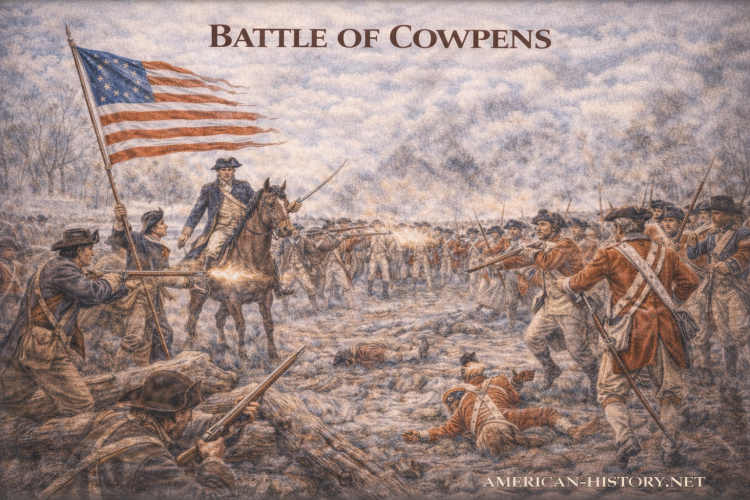
Battle of Cowpens (1781)
A brilliant American victory that weakened British forces in the Southern campaign.
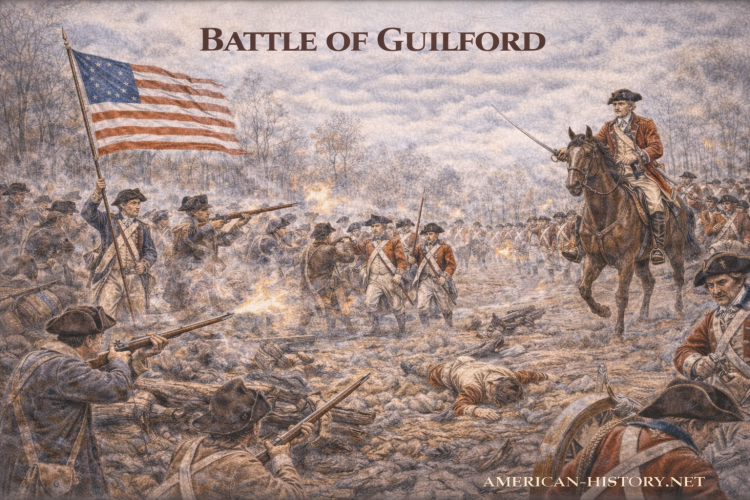
Battle of Guilford Court House (1781)
A costly British victory that left their army too weakened to maintain control of the South.
Battle of the Chesapeake (1781)
A naval battle in which the French defeated the British fleet, preventing reinforcements from reaching British troops in Virginia.
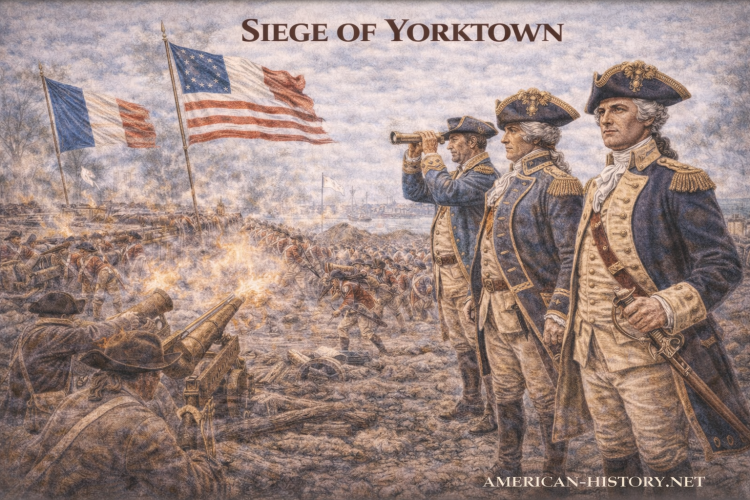
Battle of Yorktown (1781)
Combined American and French forces surrounded and forced the surrender of a British army, effectively ending major fighting in the war.
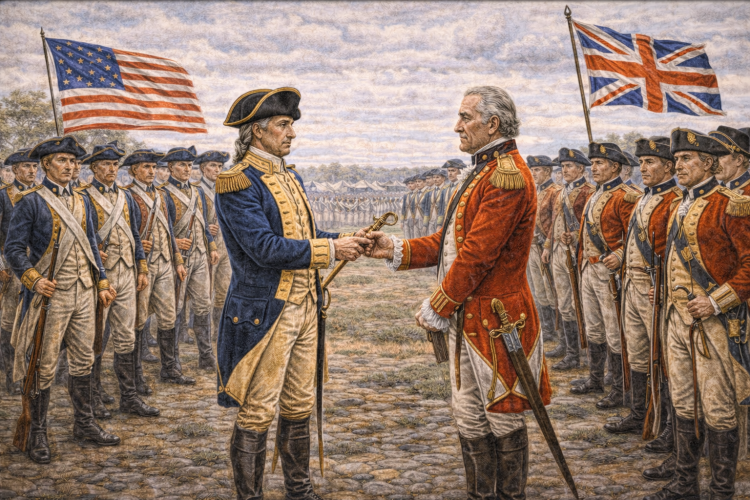
The End of the War
Following the defeat at Yorktown, Britain entered peace negotiations. In 1783, the Treaty of Paris formally ended the war, with Britain recognizing the independence of the United States.
The American Revolutionary War reshaped global politics, created a new nation, and laid the foundation for the future development of the United States.