
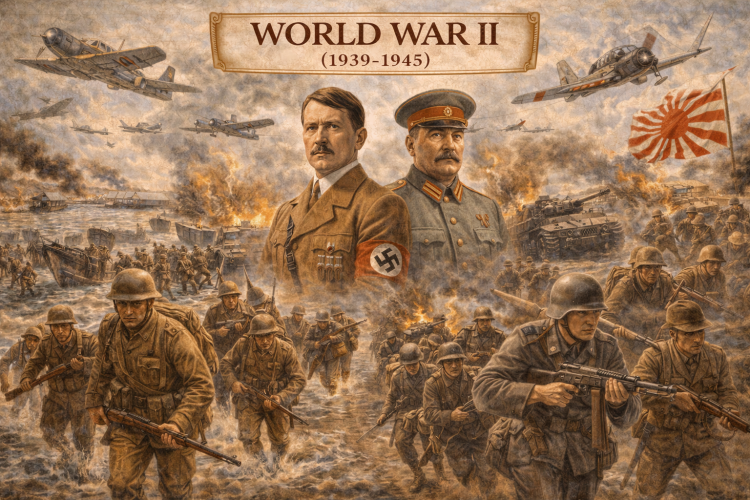
World War II (1939–1945) was the largest and most destructive conflict in human history, involving nations across Europe, Asia, Africa, and the Pacific. It was fought primarily between two opposing alliances: the Allied Powers and the Axis Powers. The war reshaped global politics, caused unprecedented human suffering, and permanently altered the balance of world power.
Emerging from the unresolved tensions of World War I, the conflict was driven by political extremism, economic instability, territorial ambition, and the failure of international diplomacy. By the time it ended in 1945, World War II had claimed tens of millions of lives and led to the creation of a new international order.
🇺🇸 Click to Reveal: Key World War II Facts
What triggered World War II?
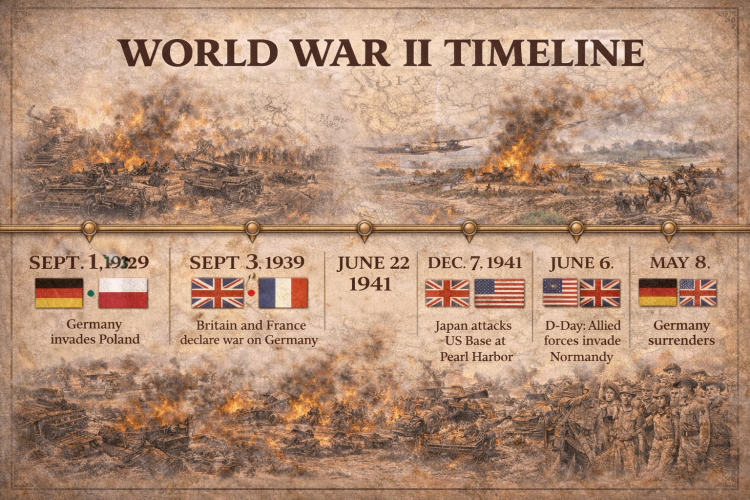
World War II was triggered by Germany’s invasion of Poland on September 1, 1939. This aggressive act forced Britain and France to declare war, transforming regional tensions into a global conflict.
Why did fascism rise in Europe?
Economic collapse, political instability, and resentment after World War I allowed extremist ideologies like fascism to take hold, particularly in Germany and Italy.
What were the Axis Powers?
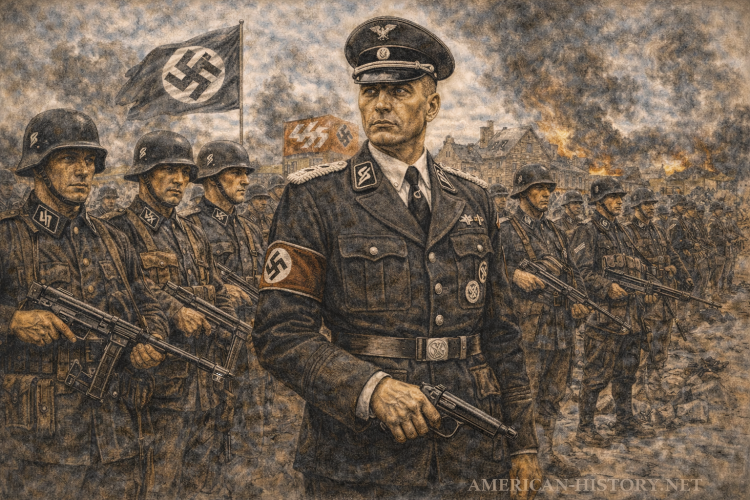
The Axis Powers were led by Germany, Italy, and Japan. They sought territorial expansion and aimed to overturn the existing international order through military force.
Who were the Allied Powers?
The Allied Powers included the United States, United Kingdom, Soviet Union, China, and many other nations that united to resist Axis aggression and restore global stability.
Why did the United States enter the war?
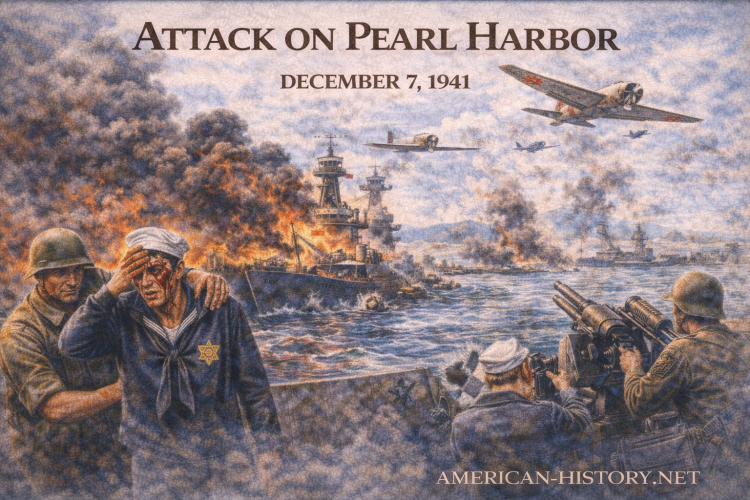
The United States entered World War II after Japan’s surprise attack on Pearl Harbor in December 1941, which killed thousands and destroyed much of the U.S. Pacific Fleet.
What made World War II a global conflict?
Fighting occurred across Europe, Africa, Asia, and the Pacific. Nations from every inhabited continent were drawn into the war through alliances, invasions, and colonial territories.
How did the war end in Europe?
Nazi Germany surrendered in May 1945 after Allied forces advanced from both the east and west, culminating in the capture of Berlin.
What lasting impact did World War II have?
World War II reshaped global politics, led to the creation of the United Nations, accelerated decolonization, and established the United States and Soviet Union as rival superpowers.
Background and Causes of World War II
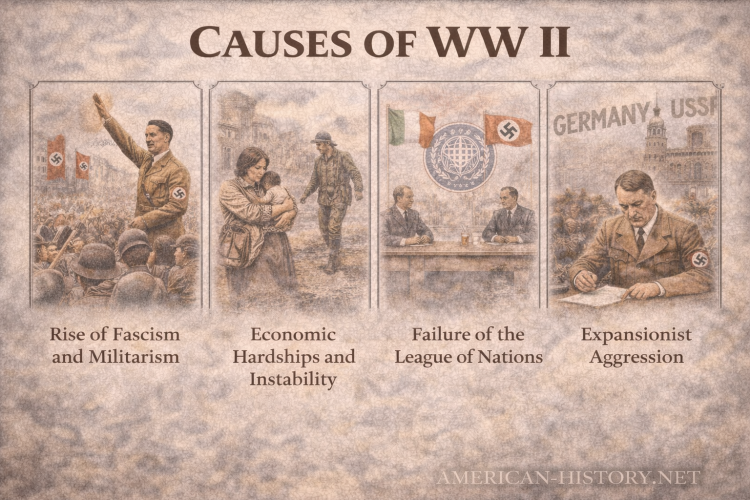
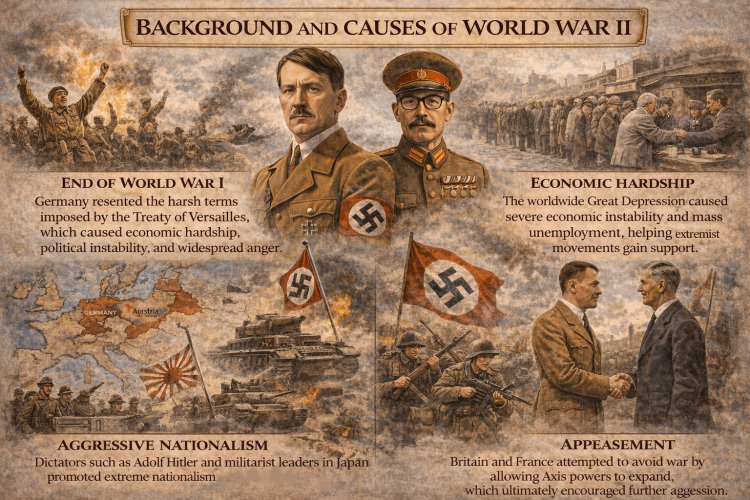
The roots of World War II lay in the aftermath of World War I. Europe was economically devastated, and the Treaty of Versailles imposed harsh penalties on Germany, fostering resentment and political instability. At the same time, the Great Depression of the 1930s weakened economies worldwide, creating conditions in which extremist ideologies flourished.
Several key developments contributed to the outbreak of war:
- The rise of fascist regimes in Germany, Italy, and Japan
- Expansionist ambitions pursued through military force
- Weak enforcement of international agreements by the League of Nations
- Policies of appeasement adopted by Britain and France
As dictators such as Adolf Hitler, Benito Mussolini, and Japanese military leaders sought to expand their influence, diplomatic solutions increasingly failed.
How World War II Began
World War II officially began on September 1, 1939, when Nazi Germany invaded Poland. This invasion violated international agreements and alarmed other European powers. In response, Britain and France declared war on Germany, marking the start of a wider conflict in Europe.
At the same time, war had already been raging in East Asia, where Japan had invaded China in the late 1930s. These regional conflicts soon merged into a single global war, drawing in nations from multiple continents.
🌍 The Major Sides in World War II
Axis Powers
The Axis Powers were led by:
- Germany
- Italy
- Japan
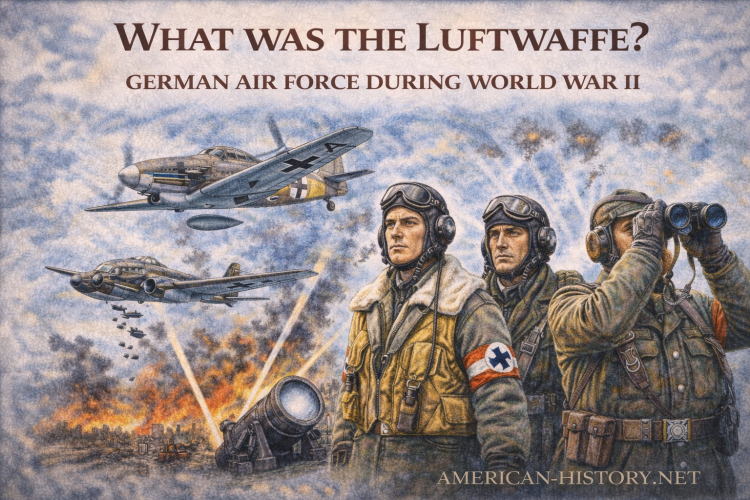
These nations pursued aggressive territorial expansion and sought to overturn the existing global order. They were supported at various times by countries such as Hungary, Romania, Bulgaria, and Finland.
Allied Powers
The Allied Powers initially included:
- United Kingdom
- France
- Poland
As the war expanded, major Allied members came to include:
- United States
- Soviet Union
- China
- Canada, Australia, and other nations
The United States, United Kingdom, Soviet Union, and China emerged as the core Allied powers and were often referred to as “The Big Four.”
American Entry into World War II
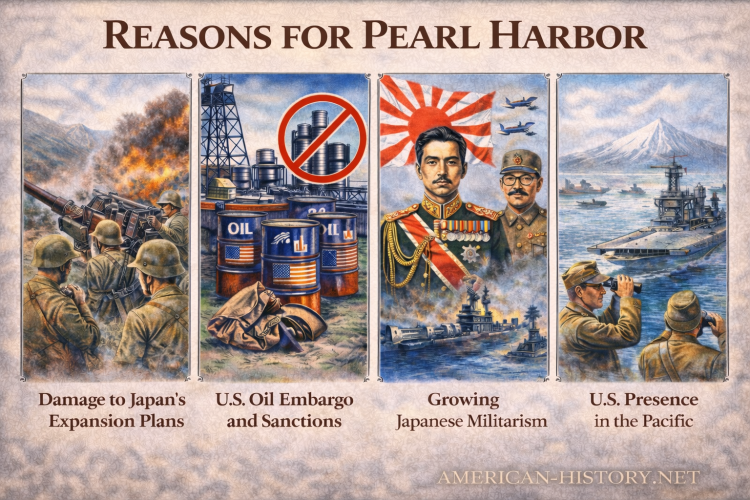
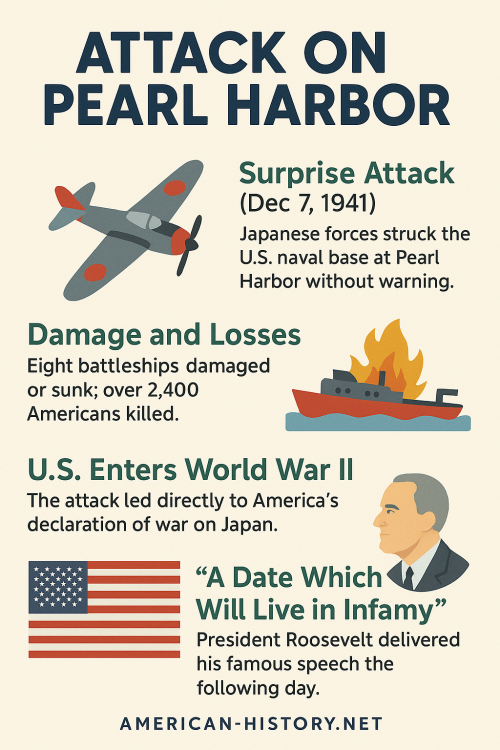
When World War II began, the United States remained neutral, reflecting widespread public opposition to involvement in another European war. This stance changed dramatically on December 7, 1941, when Japan launched a surprise attack on Pearl Harbor, a U.S. naval base in Hawaii.
The attack resulted in heavy American losses and led the United States to declare war on Japan, followed shortly by declarations of war against Germany and Italy. From this point onward, the United States became a central force in the Allied war effort.
🇺🇸 America’s Role in World War II
The United States played a decisive role in World War II by providing vast military, industrial, and economic resources to the Allied cause. Over 16 million Americans served in the armed forces during the conflict, making the U.S. one of the central powers in securing victory.
American forces fought on two major fronts:
- European Theater – Supporting Allied efforts against Nazi Germany and helping to liberate occupied territories across Western Europe.
- Pacific Theater – Leading major campaigns against Japanese forces and reclaiming territory through island-hopping strategies.
In Europe, American troops helped turn the tide against German expansion and played a crucial role in the defeat of Nazi forces. In the Pacific, U.S. forces steadily pushed Japan back toward its home islands, weakening its ability to continue the war.
Major Leaders of World War II
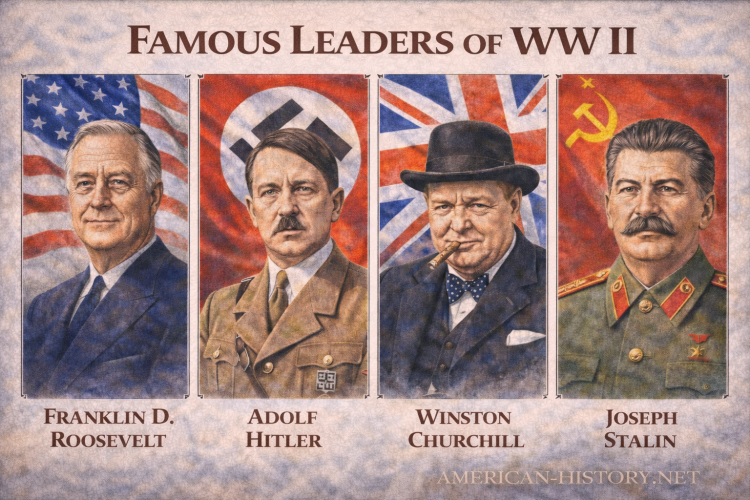
World War II produced some of the most influential—and controversial—leaders in modern history. Key figures included:
- Adolf Hitler (Germany)
- Winston Churchill (United Kingdom)
- Joseph Stalin (Soviet Union)
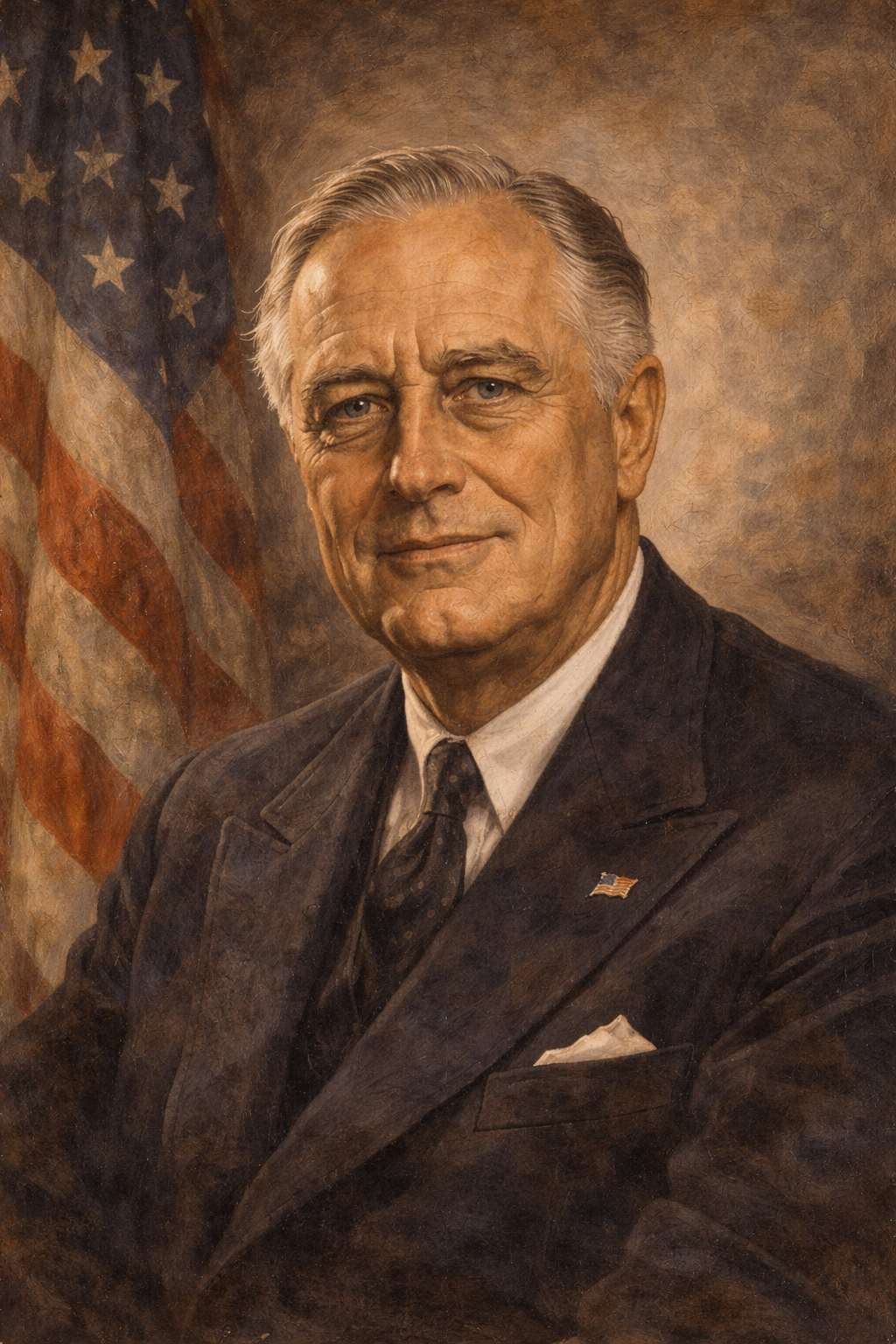
- Franklin D. Roosevelt and Dwight D. Eisenhower (United States)
- Benito Mussolini (Italy)
- Emperor Hirohito (Japan)
- Charles de Gaulle (France)
Their decisions shaped military strategies, alliances, and the postwar world.
The End of World War II
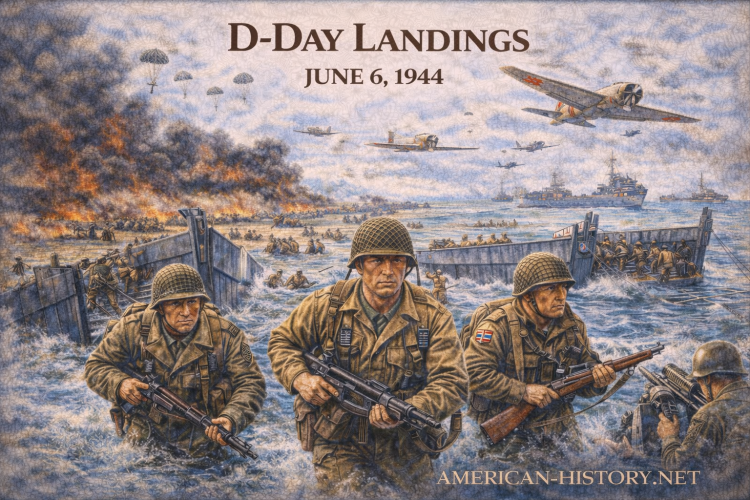
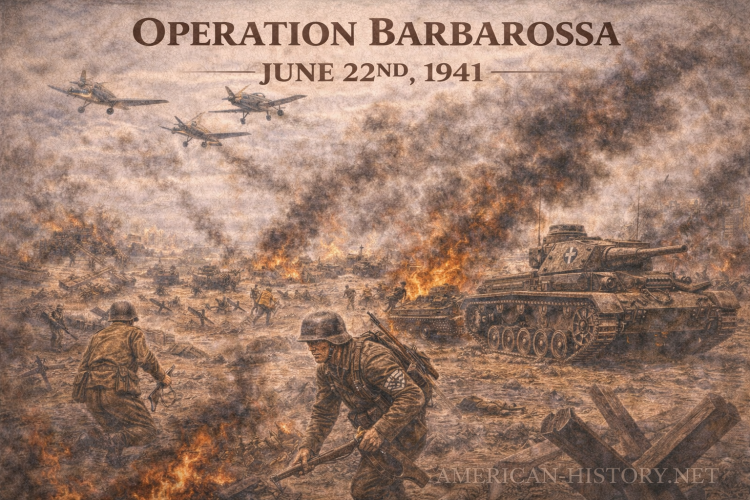
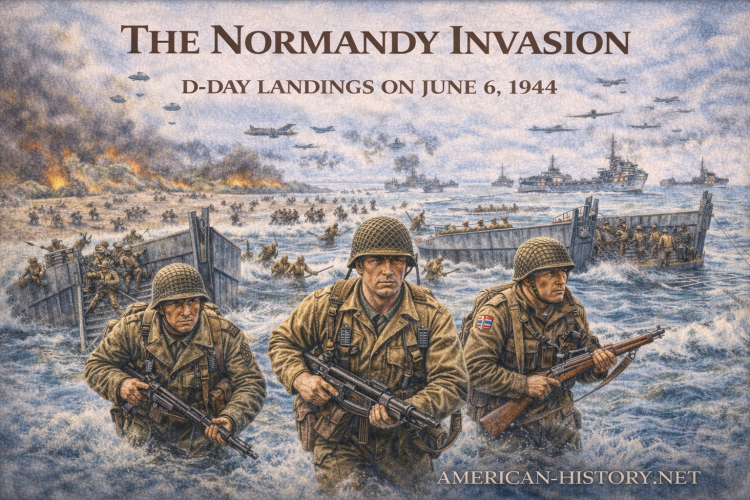
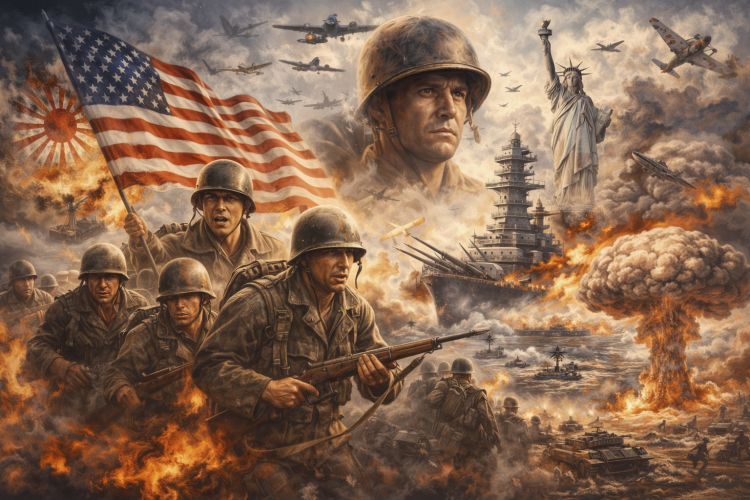
By 1944, Allied forces were advancing on all fronts. In Europe, the Soviet Union pushed westward while Western Allies landed in France and advanced toward Germany. Germany surrendered in May 1945, ending the war in Europe.
In the Pacific, fighting continued until August 1945, when the United States dropped atomic bombs on Hiroshima and Nagasaki. Japan surrendered shortly afterward, bringing World War II to an end.
Results and Aftermath
World War II was the deadliest conflict in human history. Tens of millions of soldiers and civilians lost their lives, and entire cities were destroyed.
The war resulted in:
- The defeat of the Axis Powers
- The emergence of the United States and Soviet Union as superpowers
- The creation of the United Nations
- Accelerated decolonization in Asia and Africa
- A new global political order that shaped the Cold War
The consequences of World War II continue to influence international relations, politics, and society today.
❓ World War II – Frequently Asked Questions
What caused World War II?
World War II was caused by unresolved tensions from World War I, economic instability from the Great Depression, the rise of fascist regimes, and aggressive territorial expansion by Germany, Italy, and Japan.
When did World War II officially begin?
The war officially began on September 1, 1939, when Nazi Germany invaded Poland, prompting Britain and France to declare war on Germany.
Why did the United States enter the war?
The United States entered World War II after Japan attacked Pearl Harbor on December 7, 1941, leading Congress to declare war on Japan and later on Germany and Italy.
Who were the main Axis Powers?
The Axis Powers were led by Germany, Italy, and Japan, with support from other nations including Hungary, Romania, Bulgaria, and Finland.
Who were the main Allied Powers?
The Allied Powers included the United States, United Kingdom, Soviet Union, China, France, and numerous other nations across Europe and the Pacific.
How did World War II end?
Germany surrendered in May 1945, ending the war in Europe. Japan surrendered in August 1945 following atomic bombings and Soviet entry into the Pacific war.
🧠 World War II Knowledge Quiz
📘 World War II Glossary
Axis Powers
Alliance led by Germany, Italy, and Japan seeking territorial expansion.
Allied Powers
Coalition including the U.S., U.K., Soviet Union, China, and others opposing the Axis.
Pearl Harbor
Japanese attack on a U.S. naval base that led to American entry into WWII.
Blitzkrieg
German military tactic using rapid, coordinated attacks to overwhelm enemies.
D-Day
June 6, 1944 Allied invasion of Normandy that began the liberation of Western Europe.
United Nations
International organization founded after WWII to promote peace and cooperation.